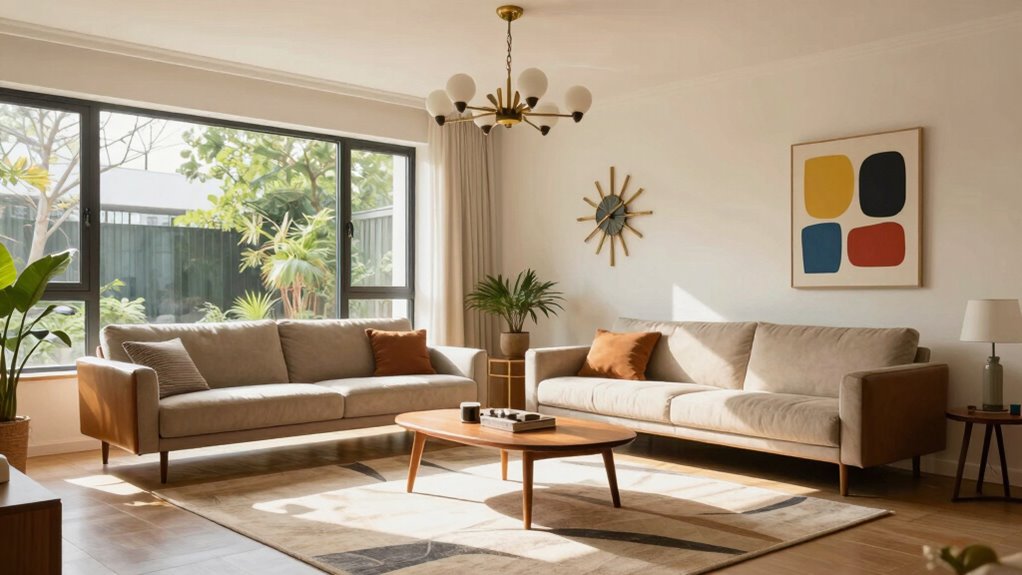

You’ve probably noticed that Mid-Century Modern has become the go-to language for vintage design because of its clean lines, organic curves, and timeless appeal. It’s approachable yet sophisticated, easily blending with modern spaces without feeling out of place. Its emphasis on minimalism, functionality, and natural materials resonates with contemporary values of wellness and sustainability. If you keep exploring, you’ll discover how it continues to influence both classic and modern interiors alike.

Get furniture and decor delivered free with Prime
- Fast, free delivery on millions of items
- Prime Video, Amazon Music and more included
- Member-only deals all year
Key Takeaways
- Its clean lines and organic shapes create a timeless, versatile aesthetic that appeals broadly.
- Advances in manufacturing made Mid-Century Modern designs more accessible and affordable.
- The style’s minimalism balances simplicity with comfort, fitting seamlessly into contemporary spaces.
- Its emphasis on natural materials and neutral palettes aligns with modern sustainability values.
- The design’s focus on functionality and elegance makes it both practical and visually appealing.
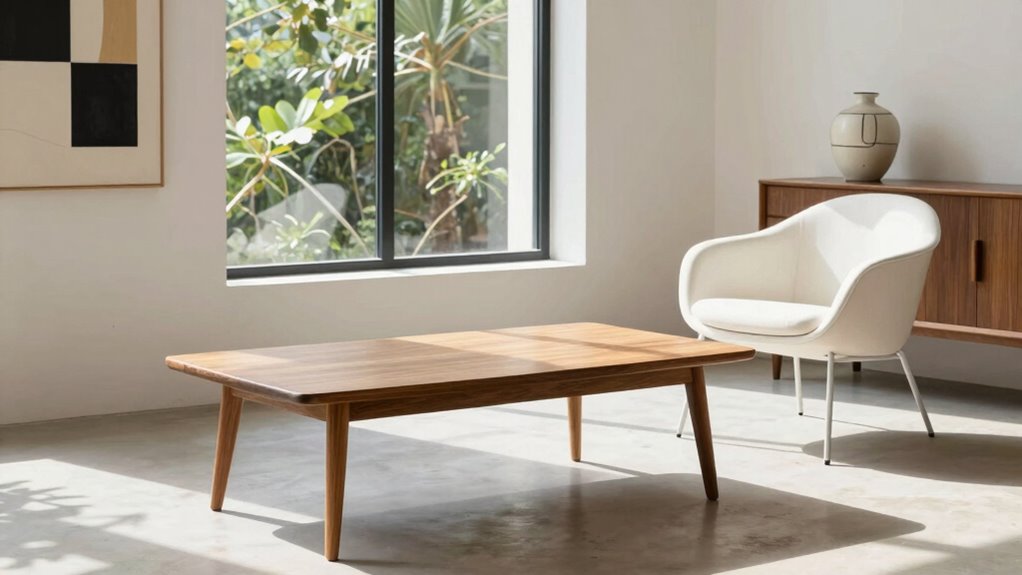
Have you noticed how “mid-century modern” has become the default language for describing vintage design? It’s almost as if this style has taken over the conversation, defining what we think of when we hear about retro aesthetics. The reason is simple: mid-century modern embodies a unique blend of simplicity, functionality, and elegance that continues to resonate today. Its furniture design emphasizes clean lines, organic curves, and innovative materials, making it instantly recognizable and versatile. This style’s focus on minimalism doesn’t sacrifice comfort or visual appeal, which helps it appeal to a broad audience. As a result, when people talk about vintage interiors, mid-century modern often comes to mind first because it’s approachable yet sophisticated. Additionally, its emphasis on holistic approaches to design and lifestyle aligns with contemporary wellness values, further cementing its popularity.
When considering interior aesthetics, mid-century modern offers a timeless appeal. It’s balanced, uncluttered, and promotes a sense of openness that many other vintage styles lack. Its furniture design often features sleek wooden legs, geometric shapes, and practical storage solutions, all crafted with an eye for both form and function. This approach makes it easier to incorporate into contemporary spaces, giving interiors a fresh yet nostalgic vibe while also benefiting from Manufacturing advancements that made its pieces more accessible. It’s no wonder that homeowners and designers prefer it — it’s adaptable, easy to live with, and always stylish. The emphasis on natural materials and neutral color palettes also helps this style stay relevant, blending seamlessly with modern decor while still evoking a sense of history and craftsmanship.
Frequently Asked Questions
How Did Mid-Century Modern Influence Contemporary Design Trends?
Mid-century modern influences your contemporary design by shaping furniture color palettes with earthy tones and bold accents. Its clean lines and functional design philosophy inspire modern pieces, blending form and function seamlessly. You’ll notice this style’s emphasis on simplicity and minimalism in today’s trends, encouraging you to create spaces that are both visually appealing and practical. This timeless approach continues to drive innovation, making mid-century modern a staple in current design aesthetics.
Are There Regional Differences in Mid-Century Modern Popularity?
Like a map revealing hidden treasures, regional differences shape mid-century modern’s popularity. In the U.S., sleek, minimalist styles dominate urban areas, influenced by industrial growth. Meanwhile, Scandinavian countries embrace cozy, functional designs rooted in cultural influences. You’ll notice that local materials, climate, and history all influence regional styles, making mid-century modern uniquely adaptable—a reflection of diverse tastes and cultural stories woven into its timeless appeal.
What Materials Are Most Characteristic of Mid-Century Modern Furniture?
You’ll notice that mid-century modern furniture often features wooden veneers, showcasing sleek, natural wood finishes that emphasize simplicity and craftsmanship. Upholstery fabrics are typically bold or muted, with materials like wool, leather, and linen used for comfort and durability. These elements combine to create pieces that are both functional and stylish, reflecting the era’s focus on clean lines, organic materials, and a seamless blend of form and function.
How Has Mid-Century Modern Architecture Evolved Over Time?
You see mid-century modern architecture evolving through a focus on iconic design that emphasizes simplicity, functionality, and clean lines. Over time, this style has integrated sustainable materials and adaptive reuse, reflecting contemporary priorities. Its architectural legacy remains influential, inspiring new designs that blend retro aesthetics with modern innovations. You notice a renewed appreciation for its timeless appeal, ensuring mid-century modern architecture stays relevant and continues to shape contemporary architectural trends.
Why Do Collectors Prioritize Mid-Century Modern Pieces Today?
You prioritize mid-century modern pieces because they embody vintage authenticity and timeless design, making them highly desirable. Collector motivations drive you to seek pieces that showcase clean lines, innovative materials, and cultural significance from the era. You value the craftsmanship and unique style that set mid-century modern apart, seeing these items as both investments and expressions of your appreciation for a distinctive vintage aesthetic that remains relevant today.
Conclusion
So, next time you see a sleek, minimalist piece from the mid-century era, realize you’re witnessing history’s greatest design revolution. It’s not just vintage – it’s the heartbeat of modern aesthetics, the pinnacle of style, and the ultimate symbol of cool. Mid-century modern isn’t just a trend; it’s a lifestyle, a statement, a revolution that will outlast time itself. Embrace it, because this is the design language that will define eternity.
Halloween Picks
halloween
As an affiliate, we earn on qualifying purchases.