

Mid-century modern accent chairs are one of the most contested purchases in home furnishing, because the category spans a $150 no-name wingback from an online marketplace and a $5,000+ licensed Eames Lounge Chair from Herman Miller. Both are sold under the same style label, both photograph beautifully in a room, and both promise the same low-profile, wood-legged, organic silhouette that defines the era. That is exactly why the decision is hard: you are not choosing between two different looks, you are choosing between two different products wearing the same look.

Get furniture and decor delivered free with Prime
- Fast, free delivery on millions of items
- Prime Video, Amazon Music and more included
- Member-only deals all year
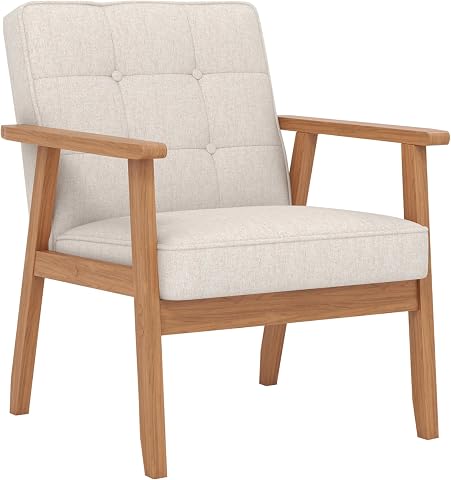
KCC Mid-Century Modern Linen Fabric Accent Chair with Wooden Armrests, Beige
- ✔ Color: Beige
- ✔ Upholstery: Linen fabric
- ✔ Frame: Wood

LUNLING Mid-Century Modern Dining Chairs Set of 2, Faux Leather with Bentwood Frame and Metal Legs (Orange)
- ✔ Brand: LUNLING
- ✔ Color: Orange
- ✔ Materials: Faux leather (PU), bentwood frame, metal legs

LUNLING Swivel Dining Chairs Set of 2, Mid-Century Modern Gray Fabric & Faux Leather with Bamboo Legs
- ✔ Brand: LUNLING
- ✔ Color: Gray
- ✔ Materials: Bamboo frame, faux leather/fabric upholstery, sponge filling
This comparison puts premium designer chairs — authentic or licensed pieces like the Eames Lounge Chair, Womb Chair, Egg Chair, or well-made equivalents from brands like Article and Design Within Reach — against budget replicas and modern reinterpretations, typically under $400. The core tension is simple: the budget chair gets you 80% of the aesthetic for 10% of the price, but the premium chair gets you construction, comfort, and resale value the budget chair cannot match. Whether the gap matters depends almost entirely on how you actually use the chair and how long you plan to keep it.
Readers who want a single statement piece for a room they’ll live in for a decade lean one way; readers furnishing a first apartment, a rental, or a room that gets redecorated often lean the other. Below, both options are compared side by side across the criteria that actually drive the decision — comfort, build quality, materials, style authenticity, size, maintenance, and long-term value — so you can match the right chair to your situation rather than just your budget.
At a Glance
| Criteria | Premium mid-century designer chairs (authentic or licensed Eames, Womb Chair, Egg Chair class) | Budget mid-century accent chairs (replicas and modern reinterpretations under $400) | Winner |
|---|---|---|---|
| Price | $1,500–$6,000+ for licensed icons; $800–$1,800 for high-end contemporary equivalents | $150–$400 for most replicas and modern mid-century-style chairs | |
| Build quality and longevity | Kiln-dried hardwood or steel frames, 15–25+ year lifespan, often lifetime warranties | Engineered wood or lightweight frames; realistic lifespan 3–7 years with regular use | |
| Comfort | Engineered ergonomics; recline angles and cushion layering refined over decades | Variable; often firmer, shallower seats, less refined lumbar support | |
| Materials | Genuine walnut or oak, top-grain leather, high-resilience foam, wool blends | Veneer or stained rubberwood, PU ‘leather’ or polyester blends, lower-density foam | |
| Style authenticity | True to original proportions and details; design pedigree with provenance | Recognizable silhouette but proportions often slightly off; no provenance | |
| Resale and investment value | Licensed originals hold value; some appreciate; easy to resell | Near zero resale value; effectively disposable | |
| Availability and delivery | Longer lead times; showroom or made-to-order, sometimes 8–12 weeks | Fast shipping from big-box and online retailers, often within a week | |
| Risk of disappointment | Low — see it in person, generous return policies, consistent quality | Higher — quality varies by batch; return shipping can be costly |
KCC Mid-Century Modern Linen Fabric Accent Chair with Wooden Armrests, Beige
This is the pick that most directly answers the question "what is a mid-century modern accent chair?" Unlike the two LUNLING sets, which are dining chairs that double as accent seating, the KCC chair is designed as a standalone lounge piece — and it shows in the details. The button-tufted backrest adds the kind of retro visual texture that plain dining-style upholstery simply can’t match, while the wooden armrests give it a warmer, more crafted silhouette than the metal-legged alternatives.Where the LUNLING Bentwood chairs wrap you in wipeable (but slightly plasticky) PU leather, the KCC’s linen upholstery breathes noticeably better, which matters if you plan to sit for extended stretches or live somewhere warm. The high-elasticity sponge padding is also designed to resist the flattening that cheaper seat cushions suffer over months of daily use. Compared with the swivel set, you give up mobility — this chair stays where you put it — but you gain a piece that looks intentional in a living room rather than borrowed from a kitchen.The honest tradeoff is maintenance. Beige linen is unforgiving: a spilled coffee or a pet’s muddy paws will leave a mark that faux leather would shrug off. If your household is hard on furniture, the Bentwood set below is the safer bet. We’d also note that assembly requirements aren’t clearly documented, so expect some uncertainty on arrival.
Pros:
- Button-tufted backrest and wooden armrests deliver genuine mid-century character
- Breathable linen stays cool and comfortable during long sittings
- High-elasticity sponge padding resists flattening over time
- Sturdy all-wood frame with strong load-bearing capacity
Cons:
- Beige linen shows stains easily and can’t be wiped clean like faux leather
- Only one chair per purchase, so it’s costly to furnish a dining set
- Assembly requirements not clearly specified by the manufacturer
Best for: Buyers furnishing a living room or reading nook who want a single statement chair with authentic retro styling and breathable upholstery.
Not ideal for: Households with young kids or pets, or anyone who needs wipe-clean seating for a dining table.
Bottom line: The most authentic accent chair of the lineup — buy it for style and comfort, not for durability under messy conditions.
“The most authentic accent chair of the lineup — buy it for style and comfort, not for durability under messy conditions.”
LUNLING Mid-Century Modern Dining Chairs Set of 2, Faux Leather with Bentwood Frame and Metal Legs (Orange)
If the KCC chair is a statement piece, the LUNLING Bentwood set is a workhorse — and that’s a compliment. You receive two fully upholstered chairs with a 300 lb weight capacity each, ergonomic curved backs, and padded armrests, assembled in about ten minutes per chair. For anyone furnishing a dining nook, kitchen counter area, or a pair of desk seats, the per-chair value is hard to beat in this comparison.The bentwood frame is the design signature here, echoing classic Eames-era curvature, and it gives the chairs a warmth that pure metal-legged options lack. The full faux leather upholstery is the easiest to maintain of anything in this lineup — spills wipe off in seconds, which is exactly why it beats the KCC for dining use and edges out the swivel set’s fabric-and-PU mix, where crumbs and stains can settle into the cloth portions. Adjustable foot pads round out the package by protecting hard floors and compensating for slightly uneven ground.Be realistic about what PU leather is, though: it looks convincing out of the box but doesn’t age or breathe like genuine leather or linen. And the orange color is a genuine commitment — stunning against walnut tones and cream walls, jarring in a cool gray or minimalist space. If your palette leans neutral, this set may fight your room rather than flatter it.
Pros:
- Two fully upholstered chairs per purchase with 300 lb weight capacity each
- Full faux leather upholstery wipes clean effortlessly
- Bentwood frame with armrests delivers authentic mid-century curvature
- Quick assembly at roughly 10 minutes per chair, with tools included
Cons:
- Faux leather lacks the breathability and aging character of linen or real leather
- Bold orange upholstery limits compatibility with neutral palettes
- Assembly required
Best for: Budget-conscious buyers who need two matching chairs for a dining area or workspace and love a bold retro color.
Not ideal for: Anyone seeking a single accent chair, or decorating around a cool, neutral color scheme.
Bottom line: The practical pick for pairs — maximum seating per dollar, with the easiest cleanup of the three.
“The practical pick for pairs — maximum seating per dollar, with the easiest cleanup of the three.”
LUNLING Swivel Dining Chairs Set of 2, Mid-Century Modern Gray Fabric & Faux Leather with Bamboo Legs
The swivel set occupies a middle ground between the other two, and its 360-degree rotation is the feature that justifies it. In practice, a swivel base transforms a dining chair into something more: pull it to a home office desk, spin between a conversation area and a window, or hand it to a teenager who will simply enjoy the motion. Neither the KCC chair nor the Bentwood set can follow you around a room the way these do.Visually, the gray fabric-and-PU combination is the most neutral option in this lineup — a clear advantage over the Bentwood set’s assertive orange if your décor leans cool or understated. The bamboo frame keeps the mid-century spirit alive with tapered natural legs, and the ergonomic curved back and padded seat mirror the comfort of its sibling set. Adjustable foot pads do double duty here, protecting hard floors from the swivel motion itself.Two caveats keep it from the top spot. First, the mixed fabric-and-leather upholstery is the hardest to clean of the three — the gray fabric sections will absorb spills that the Bentwood chairs’ full PU would repel, and the listing’s "hard floor" surface recommendation suggests carpeted rooms aren’t ideal for the swivel mechanism. Second, the gray-on-gray look, while versatile, is less distinctive than either the KCC’s tufted linen or the Bentwood set’s orange statement. You’re choosing function over flair.
Pros:
- 360-degree swivel adds mobility no other pick in this lineup offers
- Neutral gray upholstery fits almost any color scheme
- Bamboo frame with tapered legs keeps the mid-century silhouette
- Ergonomic curved back, padded seat, and armrests for all-day comfort
Cons:
- Fabric portions are harder to clean than the Bentwood set’s full faux leather
- Recommended for hard floors only — carpet limits the swivel function
- Less visually distinctive than the other two options
Best for: Buyers who want flexible, multi-room seating — home offices, open-plan living areas, or spaces where one chair needs to serve several purposes.
Not ideal for: Carpeted rooms, or anyone prioritizing easy cleanup over versatility.
Bottom line: The flexibility champion — pick it when one chair needs to work in several rooms and several roles.
“The flexibility champion — pick it when one chair needs to work in several rooms and several roles.”
As an Amazon Associate we earn from qualifying purchases.
Key Differences
The most important difference is durability per dollar spent over time. A licensed or high-end mid-century chair is built around a hardwood or steel frame with jointed construction, replaceable cushions, and foam that holds its shape for a decade or more. A budget chair is usually built around an engineered wood frame with stapled joints and foam that begins softening within two to three years of daily use. In practice, this means the budget chair may need replacing two or three times within the lifespan of one premium chair — which narrows the raw cost gap considerably if you plan to keep the piece long-term, and widens it if you don’t.
The second major difference is comfort engineering. Original mid-century icons like the Eames Lounge Chair and Womb Chair were designed around specific recline angles, seat depths, and cushion layering, and licensed versions reproduce those exactly. Budget replicas approximate the shape but frequently get the geometry wrong: seats sit too high or too shallow, the back reclines at an awkward angle, and the armrests land at the wrong height. The result is a chair that looks right in photos but feels like a prop after thirty minutes of reading. This is the most common disappointment reported with cheap replicas, and it is the single hardest thing to judge from a product listing.
The third difference is authenticity — and its weight depends on how much you care. A licensed piece carries provenance, correct proportions, correct materials, and often a stamp or medallion that matters for resale. A replica delivers the silhouette from across the room but usually reveals itself up close: visible veneer edges, plasticky ‘leather’ that cracks within a few years, and legs that wobble because the frame was never designed for the silhouette it imitates. For a living room centerpiece, this gap is visible daily; for a bedroom corner or office accent, it rarely is.
Detailed Comparison
Price and upfront cost (Budget mid-century accent chairs (replicas and modern reinterpretations under $400) wins — major)
Budget chairs win outright on sticker price, and the gap is enormous: $150–$400 versus $1,500 or more, a 5x to 20x difference. That said, price alone misleads here. A $300 chair replaced twice over ten years costs $900 total; a $2,000 chair kept for twenty years costs $100 per year. The premium option is only ‘expensive’ if you don’t keep it. For anyone on a tight furnishing budget, a first home, or a room that may be redecorated, the budget price is genuinely the right call — do not stretch finances for a chair. For a settled household buying a forever piece, the premium price is better understood as a one-time investment than a splurge.
This is where the premium chair justifies its price. Authentic and licensed pieces use kiln-dried hardwood or welded steel frames, corner-blocked joints, and upholstery that can be reupholstered rather than replaced. Budget chairs rely on engineered wood frames, stapled assemblies, and glued foam that degrades with use. In practice, a premium chair survives a move, a decade of daily sitting, and multiple children or pets; a budget chair often develops wobble, sagging seats, or cracked faux leather within three to seven years. If longevity matters, the premium option wins decisively.
The gap here is real but less consistent than build quality, because it depends on the specific model. Licensed icons like the Eames Lounge Chair or Womb Chair were engineered for long sittings, and the geometry is reproduced exactly — this is comfort refined over 60+ years. Budget replicas often miss the mark: seats too shallow, backs too upright, armrests too low. However, some mid-priced contemporary brands have designed their own mid-century-style chairs from scratch rather than copying, and a few are genuinely comfortable. The practical rule: if you cannot sit in the chair before buying, the premium option is the safer bet; if you can test the budget chair in a store, the comfort gap may disappear.
Premium chairs use solid walnut or oak, top-grain or full-grain leather that patinas beautifully, and wool or high-grade synthetic blends. Budget chairs use veneers, rubberwood, and polyurethane ‘leather’ that peels and cracks with heat and use — a well-documented failure point on cheap replicas. Real leather ages into something better; PU leather ages into something worse. For a chair that gets daily skin contact, this difference is not cosmetic. For a rarely used accent in a guest room, it matters much less.
From across the room, both deliver the mid-century look. Up close, the differences accumulate: proportion errors, chunky or hollow-feeling legs, stitching irregularities, and finishes that read as flat. Licensed pieces also carry design heritage that some owners genuinely value — the chair is a recognized object, not just furniture. If your goal is ‘the vibe,’ the budget chair achieves 80% of it. If the chair is a deliberate centerpiece of a designed room, the premium version’s correctness is visible every day, especially to anyone who knows the originals.
Licensed originals hold value remarkably well; a genuine Eames Lounge Chair in good condition resells for a substantial share of its retail price, and vintage pieces sometimes appreciate. Budget chairs have effectively zero resale market — they are given away or discarded. This means the premium chair’s true cost of ownership is far lower than its sticker price suggests, because a portion of it is recoverable. If you treat furniture as partly an asset, this criterion alone can justify the premium. If you treat furniture as consumable, it is irrelevant.
Availability, delivery, and purchase risk (minor difference)
Budget chairs win on convenience: they ship within days from major retailers, and many can be seen in showrooms before purchase. Premium pieces often involve 8–12 week lead times, made-to-order upholstery, or showroom visits. However, purchase risk runs the other way: premium brands have consistent quality control and strong warranties, while budget chairs vary batch to batch, and returning a bulky chair bought online can cost a significant portion of its price. Fast delivery is not the same as safe delivery.
Pros:
- Heirloom construction that lasts decades and survives moves
- Correct, refined ergonomics engineered for real comfort
- Genuine materials that improve with age
- Strong resale value; partly recoverable cost
- Design pedigree and correct proportions visible up close
- Warranties and consistent quality control
Cons:
- Very high upfront cost, often $1,500–$6,000+
- Long lead times for made-to-order pieces
- Overkill for temporary spaces or rarely used rooms
- Genuine leather and wool require more care
Budget mid-century accent chairs (replicas and modern reinterpretations under $400): Pros and Cons
Pros:
- Fraction of the price: $150–$400 gets the mid-century silhouette
- Fast, widely available shipping
- Low commitment — easy to replace when tastes change
- Great for rentals, guest rooms, and staging
- Many are testable in big-box showrooms before buying
Cons:
- Realistic lifespan of 3–7 years with regular use
- PU leather peels and cracks; foam sags
- Proportion and comfort often compromised
- Effectively zero resale value
- Quality varies by batch; returns can be costly
Who Should Choose What
Choose Premium mid-century designer chairs (authentic or licensed Eames, Womb Chair, Egg Chair class) if:
- You are furnishing a long-term home and want a chair you will keep for 10+ years
- The chair is the centerpiece of a living room or reading nook you use daily
- You value correct ergonomics for long sittings — reading, working, napping
- You see furniture as partly an investment and want recoverable value
- You care about provenance and authentic materials like real walnut and top-grain leather
Choose Budget mid-century accent chairs (replicas and modern reinterpretations under $400) if:
- You are furnishing a first apartment, rental, or temporary space
- Your budget is under $500 and stretching it would strain finances
- The room gets redecorated frequently and you want flexibility
- The chair is an occasional accent — a guest room or corner you rarely sit in
- You want the mid-century look now and can upgrade later without guilt
Skip both if: You need a daily-use chair for heavy household traffic, large body frames, or serious back support — in those cases, look at ergonomically focused recliners or task-adjacent seating instead of style-first mid-century pieces in either price tier.
Value for Money
Value here is a function of time horizon, not price. On a per-year basis, a $2,500 licensed chair kept for twenty years costs $125 per year and retains resale value at the end — arguably cheaper than a $300 chair bought three times over the same period, which ends up in a landfill. The premium option is the better pure value for anyone staying put. Conversely, for a renter who may move twice in five years, the budget chair’s disposability is not a flaw but a feature: low financial and logistical commitment, zero guilt on replacement.
The middle path deserves mention. Brands in the $600–$1,200 range — Article being the most prominent example — offer original mid-century-inspired designs with solid wood frames and decent upholstery, capturing much of the premium build at a quarter of the licensed price. If your budget can stretch there, that tier often beats both extremes: substantially better construction than a $300 replica without the licensing premium of an icon. Pay the full designer price only if you specifically want the icon itself — the provenance, the exact geometry, and the resale market. Otherwise, the sweet spot sits below it.
Final Verdict
If you are settled, use the chair daily, and can afford it, buy the premium piece — the comfort, longevity, and resale value make it the rational choice over a 10–20 year horizon, and it is the only option that becomes an heirloom rather than waste. If you are in a temporary space, on a tight budget, or buying for a room you rarely sit in, buy the budget chair without apology: it delivers the look you want at a price that matches the commitment level, and replacing it later costs less than the premium option’s lead time.
The single biggest deciding factor is intended lifespan. A chair you plan to keep for a decade should be bought once, properly; a chair you plan to outgrow should be bought cheap. And if you find yourself torn between the two, look hard at the $600–$1,200 middle tier first — it resolves the tradeoff for most buyers better than either extreme. The one thing not to do is pay $400 for a fake icon expecting premium results: that is the worst of both worlds, and it is the purchase most likely to disappoint.
Frequently Asked Questions
Are budget Eames-style replica chairs worth buying?
They are worth it only if your expectations match the price. A $250–$400 replica delivers the recognizable silhouette and works fine as an occasional chair. What it will not deliver is the exact recline geometry, real leather, or decade-plus durability of the licensed version. Frequent complaints include sagging cushions within two to three years and peeling PU leather. If you accept it as a 3–5 year piece, it is a reasonable purchase; if you expect it to perform like the original, you will be disappointed.
How can I tell a quality mid-century chair from a cheap one before buying?
Check four things: frame material (solid kiln-dried hardwood beats engineered wood), upholstery (top-grain leather or wool blend beats PU ‘bonded’ leather), seat construction (high-resilience foam or spring-down beats basic foam), and joinery (corner-blocked and doweled beats stapled). Weight is also a tell — quality chairs are noticeably heavier. If buying online, look for frame and upholstery specifications in the listing; vague or missing specs usually indicate a budget build.
Is the mid-priced tier ($600–$1,200) a better compromise than either extreme?
For most buyers, yes. Brands in this range design their own mid-century-inspired chairs rather than copying icons, which means correct proportions and original engineering, paired with solid wood frames and better upholstery. You give up the licensing pedigree and resale value of an authentic Eames, but you gain most of the build quality at a quarter of the price. It is the best fit for buyers who want a 10-year chair without a four-figure-plus outlay.
Do licensed designer chairs really hold their value?
The best-known ones do. Genuine Eames Lounge Chairs, Womb Chairs, and Egg Chairs in good condition resell for a substantial share of retail price, and desirable vintage pieces have appreciated over time. This does not make them investments in the financial sense, but it does mean the true cost of ownership is lower than the sticker price. Generic budget chairs have essentially no resale market at all.
What’s the most common mistake people make when buying a mid-century accent chair?
Buying from photos alone. The silhouette photographs well at every price point, but comfort failures — shallow seats, bad recline angles, low armrests — only reveal themselves when you sit down. If you cannot test the chair in person, buy from a retailer with a genuinely easy return policy, and be extra cautious with replicas of ergonomic icons, where the geometry is the whole point and cheap copies usually get it wrong.
Halloween Picks
halloween
As an affiliate, we earn on qualifying purchases.