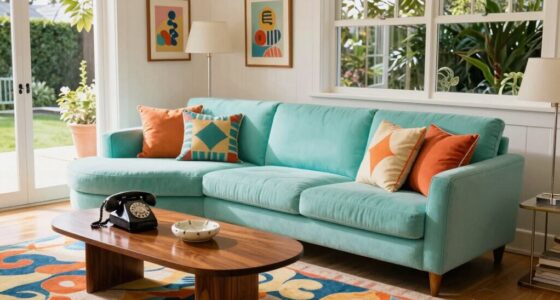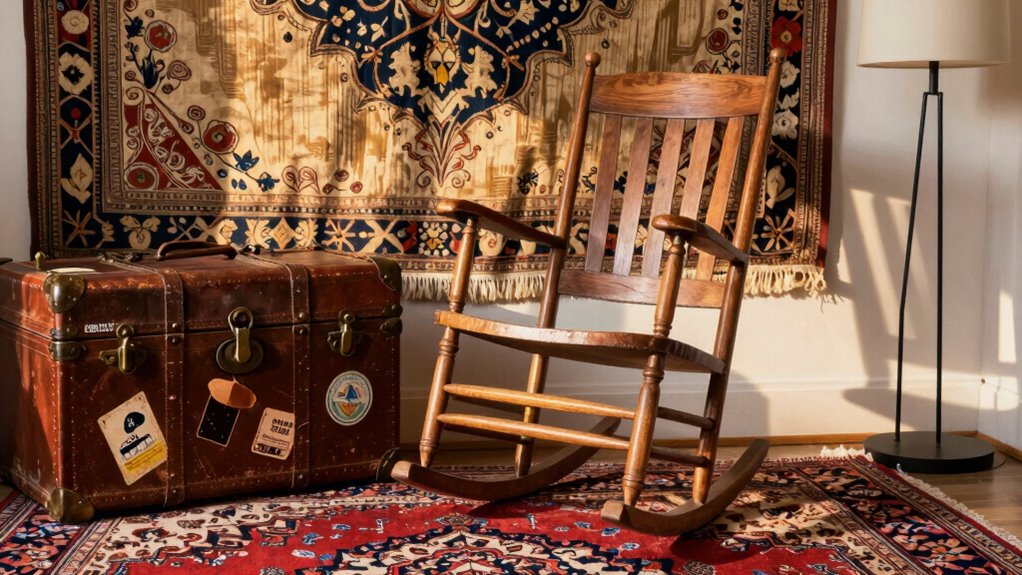

Nostalgia is about evoking feelings from the past, focusing on memories and emotional comfort, like vintage furniture from your childhood. Heritage celebrates cultural roots and traditions, incorporating handcrafted details and meaningful artifacts that honor your lineage. Design taste reflects your personal style and aesthetic preferences, guiding your choices to create spaces that resonate with who you are. Understanding these differences helps you craft a more authentic and intentional environment—continue exploring for deeper insights.

Get furniture and decor delivered free — and shop member deals
- Fast, free delivery on millions of items
- Access to Prime Big Deal Days deals on October 6–7
- Prime Video, Amazon Music and more included
Key Takeaways
- Nostalgia evokes emotional comfort by reconnecting with past eras or personal memories, focusing on feelings and moments.
- Heritage emphasizes cultural significance, tradition, and authenticity through artifacts, patterns, and storytelling.
- Design taste reflects individual personality and preferences, guiding how nostalgic and heritage elements are blended.
- Nostalgia influences vintage revival, while heritage highlights cultural roots; design taste harmonizes both with personal style.
- Understanding these distinctions helps create intentional, meaningful spaces that authentically express personal identity.

Understanding the distinctions between nostalgia, heritage, and design taste can help you make more intentional choices in your personal style and space. When you explore these concepts, you start to see how each influences what you choose to surround yourself with and how you interpret different styles. Nostalgia often drives your desire for a vintage revival, where you seek to recreate or reconnect with the past. It’s an emotional response that brings comfort and familiarity, often inspired by specific eras, trends, or personal memories. This isn’t just about aesthetic; it’s about capturing a feeling or a moment in time. For example, you might pick out vintage furniture or decor from the 60s because it reminds you of a childhood home or a favorite period in history. This vintage revival reflects your yearning to preserve or relive those moments, making your space uniquely yours. Recognizing the difference between these influences can help you curate a space that truly resonates with your personal narrative.
Heritage, on the other hand, taps into cultural significance. It’s about honoring your roots and the traditions that have shaped your identity. When you incorporate elements of heritage into your style, you’re making a conscious decision to celebrate your background or cultural history. It’s not just about aesthetics but about storytelling and meaning. You might choose handcrafted textiles, traditional patterns, or artifacts that carry deep significance within your community or family history. These choices communicate respect and pride for your origins, creating a space that feels authentic and rooted in tradition.
Your overall design taste is a broader reflection of your personality and preferences. It’s shaped by your experiences, exposure, and the way you interpret aesthetics. Whether you lean towards minimalism, bohemian chaos, or modern chic, your design taste guides how you blend nostalgia and heritage into a cohesive style. You may incorporate vintage revival elements to add a touch of playful history or integrate cultural artifacts that express your heritage. The key is that your choices are deliberate, creating a space that resonates with you on many levels. When you understand the differences—how nostalgia fuels your love for the past, how heritage connects you to your roots, and how design taste harmonizes these elements—you gain more confidence in curating a space that truly reflects your identity. Recognizing the design philosophy behind your choices can further deepen your understanding of what makes your style meaningful.
vintage furniture for living room
As an affiliate, we earn on qualifying purchases.
As an affiliate, we earn on qualifying purchases.
Frequently Asked Questions
How Can I Incorporate Nostalgia Into Modern Interior Design?
You can incorporate nostalgia into modern interior design by using vintage motifs that evoke a sense of the past. Mix these elements with contemporary pieces to create a balanced look. Focus on emotional connections by selecting items that remind you of special memories or childhood moments. This blend adds warmth and personality, making your space uniquely yours while capturing a nostalgic vibe that feels both fresh and meaningful.
What Are Common Mistakes When Blending Heritage With Contemporary Styles?
You might accidentally turn your space into a confusing jumble instead of a cohesive masterpiece. To avoid this, don’t overdo the heritage elements, which can drown out the modern vibe. Focus on balancing timeless trends with authentic heritage pieces, ensuring aesthetic authenticity remains intact. Mixing styles requires finesse—highlight key features without overwhelming the senses, creating a harmonious blend that celebrates both history and contemporary flair.
How Do Cultural Influences Shape Design Taste Preferences?
Cultural influences shape your design taste preferences by embedding cultural symbolism and regional aesthetics into your choices. When you embrace cultural symbolism, you connect emotionally and meaningfully with specific motifs or traditions. Regional aesthetics guide your style preferences based on local materials, colors, and architectural features. By appreciating these influences, you create spaces that reflect your identity, honor your heritage, and resonate with your sense of place and cultural values.
Can Personal Memories Influence Perceived Heritage in Design?
Your personal memories act like a mirror, reflecting your cultural identity and shaping how you perceive heritage in design. Memory triggers stir feelings of familiarity, making certain styles feel rooted in your past. This emotional connection influences your taste, blending your unique experiences with broader cultural elements. As a result, your perception of heritage becomes a personal tapestry, woven from memories that add depth and authenticity to your design preferences.
How Do Designers Balance Originality With Nostalgic Elements?
You balance originality with nostalgic elements by embracing innovative reinterpretations that respect vintage revival trends. You blend classic motifs with fresh ideas, creating designs that feel both familiar and new. To do this effectively, you experiment with materials, forms, and techniques, ensuring your work stands out while honoring the past. This approach allows you to evoke nostalgia without sacrificing originality, making your designs resonate deeply with diverse audiences.
handcrafted traditional textiles
As an affiliate, we earn on qualifying purchases.
As an affiliate, we earn on qualifying purchases.
Conclusion
So, next time you chase that nostalgic vibe or proudly showcase your heritage, remember—your “taste” is just a reflection of what you choose to remember or honor. Ironically, in trying to stand out, you might just be blending in with everyone else’s memories. Style is fleeting, but the stories we tell through design reveal more about us than any trend ever could. After all, isn’t the real heritage found in what we choose to keep?
cultural artifacts for home decor
As an affiliate, we earn on qualifying purchases.
As an affiliate, we earn on qualifying purchases.
As an affiliate, we earn on qualifying purchases.
Fall Picks
fall essentials
As an affiliate, we earn on qualifying purchases.