TL;DR

Get furniture and decor delivered free with Prime
- Fast, free delivery on millions of items
- Prime Video, Amazon Music and more included
- Member-only deals all year
Hungarian artist Boldizar Senteski has presented the Erosion Collection, a group of three handmade mirrors shaped through oxidation, corrosion and layered processes. The signed works are made in Hungary and available exclusively through StudioTwentySeven in New York, with prices provided on request.
Hungarian artist Boldizar Senteski has presented the Erosion Collection, a triptych of handmade mirrors shaped by oxidation, corrosion and repeated layering. The three signed works, made in Hungary, are available exclusively through StudioTwentySeven in New York City, with pricing available on request, according to Design Milk.
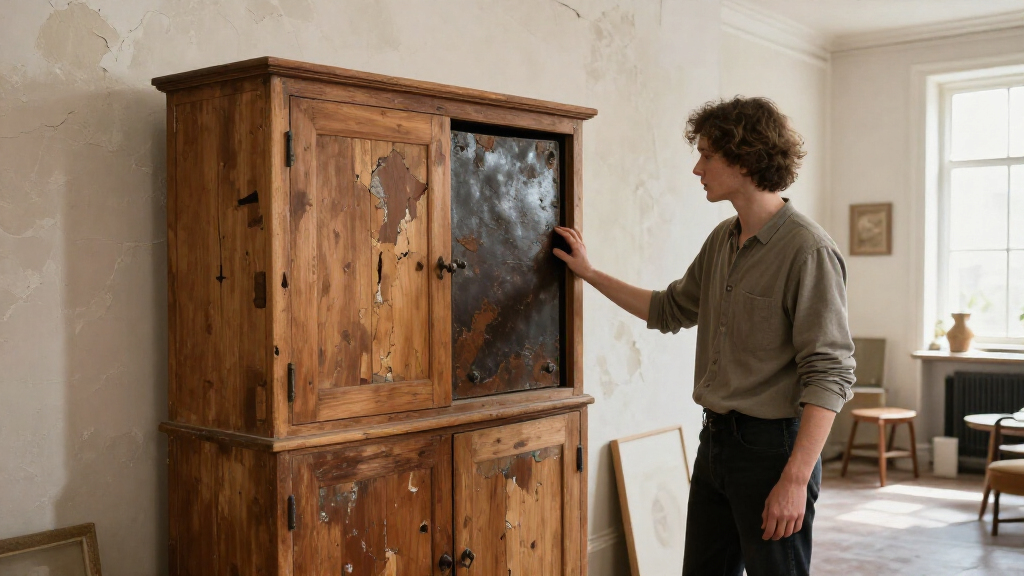
The collection uses highly polished stainless-steel frames around surfaces transformed through processes including oxidation and silvering. Design Milk reports that Senteski sets the conditions for the materials to change, while allowing those processes to help determine each mirror’s final appearance. The surfaces are intended to register change rather than present a uniform finish.
Senteski links the work to his interest in urban environments and the traces left by time. The collection draws on references including Brutalist forms, architecture, raw concrete and weathered materials. The artist describes the mirrors as functional objects that also occupy a space between design and sculpture.
Each mirror is a unique, signed work and comes with a certificate of authenticity. The source report identifies StudioTwentySeven as the collection’s exclusive point of sale but gives no prices, dimensions or information about the number of pieces beyond the three in the triptych.
Mirrors Made Through Material Change
The collection places attention on how an everyday object can also record its own making. Rather than treating a mirror only as a surface for reflection, Senteski presents it as an object marked by process: oxidation, corrosion and layering leave visible differences across the finished works.
That approach matters to design audiences because it connects function with material expression. The mirrors remain usable objects, while their varied surfaces and polished frames invite viewers to read them as sculptural works. The artist’s account emphasizes that the final appearance is not fully predetermined, making variation part of the collection’s stated concept.
For prospective buyers, the practical details are limited but clear: the works are handmade in Hungary, individually signed and sold through one New York gallery. With prices available only on request, readers cannot compare costs or assess availability from the published information alone.
As an affiliate, we earn on qualifying purchases.
Senteski’s Urban Material References
Design Milk frames the collection within Senteski’s continuing interest in the boundary between art and design. The report connects that interest to the urban environment, where buildings and materials carry marks of use and change. Brutalist forms, raw concrete and weathered surfaces are among the references named for the mirrors.
The making process is described as a balance of intention and uncertainty. Senteski establishes conditions for the surface treatments, then gives the materials a role in shaping the result. The report does not provide technical specifications for the treatment methods or a detailed production timeline, so the process is presented through the artist’s description rather than a step-by-step account.
The works are handcrafted in Hungary and offered exclusively at StudioTwentySeven. Design Milk’s report includes photography by Panna Donka and identifies the collection as a triptych, but does not state when the mirrors first became available.
“I’ve always been drawn to the urban environment; the way it carries the marks of time and holds a record of its own transformation.”
— Boldizar Senteski, quoted by Design Milk
As an affiliate, we earn on qualifying purchases.
Prices and Availability Not Specified
The source report does not provide prices, dimensions or current inventory, and it does not say whether all three mirrors are available at the same time. StudioTwentySeven is listed as the exclusive seller, with pricing available on request.
The report also gives no launch date, production schedule or technical breakdown of the surface treatments. Senteski’s statements describe his artistic intentions and process; the source does not independently document how each treatment is applied or how the mirrors perform over time.
As an affiliate, we earn on qualifying purchases.
Inquiries Go Through StudioTwentySeven
Readers seeking purchase details will need to contact StudioTwentySeven, the collection’s exclusive seller, for pricing and availability. The source does not announce an upcoming exhibition, additional release or other scheduled milestone for the Erosion Collection.
Any further information about the works’ dimensions, materials specifications, care requirements or availability would need to come from the gallery or Senteski. No additional collection developments are confirmed in the report.
As an affiliate, we earn on qualifying purchases.
Key Questions
What is the Erosion Collection?
It is a triptych of handmade mirrors by Hungarian artist Boldizar Senteski. Their surfaces are shaped through processes including oxidation, corrosion and repeated layering.
Where are the mirrors available?
Design Milk reports that the collection is available exclusively through StudioTwentySeven in New York City. The gallery is the stated point of contact for purchase inquiries.
How much do the mirrors cost?
The source does not list prices. It says pricing is available upon request through StudioTwentySeven.
Are the three mirrors identical?
No. Senteski describes each as a unique, signed work with traces that cannot be replicated. The source does not give individual dimensions or other piece-by-piece specifications.
How are the mirrors made?
The report says Senteski establishes conditions for oxidation, silvering and repeated layering, then allows the materials to influence the final result. It does not provide a detailed technical account of the methods.
Source: rss
Fall Picks
fall essentials
As an affiliate, we earn on qualifying purchases.