TL;DR

Get furniture and decor delivered free with Prime
- Fast, free delivery on millions of items
- Prime Video, Amazon Music and more included
- Member-only deals all year
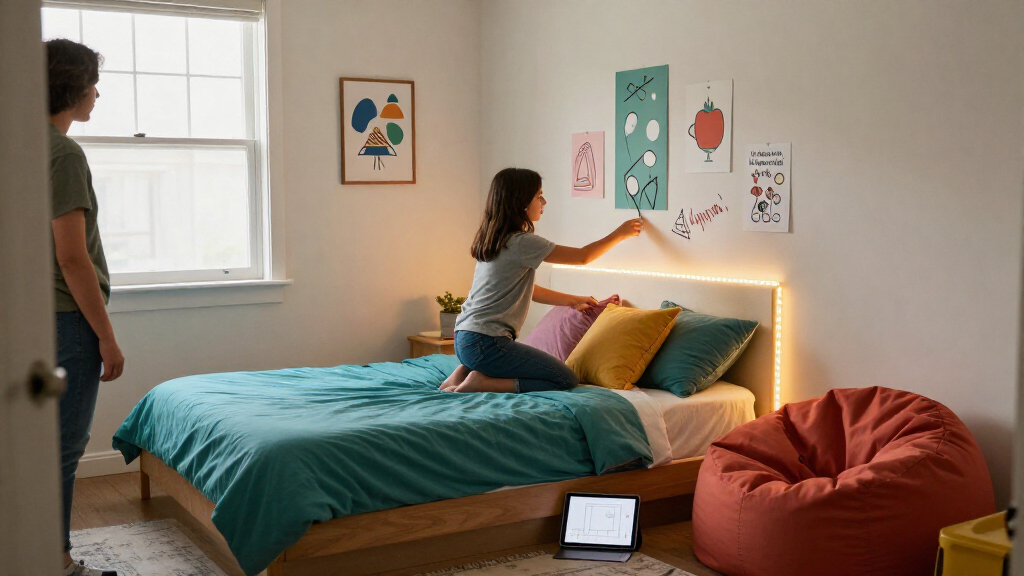
House Beautiful published a report in which Soumi Sarkar asked an 11-year-old to assess room furnishings and decor. The child’s comments favored comfortable shapes, adaptable colors, useful storage and smaller decorative accents, but the report does not establish that these preferences represent Gen Alpha as a whole.
House Beautiful has published a room-design report built around an 11-year-old’s reactions to furnishings and accessories, offering a child’s perspective on what might make a bedroom appealing to younger residents. The comments favor comfort, flexible styling and practical storage, but they reflect one child’s opinions, not a survey of Gen Alpha.
In the report, Soumi Sarkar presents design options to the child and records their responses to items including rugs, a nightstand, a chair, lighting, seating and storage. The child says a desirable seat should be “round and plump” and comfortable without looking like a cartoon or marshmallow. That distinction suggests a preference for playful shapes that still feel suited to a real room.
The child also favors smaller rugs as a way to add a distinct accent without covering the floor in one pattern. On a nightstand, ample surface space matters because the child says they keep many things on it; they prefer a white finish for a cleaner appearance. A blue-and-white floral design is judged attractive, but the child suggests it might work better on a desk chair than on a bed.
Several comments connect appearance with use. The child likes a pink jewelry organizer with dot details, a shoe-storage piece that could also hold towels or school supplies, and a pen holder that works as decor as well as storage. They also respond positively to color-changing wall lighting and a cream-colored item that could fit different room styles. The report gives no product-performance testing or broader preference data.
A Child’s Priorities for Bedroom Design
The report is a small example of how a young resident may judge a room differently from an adult choosing decor alone. The child’s remarks repeatedly weigh how an item looks against what it does: storage should be accessible and attractive, furniture should have useful surface area, and decorative pieces should not dominate the room.
For parents, designers and retailers, those observations can inform conversations about shared bedroom decisions. They may prompt adults to ask children about comfort, color and everyday routines rather than assume that a single trend will appeal to every young person. Still, one interview cannot establish a generation-wide design preference, and the article does not report how the child was selected or whether other children took part.
round upholstered accent chair for kids bedroom
As an affiliate, we earn on qualifying purchases.
As an affiliate, we earn on qualifying purchases.
How the Design Reactions Were Gathered
The source is a House Beautiful article titled “I Asked an 11-Year-Old How to Design a Room Gen Alpha Won’t Hate.” Its format is a series of first-person reactions to design choices, rather than a statistical study or a report on a new product launch. The supplied source material identifies Soumi Sarkar as the reporter and gives the child’s age as 11.
The comments cover several everyday bedroom decisions: floor coverings, bedside furniture, seating, lighting, bookshelves and organizers. That range makes the article useful as a snapshot of one child’s criteria, including comfort, visual appeal and versatility. The source material does not provide the child’s name, location, household context, or details about the specific products beyond the descriptions in the comments.
““The shape should be round and plump. It doesn’t look too much like a marshmallow. I want it to look comfy, but not like a cartoon.””
— The 11-year-old, as quoted in House Beautiful
white nightstand with large tabletop and drawers
As an affiliate, we earn on qualifying purchases.
As an affiliate, we earn on qualifying purchases.
What One Interview Cannot Establish
The report does not show whether the child’s views are shared by other 11-year-olds or by Gen Alpha more broadly. It provides no sample size beyond the featured child, survey method, demographic breakdown or comparison with other age groups. The title’s generational framing should therefore be read as a premise for the article, not as a finding about an entire generation.
The supplied material also leaves details about the design exercise unclear, including how many options were shown, whether the child saw physical products or images, and how the products were chosen. It does not identify a publication date or report follow-up comments from parents, designers or additional children.
color changing LED wall lights for bedroom
As an affiliate, we earn on qualifying purchases.
As an affiliate, we earn on qualifying purchases.
Further Evidence Would Broaden the Picture
House Beautiful’s supplied report does not announce a follow-up study or a next publication date. Any broader conclusion about youth bedroom preferences would require additional reporting, such as interviews with children from different backgrounds or a clearly described survey. For now, the article offers one child’s practical design opinions, which readers can use as prompts for discussion rather than a universal guide.
For families applying the ideas, the clearest next step is to ask the young person who uses the room what matters to them: how they use storage, what feels comfortable, and which colors or patterns they enjoy. The report does not establish that any single product or style will suit every child.
decorative shoe storage organizer for bedroom
As an affiliate, we earn on qualifying purchases.
As an affiliate, we earn on qualifying purchases.
Key Questions
What is the House Beautiful report about?
It records an 11-year-old’s reactions to bedroom furnishings and accessories, including rugs, a nightstand, lighting and storage.
What room-design features did the child like?
The child praised comfortable shapes, useful surfaces, flexible colors and storage that can serve more than one purpose. Their views are personal preferences, not findings from a larger study.
Does the report show what all Gen Alpha children want?
No. The supplied report centers on one child and gives no survey results or evidence that the comments represent Gen Alpha as a whole.
Who wrote the report?
The source identifies Soumi Sarkar as the reporter for House Beautiful.
Source: rss
Halloween Picks
halloween
As an affiliate, we earn on qualifying purchases.