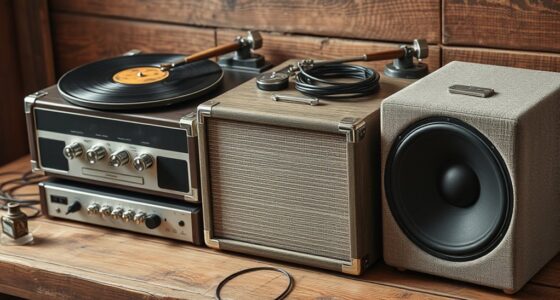
Home audio has transformed from the crackling sounds of phonographs to today’s digital streaming and high-resolution formats like FLAC. Vinyl records offered warm, nostalgic sound, while tapes and CDs provided portability and convenience. Modern systems blend analog and digital tech, focusing on sound quality and seamless connectivity. The evolution continues as smart speakers and lossless formats reshape our listening experience. Keep exploring to discover how these innovations have shaped your home audio journey.

Get furniture and decor delivered free with Prime
- Fast, free delivery on millions of items
- Prime Video, Amazon Music and more included
- Member-only deals all year
Key Takeaways
- Home audio evolved from early phonographs and records to digital formats like FLAC for high-fidelity sound.
- Vinyl records experienced a revival driven by nostalgia and appreciation for warm analog audio.
- Digital streaming services transformed music access, replacing physical media with instant, cloud-based playback.
- Advances in home audio technology now blend digital convenience with high-quality analog components.
- The transition reflects a cultural shift from traditional formats to modern, versatile listening experiences.

Have you ever wondered how home audio systems have evolved over the years? It’s a fascinating journey that reflects technological advances and changing consumer preferences. In recent years, you’ve probably noticed a vinyl resurgence, where many people are rediscovering the warm sound of records despite the dominance of digital streaming. This revival isn’t just about nostalgia; it’s about experiencing music differently, appreciating the tangible aspect of vinyl, and enjoying its unique sound quality. Back in the day, records ruled the scene, and turntables were a staple in most households. As technology progressed, tapes and CDs took over, offering more convenience and portability. But now, vinyl is making a comeback, blending the old with the new, and inspiring a renewed appreciation for analog sound. Meanwhile, digital streaming has revolutionized how you access music, making millions of tracks available instantly at your fingertips. Instead of flipping through vinyl or cassette collections, you can simply search for your favorite song and listen immediately. This convenience has transformed the way you consume music, making it more accessible than ever before.
As home audio systems evolved, manufacturers began focusing on delivering high-quality sound that could compete with the clarity of digital streaming. You’ve seen the rise of sophisticated speakers, soundbars, and multi-room systems that seamlessly connect to your devices. These advancements allow you to create immersive listening environments, whether you prefer streaming playlists or enjoying vinyl in a dedicated listening space. The progression from analog to digital formats also brought a shift in how you manage your music library. Digital files, like FLAC, offer lossless quality that preserves the original sound, satisfying audiophiles who seek pristine audio. You can now enjoy your music collection stored on local drives or cloud services, ensuring convenience without sacrificing quality. However, the vinyl resurgence reminds you that not everyone is content with purely digital sound. Many still value the tactile experience of handling records, the ritual of placing a needle, and the warm, rich tones that vinyl provides. This blending of old and new influences how home audio systems are designed today, often incorporating both digital streaming capabilities and analog components.
Frequently Asked Questions
How Did Wireless Audio Technology Develop Over Time?
Wireless audio technology evolved through various wireless standards, improving signal transmission and quality. You saw this progress with the advent of Bluetooth, which enabled short-range, reliable connections for personal devices. Later, Wi-Fi standards allowed for high-fidelity streaming over longer distances. Over time, advancements in signal transmission reduced interference and latency, making wireless audio more seamless and convenient for everyday use, greatly enhancing your listening experience.
What Are the Differences Between Analog and Digital Audio Formats?
Think of analog as a warm, textured painting capturing every brushstroke, while digital is a sharp, precise photograph. Analog audio, like vinyl, offers a rich warmth that many cherish, especially during the vinyl resurgence. Digital formats, including FLAC, provide cleaner, more accurate sound with easy storage and copying. You experience the nostalgia of analog warmth or the clarity of digital, choosing what best resonates with your listening soul.
How Has Home Audio Equipment Evolved in Design and Usability?
You’ll notice that home audio equipment has evolved markedly in design and usability, combining vintage speakers with modern acoustic engineering. Today, sleek, compact devices offer user-friendly interfaces, wireless connectivity, and smart features, making setup effortless. Vintage speakers still impress with their craftsmanship, while advancements in acoustic engineering enhance sound quality. This transformation makes enjoying high-quality audio more accessible and enjoyable, blending classic aesthetics with cutting-edge technology for a seamless experience.
What Role Did Major Brands Play in Shaping Home Audio History?
Major brands like Sony, Bose, and Yamaha played a pivotal role in shaping home audio history through their brand influence and innovations. They pushed market competition by constantly improving sound quality, design, and usability, making advanced audio equipment accessible to consumers. Your experience with home audio benefits from their efforts, as these brands drove technological advances, setting industry standards and expanding options, ensuring you enjoy better sound quality and user-friendly features in your home entertainment system.
How Will Future Advancements Impact Home Audio Experiences?
Future advancements will transform your home audio experience by integrating smart speakers seamlessly into your environment. You’ll enjoy more immersive soundscapes that adapt to your preferences, creating a personalized atmosphere. As technology evolves, expect smarter, more intuitive systems that respond instantly to your commands and elevate your listening pleasure. These innovations will make your home audio setup more immersive, convenient, and tailored to your lifestyle.
Conclusion
You might wonder if the future of home audio will stick with high-resolution formats like FLAC or if new technology will revolutionize how we experience sound. Some believe that as streaming evolves, lossless quality will become the standard, transforming your listening experience forever. While history shows constant innovation, one thing’s certain: your love for music keeps pushing technology forward. So, stay tuned—your perfect sound might be just around the corner.
Halloween Picks
halloween
As an affiliate, we earn on qualifying purchases.