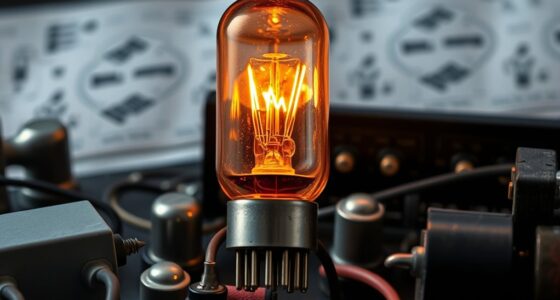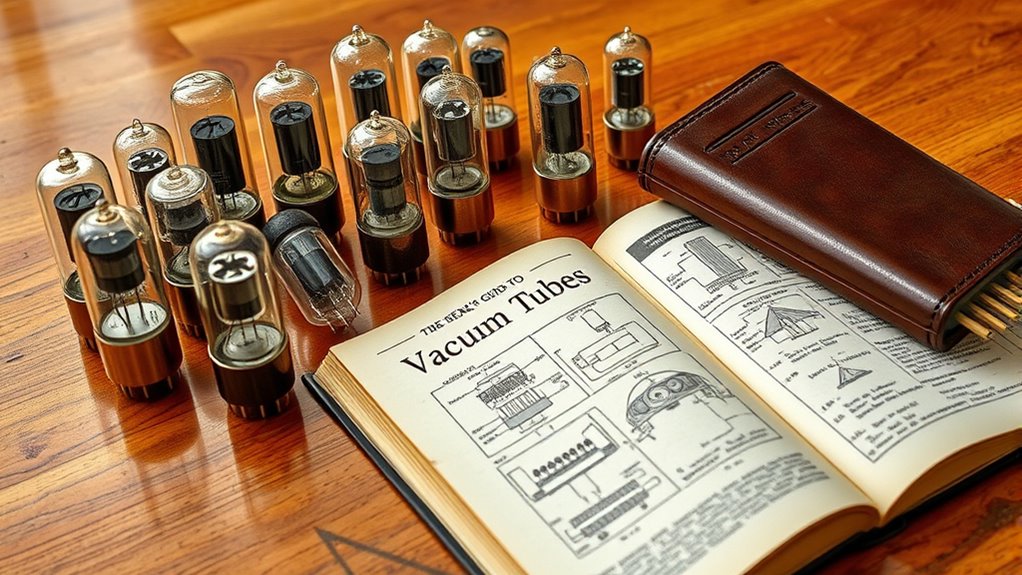

If you want to understand vacuum tubes, start with their main types: preamp tubes like 12AX7, power tubes such as EL34, and rectifiers like 5U4, each shaping sound and performance differently. They’re used in audio amplification, radio, and vintage electronics, and collecting them involves hunting for rare or NOS tubes. Knowing their history and functions helps improve your gear and appreciation. Keep exploring, and you’ll uncover even more about their fascinating world.

Get furniture and decor delivered free with Prime
- Fast, free delivery on millions of items
- Prime Video, Amazon Music and more included
- Member-only deals all year
Key Takeaways
- Different vacuum tube types (preamp, power, rectifier) serve specific roles in audio and electronics, influencing tone and performance.
- Vintage and NOS tubes are highly valued by collectors for historical significance and unique sound qualities.
- Knowledge of tube characteristics helps optimize amplifier design, ensuring desired sound signature and durability.
- Vacuum tubes revolutionized early electronics and remain essential in high-quality audio, with modern applications maintaining their relevance.
- Proper collection and maintenance require understanding tube history, types, and testing methods to preserve their value and function.

Vacuum tubes might seem like relics of the past, but they remain essential in certain audio and electronic applications today. Understanding their roots begins with a bit of vacuum tube history. These devices emerged in the early 20th century, revolutionizing electronics by enabling amplification, switching, and signal processing. Their development marked a significant leap from mechanical relays and early semiconductor devices. Over the decades, vacuum tubes became the backbone of radio, television, and early computers. Despite the rise of solid-state technology, vacuum tubes never disappeared entirely. Instead, they found a niche among audiophiles and audio engineers who prize their unique sound characteristics. When it comes to tube amplifier design, this history plays a key role. Many modern audiophile amplifiers are built with vacuum tubes precisely because of their warm, rich tonal qualities. They tend to produce a smoother distortion and a more natural sound, which is hard to replicate with transistors. That’s why tube amplifier design focuses on maximizing these qualities—using specific tube types, circuit configurations, and power supplies to craft an audio experience that’s both powerful and musical.
As you explore the world of vacuum tubes, you’ll notice there are many different types, each suited for particular roles. The most common are the preamp tubes, like the 12AX7, which shape and amplify the signal before it hits the power stage. Power tubes, such as EL34 or 6L6, handle the high-power output that drives speakers. Rectifier tubes, like the 5U4, convert AC power into usable DC, ensuring the amplifier runs smoothly. Each type has unique characteristics that influence tone and performance. Additionally, advancements in vacuum tube technology continue to influence modern designs, ensuring their relevance in both vintage and contemporary audio applications. When designing or upgrading a tube amplifier, selecting the right combination of these tubes is essential, as it directly impacts the sound signature and durability of your gear.
Collecting vacuum tubes is another fascinating aspect of this hobby. You’ll find a broad spectrum of vintage tubes from different eras and manufacturers, each with its own history and character. Some collectors focus on rare or original tubes, valuing their historical significance and unique sound qualities. Others seek out NOS (new old stock) tubes, which are unused but centuries-old. Maintaining and testing these tubes requires knowledge and care, especially since many vintage types are no longer in production. Whether you’re after the sonic qualities, historical value, or just the thrill of the hunt, collecting vacuum tubes offers a tangible connection to the roots of electronic innovation. In summary, understanding vacuum tube history and mastering tube amplifier design empowers you to appreciate and utilize these timeless devices fully.
As an affiliate, we earn on qualifying purchases.
Frequently Asked Questions
How Do Vacuum Tubes Differ From Modern Solid-State Devices?
Vacuum tubes differ from modern transistors by using glass enclosures and electron flow to amplify signals, giving tubes versus transistors a unique analog warmth. You’ll notice that tubes produce a richer, more musical sound, especially in audio applications. While transistors are smaller and more efficient, tubes are favored for their distinctive tonal character and vintage appeal. If you value sound quality, you’ll appreciate how vacuum tubes deliver a warm, nostalgic feel.
What Are the Signs of a Failing Vacuum Tube?
Imagine your vintage gear whispering its last song—failing indicators signal trouble. You’ll notice performance decline, like muffled sound or crackling, and increased noise. The tube may glow dimly or not at all, and it might become unusually hot. These signs point to a failing vacuum tube, so don’t dismiss them. Replacing it restores clarity and ensures your equipment continues to perform at its best.
Can Vacuum Tubes Be Repaired or Refurbished?
Yes, vacuum tubes can be repaired or refurbished. You can try tube restoration by cleaning the pins and resealing the glass if needed. Refurbishment techniques include replacing internal components like filaments or getter materials, and rebiasing the tube for ideal performance. Keep in mind, some damaged tubes may be beyond repair, but careful refurbishment can often extend their lifespan and restore sound quality or functionality.
How Do Vacuum Tubes Affect Audio Sound Quality?
Vacuum tubes transform your audio experience into pure sonic bliss, dramatically influencing sound quality. They enhance timbre and add harmonic distortion that creates a warm, rich tone unlike any solid-state device. You’ll notice a smoother, more natural sound with greater depth and clarity. This harmonic distortion subtly enriches your music, making every note feel alive and vibrant—like hearing your favorite tracks for the first time all over again.
Are Vintage Vacuum Tubes Safe to Handle and Use?
Vintage vacuum tubes are generally safe to handle if you observe proper handling precautions. Since tube longevity varies, avoid touching the glass directly with your bare hands to prevent oils from damaging the surface. Always unplug equipment before handling the tubes, and let them cool down if recently used. Use gloves or a cloth for extra safety, and store tubes properly to maintain their safety and longevity.
As an affiliate, we earn on qualifying purchases.
Conclusion
Now that you understand the different types and uses of vacuum tubes, you’re ready to explore this fascinating world. Whether you’re collecting vintage pieces or experimenting with audio gear, these tubes offer unique warmth and character. Imagine the rich sound waves filling your space—can you see how each tube plays a crucial role? Embrace your curiosity, and let your passion for vacuum tubes inspire your next project or collection. The possibilities are truly exciting.
As an affiliate, we earn on qualifying purchases.
As an affiliate, we earn on qualifying purchases.
Halloween Picks
halloween
As an affiliate, we earn on qualifying purchases.