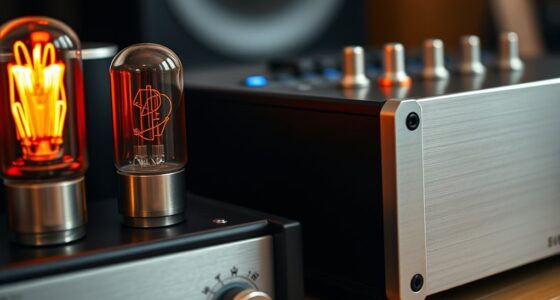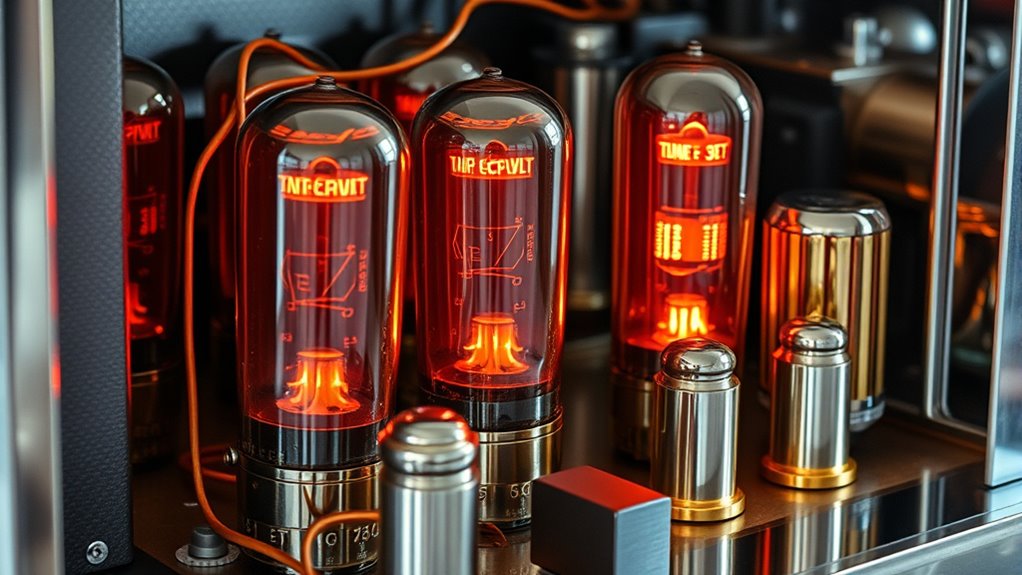

Inside a vintage tube amp, you’ll find vacuum tubes that amplify the sound and add warmth through harmonic distortion, glowing when active. You’ll also see resistors, capacitors, and transformers that shape the signal flow, with transformers matching impedance for efficient power transfer. The signal passes through several stages, each influencing tone and sustain. If you keep exploring, you’ll discover how these components work together to create that rich, dynamic sound you love.
Listen free for 30 days with Audible
Thousands of audiobooks and originals — cancel anytime.
As an affiliate, we earn on qualifying purchases.
Key Takeaways
- Vacuum tubes amplify audio signals and add harmonic warmth, indicated by their glowing filaments when active.
- Internal components like resistors, capacitors, and transformers shape signal flow and maintain tonal fidelity.
- Signal passes through preamp and power amp stages, with transformers matching impedance for efficient power transfer.
- Design choices and component quality influence the amp’s response, sustain, and vintage tonal character.
- Visual indicators such as tube glow reveal operational status and contribute to the amp’s iconic aesthetic.

If you’ve ever wondered what makes a tube amp produce its warm, rich sound, understanding its internal components is vital. At the heart of the amp are vacuum tubes, which act as the primary active devices that shape the tone. These glass cylinders contain heated filaments that emit electrons, allowing the vacuum tubes to amplify audio signals. Unlike solid-state components, vacuum tubes add a unique harmonic distortion that contributes to the amp’s characteristic warmth and smoothness. They’re responsible for the gentle compression and natural overdrive that vintage audio enthusiasts cherish. When you turn on a tube amp, the vacuum tubes heat up, and their glow becomes a visual indicator of operation, signaling that the amplifier circuitry is actively working to produce sound. Additionally, the color temperature of the tubes influences the overall tonal balance and ambiance of the sound.
The amplifier circuitry inside a tube amp is a carefully designed network of components that work together to process and boost audio signals. This circuitry includes resistors, capacitors, and transformers, all arranged to optimize the flow of current through the vacuum tubes. The signal enters the preamp stage, where small voltages are amplified via the vacuum tubes, adding coloration and character to the tone. From there, the signal moves into the power amp section, where the vacuum tubes further amplify the signal to drive the speakers. The transformers play a vital role here, matching impedance levels to guarantee efficient power transfer and maintaining tonal fidelity. Every connection, component, and layout is purposefully designed to preserve the warmth and dynamic range that define vintage tube amplification.
The design of the amplifier circuitry directly influences the sound quality, response, and overall character of the amp. For instance, the choice of tube types, the circuit topology, and component quality all impact how the amp handles transients and sustains notes. The interaction between vacuum tubes and circuitry adds a musicality that’s hard to replicate with modern solid-state technology. When you operate a tube amp, you’re engaging with a complex yet elegant system where each component contributes to the distinctive sonic signature. This combination of vacuum tubes and carefully crafted circuitry creates the lush, dynamic sound that makes vintage tube amps so desirable among musicians and audiophiles alike. Understanding these internal parts gives you insight into why these amplifiers have stood the test of time and continue to influence modern audio design.
vintage tube amplifier vacuum tubes
As an affiliate, we earn on qualifying purchases.
As an affiliate, we earn on qualifying purchases.
Frequently Asked Questions
How Do Tube Amps Differ From Solid-State Amplifiers?
Tube amps differ from solid-state amplifiers because they use vacuum tubes instead of transistors, giving you a warmer, more organic sound. Transistor comparison shows solid-state amps are more durable and efficient, but often lack the natural distortion tube amps provide. Plus, tube amps typically avoid digital integration, making them preferred for classic tones, while solid-state amps easily incorporate digital features for versatile sound options.
What Maintenance Is Required for Vintage Tube Amplifiers?
To keep your vintage tube amp in top shape, regularly check for tube socket corrosion and clean the sockets gently. You should also monitor the power supply aging, replacing capacitors and resistors as needed to prevent sound issues. Periodic bias adjustments ensure tubes operate correctly, and keeping the amp in a dry, cool environment helps prevent corrosion and extends its lifespan. Regular maintenance preserves your amp’s tone and performance.
Can Tube Amps Be Repaired or Refurbished Easily?
You can definitely repair or refurbish tube amps, but it’s not always a walk in the park. With some patience, you can handle tube replacement and circuit restoration yourself, but complex issues might require a professional. Think of it like fixing a vintage watch — delicate work, but rewarding. Proper maintenance, replacement of worn tubes, and circuit checks keep your amp singing, extending its life and ensuring great sound.
How Does Tube Age Affect Sound Quality?
As your tube ages, you’ll notice tube degradation, which often causes sound deterioration. Over time, worn-out tubes can reduce clarity, introduce noise, or alter the amp’s tonal characteristics. This happens because the tubes can’t amplify or process signals as effectively, impacting your sound quality. Regularly replacing old tubes guarantees your vintage amplifier maintains its rich, warm tone and peak performance, preventing significant sound issues caused by aging components.
What Are Common Issues Found in Vintage Tube Amplifiers?
You might notice tube noise or capacitor failure, common issues in vintage tube amplifiers. While these amps deliver warm, rich sound, aging components can cause crackling, humming, or loss of clarity. These problems often stem from deteriorated tubes or failing capacitors. Regular maintenance and replacing worn parts can restore your amp’s performance, ensuring you enjoy that classic vintage tone without unwanted noise or interruptions.
audio signal transformers for tube amps
As an affiliate, we earn on qualifying purchases.
As an affiliate, we earn on qualifying purchases.
Conclusion
As you explore the inside of a vintage tube amp, you can almost hear the warm glow of the tubes and feel the gentle hum of electricity working in harmony. Each component, from the transformers to the capacitors, plays a essential role in shaping your sound. Think of it as a lively orchestra, where every part contributes to a rich, soulful tone. Embrace this intricate dance, and let the magic of vintage amplification inspire your music.
As an affiliate, we earn on qualifying purchases.
tube amp resistors and capacitors
As an affiliate, we earn on qualifying purchases.
As an affiliate, we earn on qualifying purchases.
Flea & tick season Picks
flea and tick prevention
As an affiliate, we earn on qualifying purchases.