TL;DR

Get furniture and decor delivered free with Prime
- Fast, free delivery on millions of items
- Prime Video, Amazon Music and more included
- Member-only deals all year
A Hunker report describes a DIY bird feeder made from a repurposed glass jar, a wooden spoon, wire and jute. The spoon serves as a perch, while the jar holds seed; the guide also advises regular cleaning and careful placement near windows.
Hunker has outlined a DIY bird feeder made from a repurposed glass jar and a wooden spoon, offering a way to reuse household items while setting out birdseed. In the design, the spoon is fixed lengthwise to the jar and serves as a perch, while wire forms a hanger for suspending the feeder.
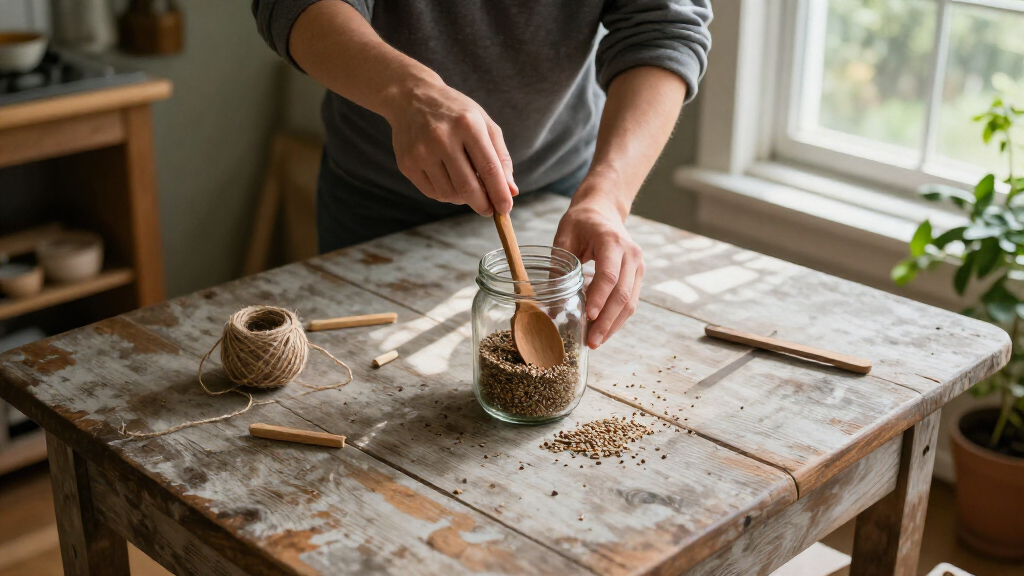
The project can use a Mason jar or another glass food jar, along with a wooden spoon, jute, garden wire, bendable aluminum wire and two decorative wooden beads. The instructions also list a glue gun, scissors, paint brushes and paint suitable for glass. Birdseed is added after the feeder is assembled.
To make the feeder, the report says to glue the spoon along the jar so its bowl extends near the opening. Garden wire wrapped around the jar helps hold the spoon in place. The maker can then cover or decorate that wire with jute, paint the glass, and attach aluminum wire and beads to create a handle. The report attributes an example of the design to Anna King of makinghomematters.
Hunker advises letting the paint and glue dry before filling and hanging the feeder. It says the feeder should be cleaned regularly, particularly in colder weather when more birds may visit. The guide also recommends placing it either within three feet of a window or 30 feet away, and keeping native plants and, if possible, trees nearby for cover.
A Reusable Feeder for Small Spaces
The design offers a low-material way to put a glass jar and spoon to another use, while providing a spot for seed and a perch. Hunker describes it as suitable for compact outdoor areas and says the jar can be accessed for cleaning. That maintenance matters: a feeder left outdoors needs regular attention, and the source specifically flags cleaning as a recurring task rather than a one-time step.
The placement advice also gives the project practical considerations beyond appearance. A feeder can bring birds close to a home, but the guide says to position it either close to windows or farther away, rather than at an intermediate distance. Nearby plants or trees can offer cover. The report presents these recommendations as guidance for the project; it does not provide independent testing or research on the feeder’s performance.
Products Worth Considering

Bose SoundLink Flex (2nd Gen) Portable Bluetooth Speaker

Levoit Vital 100S-P Air Purifier with Washable Pre-Filter

Dyson Airwrap i.d. Multi-Styler for Straight and Wavy Hair
As an affiliate, we earn on qualifying purchases.
How the Jar-and-Spoon Design Works
The project adapts a simple container into a feeder by attaching a spoon to its side. The jar stores the seed, and the exposed spoon bowl provides a place for a bird to perch while feeding. Wire and jute secure and decorate the assembly, while a separate wire handle allows it to hang from a hook.
Hunker’s instructions leave room for personal choices, including the jar, paint color and decorative details. The report suggests colorful paint as a possible way to encourage birds to return, but does not cite evidence or specify that a particular color will attract them. Its central steps are the spoon attachment, wire support, hanging handle and regular cleaning.
“the bowl of the spoon jutting out from the open end of the glass jar”
— Hunker report
Details the Guide Does Not Specify
The report does not give measurements for the jar, spoon, wire or spacing, or explain how much seed the feeder holds. It also does not specify a weight limit, a tested fastening method, or how the materials hold up to weather over time. The source recommends glue and wire but does not report trials of the finished design.
It is also unclear which seed types are best for the intended local birds; the guide says to use seed of choice without identifying species or regional needs. Its suggestion that colorful paint may encourage repeat visits is presented as a consideration, not as a demonstrated result. Readers should check that the finished feeder is stable and cleanable before filling it.
Assembly, Placement and Upkeep
The next steps for anyone following the guide are to assemble the jar-and-spoon structure, allow the paint and adhesive to dry, add seed and hang the feeder in a suitable location. Hunker recommends keeping it at one of the stated distances from a window and placing it near native plants or trees where possible.
After hanging it, the ongoing task is to inspect and clean the feeder regularly, with particular attention during colder periods when visits may increase. The report does not set a cleaning schedule or provide follow-up data on how many birds the design attracts, so frequency and results are not specified.
Key Questions
What materials does the bird feeder require?
The Hunker guide lists a glass jar, wooden spoon, garden wire, jute, bendable aluminum wire and two wooden beads. It also calls for a glue gun, scissors, paint brushes, glass-suitable paint and birdseed.
How does the wooden spoon work?
The spoon is attached lengthwise to the jar, with its bowl extending near the opening. That bowl acts as a perch beside the seed.
Where should the feeder be placed?
The report advises hanging it either within three feet of a window or 30 feet away. It also recommends nearby native plants and, if available, trees that can provide cover.
Does the feeder need regular cleaning?
Yes. Hunker says the feeder should be cleaned regularly, particularly when colder weather brings more birds to it. The report does not prescribe a specific cleaning interval.
Does the guide prove that colorful paint attracts more birds?
No. The report suggests colorful paint as an option that may encourage birds to return, but it does not cite testing or evidence showing that a particular color attracts more birds.
Source: hunker.com