Neon lights glow because electric currents excite neon gas atoms inside glass tubes, causing them to emit their characteristic reddish-orange light. This process turns scientific principles into vibrant signs that catch your eye and became symbols of urban nightlife and nostalgia. The craftsmanship of shaping and sealing these glass tubes, combined with their durability, helped neon signs become timeless icons. If you keep exploring, you’ll discover even more about how science and art created these mesmerizing symbols.

Get furniture and decor delivered free with Prime
- Fast, free delivery on millions of items
- Prime Video, Amazon Music and more included
- Member-only deals all year
Key Takeaways
- Neon lights produce their signature glow through gas excitation, emitting reddish-orange light when energized by an electric current.
- Skilled craftsmanship involves shaping and sealing glass tubes filled with neon gas, ensuring durability and vibrant illumination.
- The unique combination of science and artistry transformed neon signs into eye-catching symbols of advertising and nightlife.
- Their lasting appeal as retro icons stems from their distinctive glow, cultural significance, and nostalgic association with mid-20th-century design.
- Advances in manufacturing and design helped neon signs become enduring symbols of urban identity and visual culture.
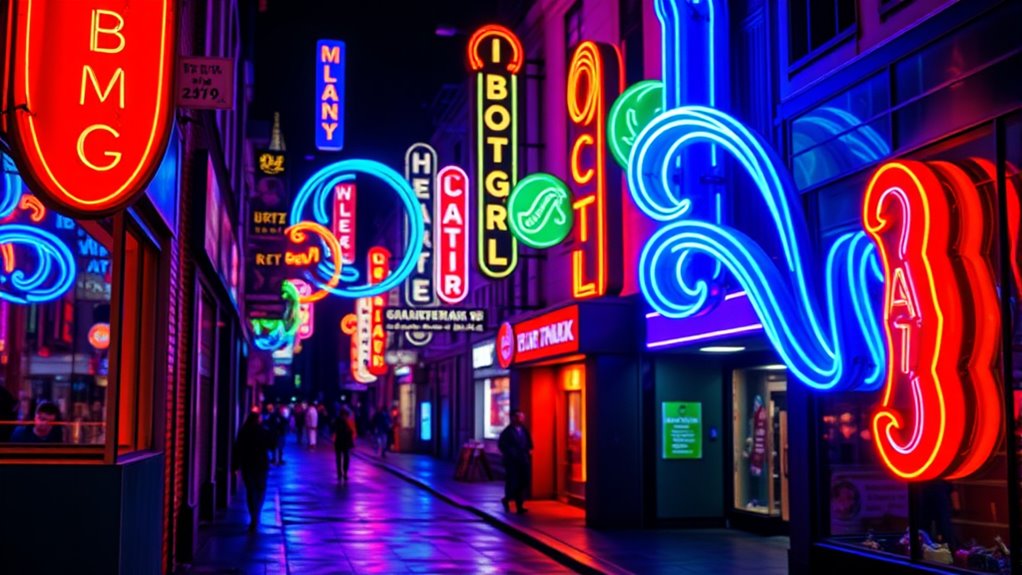
Have you ever wondered what makes neon lights glow so brightly and vividly? It all comes down to the fascinating properties of neon gas and the way these signs are crafted. Neon gas, a noble gas found naturally in the Earth’s atmosphere, has unique characteristics that make it perfect for luminous displays. When an electric current passes through neon, its atoms become energized and emit a distinct reddish-orange glow. This property, known as gas excitation, is what produces that iconic neon light color. Because neon is inert, it doesn’t react easily with other substances, guaranteeing the glow remains consistent and stable over time. These qualities make neon ideal for signage, allowing signs to shine brightly without flickering or fading.
To turn this gas into the glowing signs we recognize, a specific manufacturing process is involved—glass tube fabrication. First, skilled artisans carefully shape and bend thin glass tubes into various forms and letters, a process that requires precision. They heat the glass until it’s pliable, then bend and connect it to create the desired design. Once the shape is set, the tubes are evacuated of air and filled with neon gas—sometimes mixed with other gases like argon or krypton to produce different colors. This step is vital because the purity of the neon and the integrity of the tube influence the brightness and color of the final sign.
The gas excitation process is fundamental to the distinctive glow and efficiency of neon signs, illustrating how science and craftsmanship work together. After filling, the ends of the glass tubes are sealed to contain the neon gas securely inside. The tubes are then mounted onto a backing or frame, often made of metal or plastic, to form the complete sign. When electric voltage is applied, the neon atoms inside the tube become energized, causing the gas to glow. This glowing effect is not only mesmerizing but also highly efficient, as the energy input directly translates into visible light. The craftsmanship involved in glass tube fabrication ensures that the signs are durable, vibrant, and capable of lasting for years with proper maintenance.
In essence, the glowing neon signs we see today are a perfect blend of science and artistry. The properties of neon gas enable bright, eye-catching illumination, while the meticulous process of glass tube fabrication allows for creative expression. Together, these elements have transformed simple gases and glass into timeless symbols of nightlife, advertising, and nostalgia—icons that continue to captivate and inspire.
Products Worth Considering

Bose SoundLink Flex Bluetooth Speaker (2nd Gen), Portable Waterproof Speaker, Black

Philips Hue Secure Wired Video Doorbell, 2K, Black

Bose TV Speaker (2nd Gen) Compact Soundbar with Bluetooth and HDMI Connectivity
As an affiliate, we earn on qualifying purchases.
Frequently Asked Questions
How Do Neon Signs Influence Modern Digital Advertising?
Neon signs influence modern digital advertising by inspiring neon sign artistry that captures attention and creates memorable visuals. You can incorporate neon branding strategies to evoke retro charm and authenticity, making your brand stand out. Their vibrant glow encourages engagement and emotional connection, translating well into digital campaigns. By blending neon aesthetics with digital media, you make your advertising more eye-catching, memorable, and aligned with nostalgic trends that resonate with audiences today.
What Are the Environmental Impacts of Neon Sign Production?
You should know that neon sign production impacts the environment through neon gas emissions and high production energy consumption. During manufacturing, neon gases like argon and krypton are used, which can escape into the atmosphere if not properly contained, contributing to emissions. Additionally, energy-intensive processes for producing and powering neon signs increase your carbon footprint. Being aware of these factors helps you understand the environmental cost behind these glowing icons.
Can Neon Lights Be Recycled or Reused Effectively?
Neon lights are like glowing memories waiting to be reborn. You can definitely recycle neon signs through specialized neon sign recycling and reuse techniques. By carefully extracting gases and reconditioning glass tubes, you breathe new life into these luminous icons. This process not only prevents waste but also preserves their nostalgic charm. With effort, your neon signs can shine again, becoming part of future stories rather than fading into history.
How Has LED Technology Affected Neon Sign Popularity?
You’ll find that LED technology has substantially affected neon sign popularity by offering better LED integration that mimics neon’s glow. LED signs are more durable, requiring less maintenance and lasting longer, which appeals to modern businesses. This durability and versatility make LED signage a preferred choice, often replacing traditional neon signs. As a result, the nostalgic charm of neon remains, but LED technology drives the trend toward more efficient, long-lasting signage options.
Are There Cultural Differences in Neon Sign Usage Worldwide?
You’ll find that cultural symbolism and regional aesthetics greatly influence neon sign usage worldwide. In Japan, neon depicts futuristic and vibrant themes, while in the US, signs often emphasize commercialism and nightlife. These differences reflect local values and artistic preferences, proving that neon signs adapt to cultural contexts. So, your experience with neon varies depending on where you are, shaping the visual language of each region.
Conclusion
Now that you’ve seen how neon lights transformed from scientific marvels to retro icons, you realize they’ve truly stood the test of time. Their vibrant glow isn’t just about illumination but about making a statement that’s hard to miss. You can think of neon signs as the life of the party—bright, bold, and impossible to ignore. They remind us that sometimes, the most enduring icons are the ones that keep shining, no matter how much time passes.