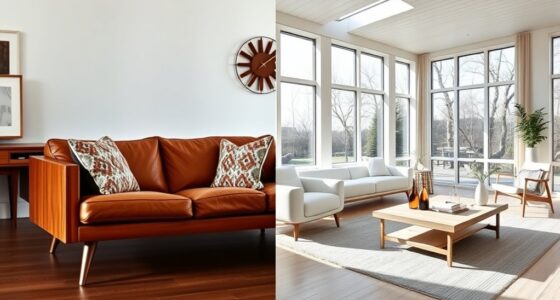
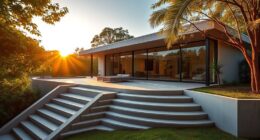
Mid-century modern transformed American homes by introducing open layouts, large windows, and seamless indoor-outdoor connections, making spaces feel larger and more inviting. The style’s sleek, minimalist design with innovative materials like glass and steel changed how homes looked and functioned. It encouraged casual, accessible living and influenced suburban expansion. If you look further, you’ll discover how this iconic style continues to shape contemporary interiors and architectural trends today.
Key Takeaways
- Introduced open floor plans and large windows, creating seamless indoor-outdoor living spaces.
- Emphasized minimalist aesthetics with clean lines and clutter-free interiors.
- Used innovative materials like steel and glass, enabling sleek, modern architectural designs.
- Popularized integration of outdoor spaces, blending nature with home environments.
- Influenced the growth of affordable, stylish suburban homes with functional, modern layouts.
The Origins and Influences of Mid-Century Modern Design
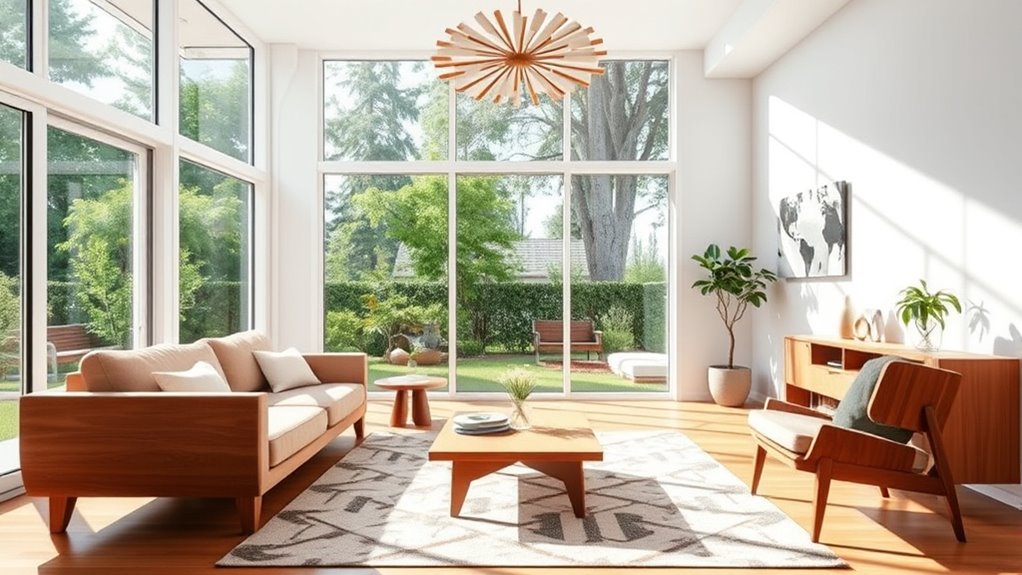
Mid-century modern design emerged after World War II, reflecting a desire for simplicity, functionality, and new technologies. Landmark architects like Charles and Ray Eames, Eero Saarinen, and Ludwig Mies van der Rohe played key roles in shaping this movement, emphasizing clean lines and innovative materials. This era marked a significant point in the design evolution, moving away from ornate styles toward minimalist aesthetics that prioritized practicality. These architects drew inspiration from earlier modernist principles, integrating new construction techniques and industrial materials to create open, airy spaces. Their work aimed to reflect the optimistic spirit of the post-war period, blending form and function seamlessly. The movement also embraced innovative materials, which allowed for more flexible and creative architectural expressions. Additionally, the influence of entertainment and parks can be seen in the way mid-century modern homes often incorporated indoor-outdoor living spaces. Moreover, the integration of sustainable design principles began to emerge as a consideration for future architectural innovations. Incorporating acoustic science principles in interior design, such as creating calming environments with specific materials and acoustics, subtly contributed to the overall ambiance. Understanding this history helps you appreciate how these influences laid the foundation for the iconic homes of the mid-century modern style.
Key Architectural Features That Defined the Style

You’ll notice that mid-century modern homes feature clean lines and a minimalist aesthetic that creates a sleek, uncluttered look. They seamlessly connect with nature through large windows and open floor plans, blurring indoor and outdoor spaces. Additionally, innovative materials like steel, glass, and plywood define the style’s forward-thinking approach.
Clean Lines & Minimalism
Clean lines and minimalism are the defining features that give Mid-Century Modern homes their sleek, uncluttered look. You’ll notice furniture design that emphasizes simple, geometric shapes with little ornamentation, creating a sense of openness. Interior color schemes favor neutral tones like white, gray, and earth tones, often contrasted with bold accent colors. This style avoids excessive decoration, focusing on functionality and form. You’ll find:
- Streamlined furniture with clean edges
- Open floor plans that maximize space
- Hidden storage to reduce clutter
- Monochromatic or limited color palettes
- Emphasis on natural light and uncluttered surfaces
These elements work together to produce a calm, sophisticated aesthetic that’s both timeless and practical. The use of natural materials like wood and stone further enhances the organic and minimalist appeal characteristic of the style. Additionally, the integration of sustainable design principles contributes to the enduring popularity of Mid-Century Modern architecture.
Integration With Nature
One of the defining features of Mid-Century Modern homes is their seamless connection to the natural environment through architectural design. You’ll notice how large windows and sliding glass doors blur the boundaries between indoors and outdoors, fostering landscape harmony. This approach emphasizes natural integration, making the surrounding scenery an essential part of your living space. Natural integration is a fundamental principle that exemplifies the style’s commitment to harmony with the environment. Additionally, the use of large windows not only enhances views but also maximizes natural light, reducing the need for artificial lighting during the day. Flat planes, open floor plans, and cantilevered structures further enhance this connection, inviting you to feel immersed in nature without leaving your home. Thoughtful site planning guarantees the house complements its environment rather than disrupting it. Incorporating passive solar design principles can further optimize energy efficiency and comfort. Understanding solar orientation helps in designing homes that harness sunlight effectively throughout the seasons. By prioritizing natural light and views, Mid-Century Modern homes create a sense of calm and unity with the landscape, making nature an integral aspect of your everyday experience.
Use of New Materials
Mid-Century Modern homes revolutionized architecture by incorporating innovative materials that defined their sleek aesthetic. These materials allowed for bold designs and functional spaces, pushing the boundaries of traditional construction. You’ll notice furniture innovation using plywood, plastic, and metal, making pieces lightweight yet stylish. Decorative techniques, like terrazzo floors and bold wall coverings, became popular, adding texture and color. Glass walls and sliding doors blurred indoor-outdoor boundaries, emphasizing transparency. The use of new materials also enabled open floor plans and minimalist designs. Additionally, the availability of specialized planters and other home accessories contributed to the era’s distinctive style, blending form and function seamlessly. These elements combined to create a modern look that was both practical and visually striking. By embracing materials like steel and vinyl, Mid-Century Modern homes set a new standard for American architecture. The incorporation of innovative construction techniques further enhanced the durability and aesthetic appeal of these homes, making them iconic representations of their era.
The Shift Toward Open Floor Plans and Spacious Interiors
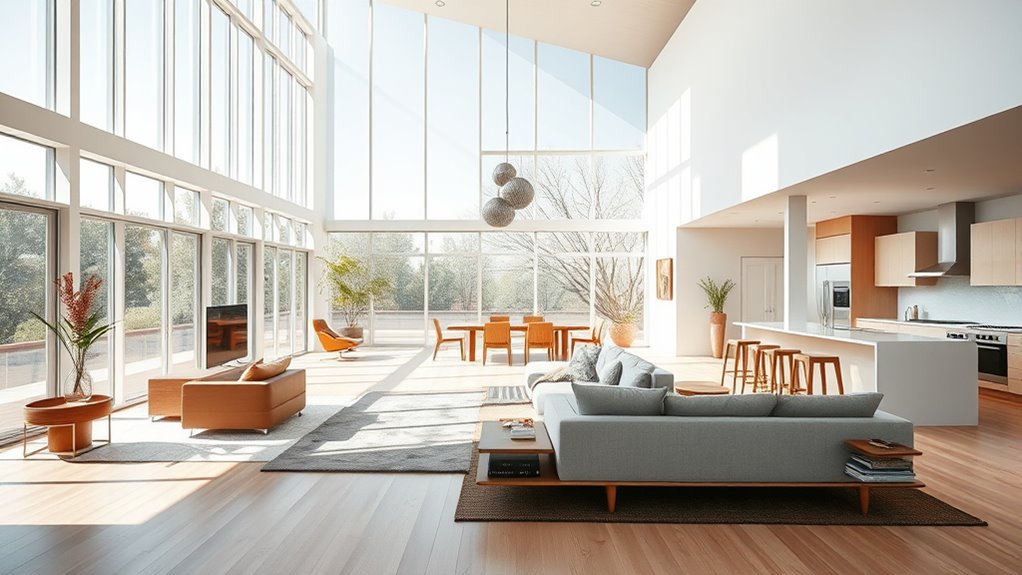
You’ll notice how open floor plans create a seamless flow between living spaces, making your home feel larger and more inviting. Natural light floods through expansive windows, emphasizing the spaciousness and bringing warmth inside. This shift encourages a more connected, airy environment that defines mid-century modern design.
Seamless Space Integration
As homeowners increasingly favor a sense of openness, the shift toward open floor plans and spacious interiors has transformed mid-century modern homes. This seamless space integration encourages fluid movement between rooms, making your living areas feel larger and more inviting. You can effortlessly blend vintage decor with modern elements, creating a cohesive look. Retro color palettes add vibrancy and personality to open spaces. To maximize this effect, consider these ideas:
- Use continuous flooring for visual flow
- Incorporate multi-functional furniture
- Open up sightlines between rooms
- Use minimal partitions or sliding doors
- Integrate vintage decor as focal points
This approach enhances the aesthetic appeal and functionality of your home while embracing the mid-century modern ethos of simplicity and openness.
Emphasis on Natural Light
Natural light plays an essential role in enhancing the openness and vibrancy of mid-century modern homes. You’ll notice how large windows and glass walls open up interior spaces, making them feel airy and inviting. To maximize natural light, you’ll use lighting design techniques like skylights and strategically placed fixtures that complement your interior color palettes. Light, neutral tones reflect sunlight, amplifying the sense of spaciousness. Open floor plans remove barriers, allowing light to flow freely from one area to another. This focus on natural illumination creates an environment that feels warm and alive, emphasizing the connection between indoor and outdoor spaces. Incorporating proper window placement can further optimize sunlight penetration and balancing natural light with interior design to enhance the overall aesthetic. Additionally, using light-reflecting surfaces such as glossy finishes and mirrors can help bounce light throughout your space, making it even brighter. By prioritizing natural light, your home embodies the mid-century modern ideals of simplicity, functionality, and a harmonious relationship with nature.
Integration of Indoor and Outdoor Living Spaces
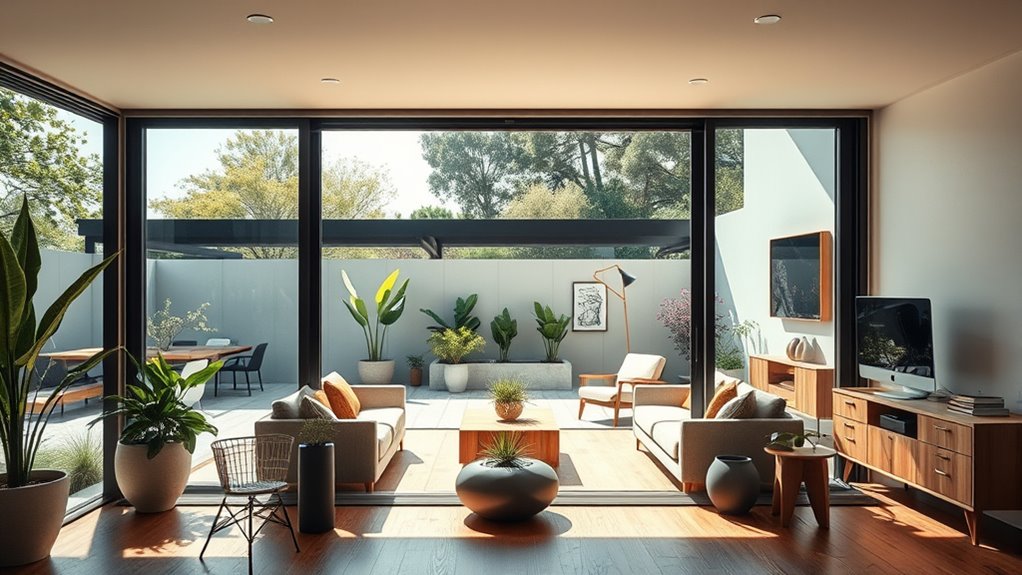
Mid-century modern homes seamlessly blend indoor and outdoor living spaces, creating a sense of openness and harmony with nature. This integration enhances your experience by blurring boundaries between interior comfort and the outdoor environment. To achieve this, designers focus on landscape integration, ensuring outdoor spaces complement indoor areas. You’ll find features like large glass doors that open fully, patios that extend living rooms, and seamless progressions between spaces. Incorporating Gold IRA Rollovers strategies can also diversify your investment portfolio, providing long-term security for your home and lifestyle. The use of architectural design principles ensures these elements work together cohesively for a balanced aesthetic. These elements make outdoor living an extension of your home, encouraging relaxation and outdoor activities. Embracing design harmony is essential to embody the mid-century modern ethos of harmony with nature. Additionally, careful consideration of bicycle tire longevity in storage can help maintain outdoor furniture or equipment used in outdoor living areas, ensuring their durability over time. Paying attention to climate considerations can further optimize outdoor space usability throughout the year.
Use of Innovative Materials and Construction Techniques

Innovative materials and construction techniques define the distinctive look and durability of mid-century modern homes. Architects embraced new technologies like steel, plywood, and glass to create sleek, open designs with large windows and flat roofs. These materials allowed for longer spans and minimalist aesthetics that became hallmarks of the style. Construction techniques such as post-and-beam framing reduced interior supports, enhancing open floor plans. This approach also improved energy efficiency and structural integrity. Here’s a visual overview:
| Innovative Materials | Construction Techniques |
|---|---|
| Steel frameworks | Post-and-beam construction |
| Large glass panes | Open floor plan integration |
| Plywood and veneer | Minimal supports for space openness |
| Fiberglass and plastics | Prefabrication methods |
| Concrete innovations | Flat roof construction |
Iconic Furniture and Interior Design Elements
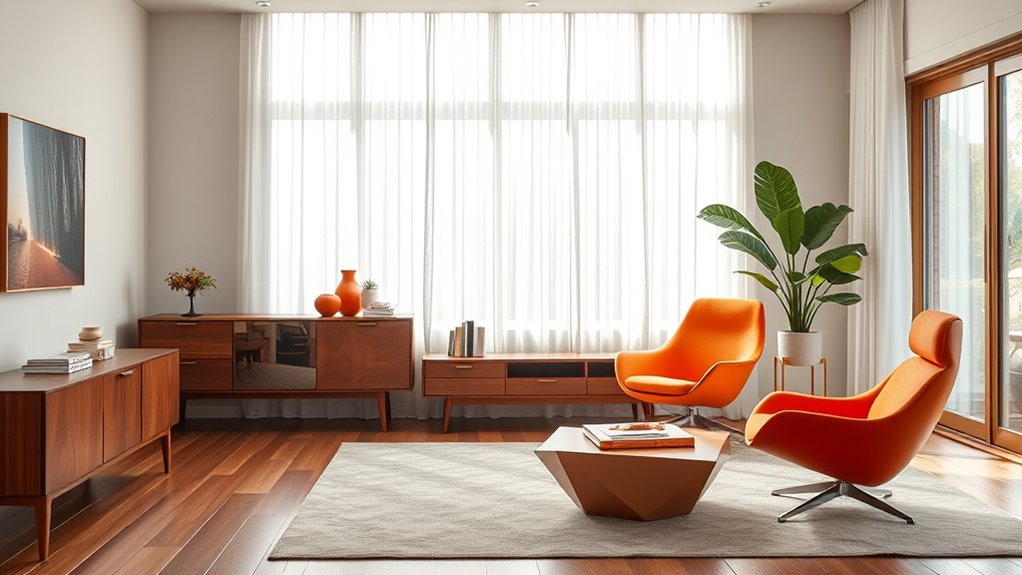
Iconic furniture and interior design elements define the timeless appeal of mid-century modern homes. You’ll notice sleek lines, organic shapes, and functional designs that emphasize simplicity and comfort. Vintage lamps add a warm glow, often featuring bold colors or unique shapes that stand out. Geometric patterns become a staple, seen in rugs, wallpaper, and textiles, bringing visual interest without clutter. The furniture pieces are characterized by low profiles, tapered legs, and minimalist aesthetics, making spaces feel open and inviting. To capture the style, look for:
- Vintage lamps with sculptural forms
- Geometric patterned textiles
- Low-profile sofas and chairs
- Wooden sideboards and credenzas
- Bold, abstract artwork
These elements combine to create a distinctive, enduring look.
Impact on Suburban Development and Housing Trends
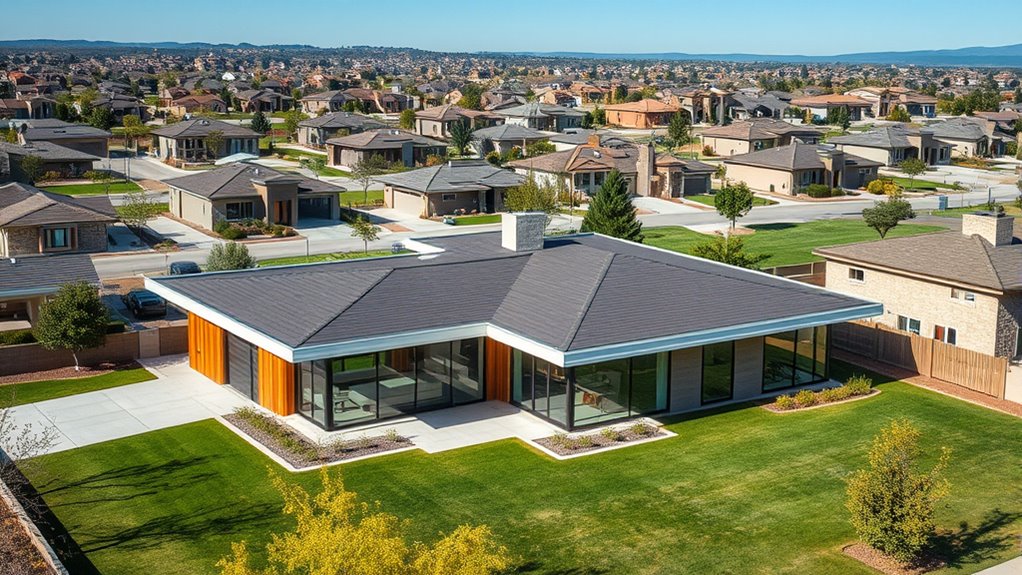
The popularity of mid-century modern design substantially shaped suburban development and housing trends during the mid-20th century. As demand for stylish yet affordable homes grew, developers focused on suburban expansion, creating neighborhoods with functional, streamlined houses that reflected modern aesthetics. These homes often featured open floor plans, large windows, and efficient layouts, making them appealing and accessible. The emphasis on housing affordability drove mass production, allowing more families to buy into the suburban lifestyle. This trend also encouraged the development of highways and transportation infrastructure, further fueling suburban growth. By prioritizing cost-effective construction and modern design, mid-century modern homes became symbols of progress, helping to transform American suburbs into desirable, affordable places to live for a broad demographic.
The Style’s Influence on Contemporary Architecture

You’ll notice how open floor plans have become a hallmark of modern homes, making spaces feel more connected and functional. The minimalist aesthetic, with clean lines and simple forms, continues to dominate contemporary architecture, reflecting a sense of clarity and purpose. These elements show how Mid-Century Modern design principles still shape the way we build and live today.
Open Floor Plans
Have you noticed how open floor plans have become a defining feature of modern homes? They create a sense of spaciousness and promote social interaction. This layout style influences furniture layouts, encouraging flexible arrangements that blend living, dining, and kitchen areas seamlessly. Interior decor becomes more cohesive, with fewer walls and partitions to break up space. Key aspects include:
- Streamlined furniture placement for easy flow
- Multi-purpose furniture to maximize space
- Focus on natural light and sightlines
- Minimal visual clutter for a clean look
- Centralized gathering areas for socializing
Minimalist Aesthetic
Minimalist aesthetic has profoundly shaped contemporary architecture by emphasizing simplicity and clean lines. You notice this in the use of restrained color palettes, often featuring neutral tones like whites, grays, and blacks, which create a calm and cohesive environment. Decorative accents are kept minimal, serving as subtle focal points rather than overwhelming the space. This approach highlights the beauty of functional design, where every element serves a purpose. You’ll see open spaces with uncluttered surfaces, allowing natural light to flow freely. The minimalist style encourages you to focus on quality over quantity, creating homes that feel both sophisticated and comfortable. By stripping away excess, this aesthetic fosters a sense of tranquility and clarity in modern living spaces.
Cultural and Social Factors Shaping the Movement

The Mid-Century Modern movement was deeply influenced by the cultural and social changes sweeping through the post-World War II era. As society shifted, you see how mid-century modern cultural influences and social changes shaping design became evident. This period embraced optimism, technological innovation, and a desire for new ways of living. People sought homes that reflected progress and individuality. The movement responded to these needs with open floor plans, functional furniture, and integration with nature.
The post-WWII era’s social shifts fueled Mid-Century Modern design with openness, innovation, and a focus on individual living.
- Emphasis on simplicity and functionality
- Break from traditional ornamentation
- Rise of suburban living
- Incorporation of new materials and technology
- Focus on comfort and accessibility
The Lasting Legacy of Mid-Century Modern in Today’s Homes

How has the Mid-Century Modern movement continued to influence today’s homes? You’ll notice its legacy in the popularity of mid century modern furniture, which combines clean lines with functional design. This style’s emphasis on simplicity and integration with nature remains appealing, fueling a retro aesthetic revival. You might see iconic pieces like sleek sofas or minimalist dining tables that blend form and function effortlessly. The movement’s focus on open spaces and natural light continues to shape modern layouts. Even if your home isn’t fully mid-century modern, you can incorporate its elements for timeless style. Its influence endures because it offers a fresh, uncluttered look that feels both nostalgic and contemporary, making it a lasting favorite in home design.
Frequently Asked Questions
How Did Mid-Century Modern Influence Today’s Sustainable Home Designs?
Mid-century modern influences today’s sustainable home designs by emphasizing energy efficiency and material innovation. You’re likely to notice clean lines and open spaces that maximize natural light, reducing the need for artificial lighting. Designers incorporate eco-friendly materials and smart technology to lower energy consumption. This approach encourages you to build homes that are both stylish and environmentally conscious, proving that sustainable living can blend seamlessly with timeless mid-century aesthetics.
What Role Did Technological Advances Play in Shaping Mid-Century Modern Homes?
Think of the space race fueling innovation, and you’ll see how technological advances shaped mid-century modern homes. You benefit from furniture innovations that emphasize sleek, functional design, and lighting technology that creates warm, inviting atmospheres. These breakthroughs made homes more efficient, stylish, and comfortable, transforming everyday living. By embracing new tech, mid-century designers pushed boundaries, inspiring today’s smart homes and sustainable designs rooted in those same innovative principles.
How Did Mid-Century Modern Design Affect Regional Architectural Variations?
Mid-century modern design encourages regional diversity by blending local materials and climate considerations into architectural adaptation. You’ll notice homes reflect regional styles, like California’s open layouts for outdoor living or the Northwest’s use of wood to suit the environment. This style’s flexibility allows you to appreciate regional influences while maintaining a cohesive modern aesthetic, ensuring that each home responds uniquely to its landscape and cultural context.
Were There Specific Demographic Groups Primarily Interested in Mid-Century Modern Homes?
You’ll find that urban professionals and design enthusiasts mainly showed interest in mid-century modern homes. These groups appreciated the sleek lines, open spaces, and innovative use of materials that defined the style. As someone who values modern aesthetics and functionality, you might be drawn to how this design movement reflects a forward-thinking, stylish lifestyle. Their enthusiasm helped popularize mid-century modern as a symbol of progress and sophistication in American homes.
How Has Mid-Century Modern Design Evolved With Smart Home Technology?
You’ve seen how mid-century modern design now evolves with smart home technology by integrating smart lighting and voice-activated controls. This seamless blend allows you to maintain sleek, minimalist aesthetics while enjoying modern convenience. You can effortlessly adjust lighting, control appliances, and set moods with simple voice commands, enhancing your space’s functionality without sacrificing its iconic style. This evolution keeps mid-century modern homes both timeless and highly adaptable to your digital lifestyle.
Conclusion
As you step into a modern home, you see sleek lines and open spaces, yet beneath it all, mid-century roots run deep. It’s like blending vintage charm with fresh innovation—where history and future meet. This style invites you to imagine a time when design was about simplicity and connection, just as today’s homes continue to reflect that timeless balance. In embracing mid-century modern, you carry forward a legacy of bold ideas and enduring elegance.