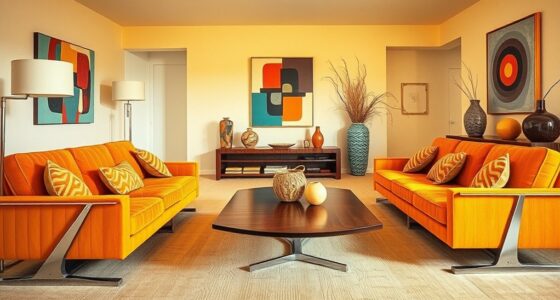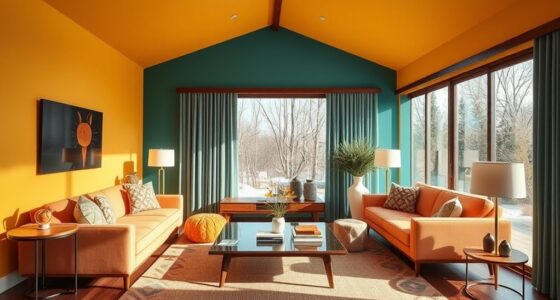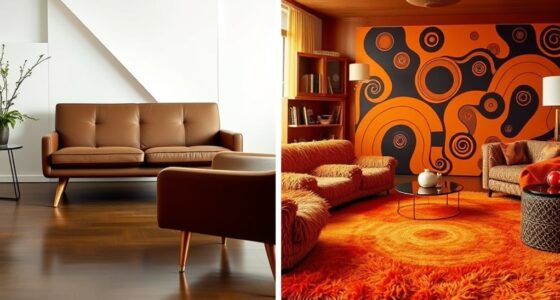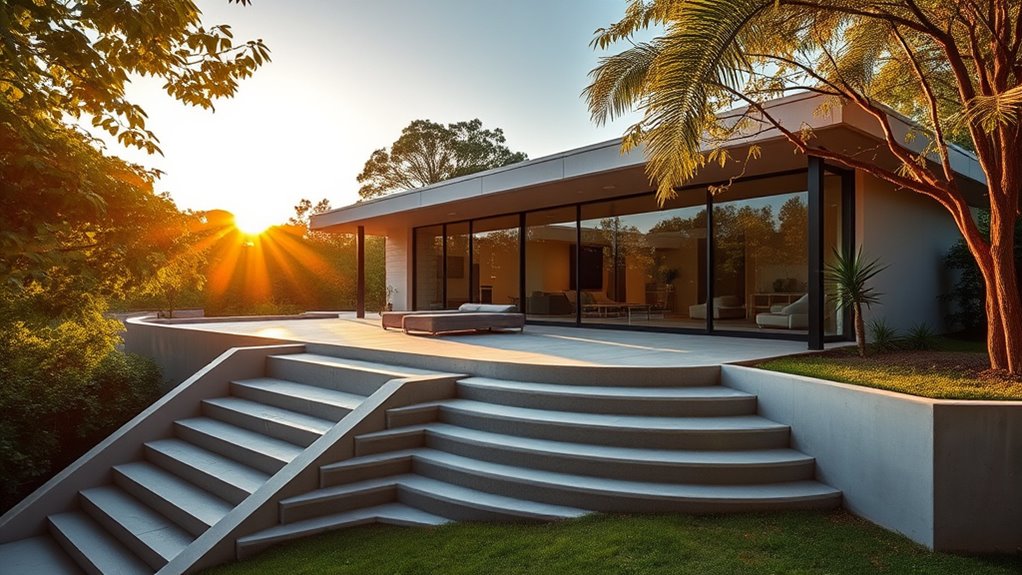

Mid-century modern architecture, highlighted by the Case Study Houses, emerged in the 1950s as a revolutionary design movement focused on innovation, functionality, and sleek aesthetics. It shifted away from traditional styles toward open layouts, large glass windows, and new materials like steel and glass. These homes embodied post-war optimism and technological progress, shaping the future of residential design. To understand how this movement transformed homes and influenced architecture, exploring its history will reveal the exciting ideas behind these iconic structures.

Get furniture and decor delivered free — and shop member deals
- Fast, free delivery on millions of items
- Access to Prime Big Deal Days deals on October 6–7
- Prime Video, Amazon Music and more included
Key Takeaways
- Mid-century modern architecture emerged in the 1950s, emphasizing minimalism, innovation, and a shift from traditional styles.
- Case Study Houses served as experimental models showcasing new materials, open layouts, and indoor-outdoor integration.
- Design features included large glass windows, flat roofs, and sleek materials like steel and glass for modern appeal.
- The movement reflected post-war optimism, prioritizing functionality, practicality, and aesthetic simplicity in residential design.
- Its legacy influenced future architecture, emphasizing modern materials, seamless indoor-outdoor spaces, and innovative construction techniques.

Have you ever wondered how mid-century modern architecture transformed the way we live and design? It’s a story rooted in the innovative spirit of the 1950s design movement, where architects pushed boundaries to create spaces that were both functional and aesthetically striking. During this era, architectural innovation flourished as designers sought to redefine the relationship between interior and exterior, embracing open-plan layouts, large glass windows, and new materials. The case study houses exemplify this shift, serving as experimental models that demonstrated new approaches to residential architecture. These houses weren’t just homes; they were blueprints for a modern lifestyle, emphasizing simplicity, clean lines, and integration with nature.
The 1950s marked a pivotal period when architects moved away from ornate, traditional styles toward minimalism and practicality. They aimed to create homes that reflected the burgeoning post-war optimism and technological progress. The case study houses—designed by renowned architects like Charles and Ray Eames, Pierre Koenig, and Richard Neutra—embodied this ethos perfectly. Each project showcased architectural innovation, integrating innovative materials like steel and glass to achieve sleek, open spaces. These homes often featured flat roofs, cantilevered structures, and large sliding glass doors that blurred the boundaries between indoors and outdoors. It was about making the home a seamless extension of the environment, encouraging a sense of freedom and fluidity.
The influence of 1950s design is evident in how these structures prioritized functionality without sacrificing style. The focus was on creating livable, adaptable spaces that responded to the needs of modern families. This approach was revolutionary at the time, emphasizing simplicity and efficiency—traits that continue to define mid-century modern architecture today. The case study houses also became symbols of architectural experimentation, often serving as platforms for testing new construction techniques and materials. Their innovative design not only changed the way homes looked but also how they were built, inspiring generations of architects and designers to think differently about space and form. Additionally, the use of modern materials and construction methods in these homes played a key role in shaping the future of residential architecture.
As an affiliate, we earn on qualifying purchases.
Frequently Asked Questions
How Did the Case Study Houses Influence Global Architecture Trends?
You see how the Case Study Houses influenced global architecture trends by showcasing sustainable adaptations like open floor plans and large windows that connect indoor and outdoor spaces. Their design also reflects cultural influences emphasizing simplicity, functionality, and integration with nature. These principles inspired architects worldwide to prioritize sustainability and cultural context, shaping contemporary architecture to be more eco-friendly, community-oriented, and responsive to local environments.
What Materials Were Most Commonly Used in Mid-Century Modern Homes?
You’ll notice that mid-century modern homes often used over 60% glass for large windows, connecting indoors and outdoors. Inside, you see materials like wood, plywood, and terrazzo for interior finishes, creating warmth and texture. For exterior cladding, you typically find stucco, brick, or steel panels, giving homes a sleek, minimalist look. These materials emphasize simplicity, functionality, and harmony with nature, defining the iconic style of the era.
Who Were the Key Architects Behind the Case Study House Program?
You should know that the key architects behind the Case Study House program include Charles and Ray Eames, Richard Neutra, and Pierre Koenig. They embraced architectural philosophies focused on simplicity, functionality, and blending indoor-outdoor spaces. Their design innovations often featured open floor plans, large glass panels, and innovative materials, all aimed at creating modern, accessible homes that reflected the evolving lifestyle and technological advancements of the mid-century era.
How Did Technological Advances Impact Mid-Century Modern Design?
You’re in for a treat when exploring how technological advances transformed mid-century modern design. These innovations revolutionized construction, enabling innovative construction methods and sleek, open spaces. Design innovations like new materials and prefabrication techniques made homes more affordable and efficient. These breakthroughs allowed architects to push boundaries, combining form and function seamlessly. As a result, mid-century modern homes became symbols of progress, proving that when technology leads, design follows suit.
What Challenges Faced Preservation of Mid-Century Modern Architecture Today?
You face challenges preserving mid-century modern architecture because urban development often leads to neglect or demolition. Restoration techniques are essential, but they can be costly and complex, especially when original materials are hard to find. Balancing modern needs with maintaining the buildings’ integrity requires careful planning. You must advocate for policies that protect these structures, ensuring they survive amidst ongoing urban development pressures.
As an affiliate, we earn on qualifying purchases.
Conclusion
As you reflect on the Case Study Houses, remember that like Icarus reaching for the sun, mid-century modern architecture aimed to elevate and inspire. Its clean lines and innovative spirit continue to influence design today, reminding you that pushing boundaries often leads to groundbreaking beauty. Embrace this legacy of daring creativity, for in building the future, you stand on the shoulders of those who dared to dream beyond the horizon.
As an affiliate, we earn on qualifying purchases.
As an affiliate, we earn on qualifying purchases.
Evergreen bestsellers Picks
bestsellers
As an affiliate, we earn on qualifying purchases.