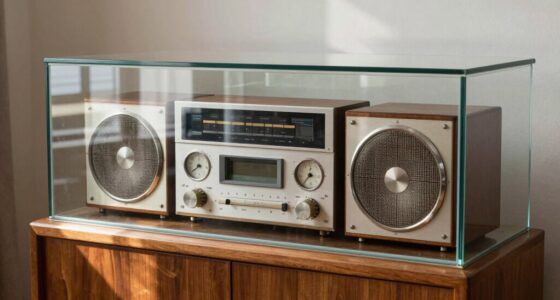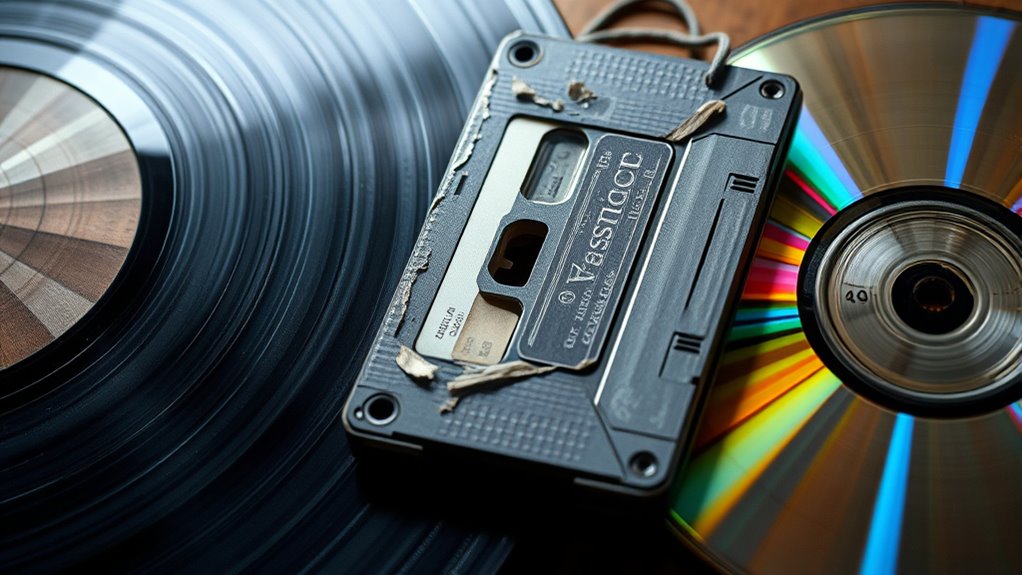

When you listen to music on vinyl, you experience a warm, rich sound with subtle nuances and a smooth, immersive quality. CDs deliver a clear, precise sound with minimal noise, making details stand out sharp and clean. Cassettes offer a mid-range, nostalgic vibe, with some compression and tape hiss adding character. Each format shapes the sound and mood uniquely—exploring these differences can deepen your listening experience, and there’s more to uncover about what makes each one special.
Listen free for 30 days with Audible
Thousands of audiobooks and originals — cancel anytime.
As an affiliate, we earn on qualifying purchases.
Key Takeaways
- Vinyl offers a warm, rich, and immersive sound with subtle nuances, enhancing emotional connection and musical depth.
- Cassette tapes provide a mid-range, lo-fi sound with tape hiss and imperfections that add vintage character.
- CDs deliver a digital, crystal-clear sound with precise frequency response, emphasizing clarity and detail.
- Vinyl’s analog process captures continuous sound waves, creating a smooth, textured listening experience.
- Digital formats like CDs reproduce recordings exactly, reducing noise but lacking the analog warmth of vinyl and cassettes.

When comparing the sound quality of vinyl records, cassettes, and CDs, you’ll notice distinct differences that influence your listening experience. Vinyl records are celebrated for their unique sound, often described as having a warm, rich quality known as analog warmth. This warmth stems from the way vinyl captures sound waves directly through physical grooves, preserving subtle nuances and imperfections that add character to the music. When you listen to vinyl, you might find that instruments and vocals feel more alive and textured, as the analog process allows for a continuous, smooth sound that isn’t broken up by digital sampling. This creates an inviting, immersive experience that many audiophiles cherish, especially for genres like jazz, classic rock, or blues, where the depth and warmth enhance emotional connection. Moreover, the analog recording process contributes significantly to the distinctive sound signature of vinyl, making it a preferred choice for those seeking authentic auditory richness.
Vinyl offers a warm, immersive sound with rich nuances and character, enhancing emotional connection and musical depth.
In contrast, CDs are designed to deliver digital clarity, which provides a different kind of listening experience. Digital clarity means that the sound is extremely precise, with a flat frequency response that reproduces recordings exactly as they were mastered. When you listen to a CD, the sound is free from the pops, crackles, or hiss often associated with analog formats, offering a clean, crisp presentation. This clarity allows every detail in the music—be it subtle background effects, intricate harmonies, or sharp percussion—to come through clearly. For many, this makes CDs ideal for genres that benefit from precision, like classical or electronic music, where clarity can reveal layers that might be masked in more textured formats.
While vinyl provides that warm, organic feel due to its analog nature, cassettes fall somewhere in between. Cassettes reproduce sound through magnetic tape, which introduces a slightly compressed, sometimes lo-fi quality. They often carry a nostalgic charm and can deliver a sense of immediacy and intimacy, but their sound can be affected by tape hiss, wow, and flutter, which add to their character but may detract from fidelity. The sound on cassettes isn’t as crisp as CDs or as warm as vinyl, but it offers a distinctive, human touch that appeals to those seeking a more tactile or vintage listening experience.
Ultimately, your choice depends on what you value most: the warmth and character of analog sound, the precision and clarity of digital formats, or the nostalgic, imperfect charm of tapes. Each format shapes how you experience music, influencing how you connect emotionally with what you hear.
vinyl record player with built-in speakers
As an affiliate, we earn on qualifying purchases.
As an affiliate, we earn on qualifying purchases.
Frequently Asked Questions
How Does Cassette Tape Wear Affect Sound Quality Over Time?
As your cassette tape wears, tape degradation causes sound quality to decline. You might notice increased wear artifacts like hiss, dropout, or distortion, which result from the tape’s material breaking down over time. These imperfections can make the music sound muddier or less clear. Regular playback and proper storage can slow wear, but eventually, the tape’s physical condition impacts your listening experience, emphasizing the importance of handling tapes carefully.
Are There Specific Genres That Sound Better on Vinyl?
You’ll find that genres with rich acoustic qualities, like jazz, classical, and blues, tend to sound better on vinyl. The warm, full-bodied sound of vinyl enhances their depth and complexity, adding a tactile feel that digital formats often lack. Your genre preferences influence your experience, as vinyl’s analog nature captures subtle nuances beautifully. If you enjoy detailed, immersive listening, vinyl could elevate your favorite genres profoundly.
Can Digital Remastering Improve Cassette or Vinyl Recordings?
Digital remastering can definitely improve cassette and vinyl recordings by applying digital restoration and analog enhancement techniques. You’ll notice clearer sound, reduced noise, and better dynamic range as these processes fix imperfections and enhance audio quality. While it can’t completely replicate the original recording’s warmth or character, digital restoration and analog enhancement give your favorite classics a fresh, improved listening experience, making old recordings sound more vibrant and detailed.
How Does the Playback Equipment Influence Sound Differences?
Think of your playback equipment as a symphony conductor shaping sound. Your turntable’s resonance can add warmth or muddiness, while precise tape head alignment guarantees clarity on cassettes. These factors directly influence how music reaches your ears, making each listening experience unique. By fine-tuning your equipment, you control the nuances and richness, turning ordinary playback into a personalized auditory masterpiece that resonates with your style.
Is There a Noticeable Difference in Sound Between New and Vintage Formats?
You’ll notice a difference in sound between new and vintage formats, especially if you value audio fidelity. Vintage formats like vinyl often deliver a warmer, richer tone that many find nostalgic. Newer formats prioritize clarity and convenience but might lack some of that nostalgic charm. Your perception depends on what you seek—authentic sound quality or format nostalgia. Either way, each format offers a unique listening experience worth exploring.
high fidelity cassette tape deck
As an affiliate, we earn on qualifying purchases.
As an affiliate, we earn on qualifying purchases.
Conclusion
No matter which format you choose, each offers a unique way to experience music’s soul. Vinyl’s warm embrace, cassette’s nostalgic hiss, and CD’s crisp clarity all paint a different picture of the same song. Think of it like tasting a familiar dish prepared in three different ways—each bites brings its own story. So, pick your favorite and let your ears be the guides, because in the end, music’s magic lives in how it makes you feel.
compact CD player with Bluetooth
As an affiliate, we earn on qualifying purchases.
As an affiliate, we earn on qualifying purchases.
Flea & tick season Picks
flea and tick prevention
As an affiliate, we earn on qualifying purchases.