You discover that Charles and Ray Eames revolutionized mid-century design by blending innovation, functionality, and beauty. They used groundbreaking materials like molded plywood and fiberglass to create timeless furniture with organic forms and natural textures. Their architectural projects, artwork, and multimedia works continue to influence modern aesthetics and sustainable practices. Their legacy endures through their iconic pieces and ideas that still shape how we experience design—exploring their story reveals even more inspiring innovations.

Get furniture and decor delivered free — and shop member deals
- Fast, free delivery on millions of items
- Access to Prime Big Deal Days deals on October 6–7
- Prime Video, Amazon Music and more included
Key Takeaways
- Charles and Ray Eames revolutionized furniture design with innovative materials like molded plywood and fiberglass, blending functionality and organic aesthetics.
- Their iconic pieces, such as the Lounge Chair and Molded Plastic Chair, symbolize mid-century modernism and continue to influence contemporary interiors.
- They pioneered sustainable practices in architecture and furniture, emphasizing durability, eco-friendly materials, and waste reduction.
- Extending their creativity into multimedia and visual arts, they pioneered interactive installations and digital storytelling that impacted modern design.
- Their enduring legacy lies in their timeless design philosophy, inspiring ongoing innovation, reinterpretation, and cultural significance in the design world.
As an affiliate, we earn on qualifying purchases.
The Origins of Charles & Ray Eames

Charles and Ray Eames’s partnership began in the early 1940s, when both were working in the design field. Their early lives shaped their future collaboration, with Charles studying architecture and Ray focusing on fine arts. They shared a passion for innovative design and problem-solving, which led them to work together on projects that combined form and function. Their collaborative partnership quickly gained momentum as they explored new ideas and materials, pushing the boundaries of mid-century design. You can see how their combined talents complemented each other, creating a synergy that would define their work. From the start, their shared vision and dedication set the foundation for a lasting legacy in the world of design. Their innovative use of materials like molded plywood revolutionized furniture design and demonstrated their commitment to material innovation. This approach was also influenced by their interest in cross-disciplinary collaboration, which helped them integrate different fields of knowledge into their work.
As an affiliate, we earn on qualifying purchases.
Pioneering Materials and Techniques

The Eameses revolutionized furniture design by experimenting with pioneering materials and techniques that pushed the boundaries of traditional craftsmanship. They embraced sustainable practices by exploring new materials like molded plywood, fiberglass, and aluminum, reducing waste and improving durability. Their innovative use of experimental techniques allowed them to create lightweight, ergonomic forms that were both functional and aesthetically striking. By pushing the limits of material manipulation, they demonstrated how thoughtful design could be environmentally conscious without sacrificing style. Their approach fostered a deeper understanding of material properties, leading to breakthroughs in mid-century furniture. This commitment to innovation and sustainability set new standards in design, inspiring future generations to think creatively about materials and techniques while respecting the environment. Recognizing the importance of sustainable practices, the Eameses emphasized responsible use of resources, which remains influential in design today. Additionally, their work highlighted the significance of environmentally conscious design, inspiring ongoing efforts in sustainable innovation within the industry.
As an affiliate, we earn on qualifying purchases.
Iconic Furniture Designs
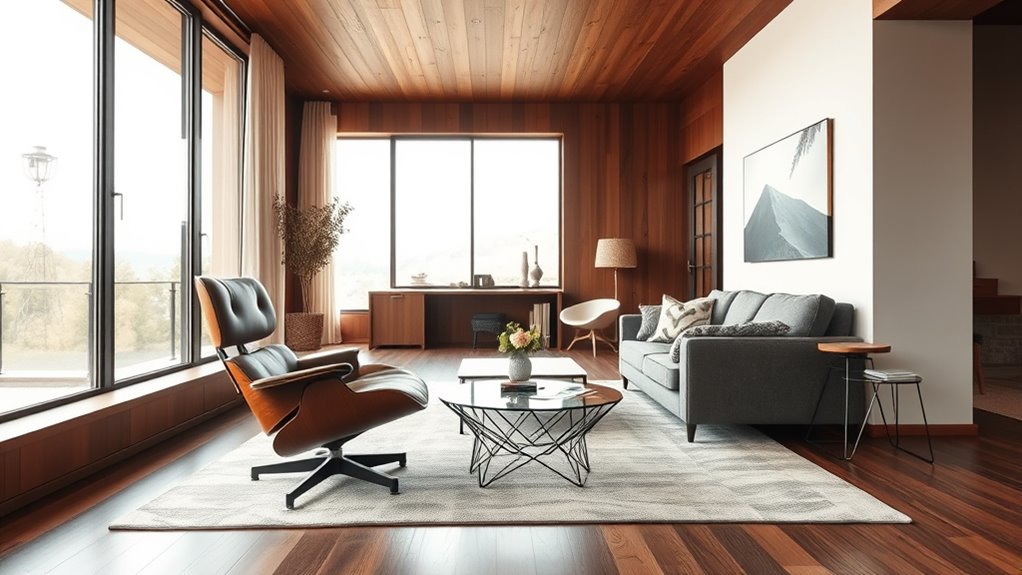
When you look at Charles and Ray Eames’ furniture, you notice its timeless appeal that still feels fresh today. Their innovative use of materials transformed how furniture is made and appreciated. These designs not only shape interiors but also leave a lasting cultural impact worldwide. Additionally, their pioneering techniques in wall surfaces and finishes contributed to the evolution of interior design aesthetics. Demonstrating leadership skills, the Eames duo also influenced design education and industry standards, inspiring future generations of designers. Furthermore, their understanding of home energy integration and sustainable practices reflected their forward-thinking approach to design, emphasizing material innovation that continues to influence contemporary practices. Their approach to sustainable design practices exemplifies their commitment to environmentally conscious innovation, inspiring ongoing developments in green architecture and interior design.
Timeless Aesthetic Appeal
Their furniture designs have stood the test of time because they blend form and function seamlessly, creating pieces that remain relevant across decades. You’re drawn to their timeless aesthetic, which combines clean lines with a sense of vintage charm. These designs offer more than utility; they add decorative appeal that enhances any space. Whether it’s a lounge chair or a side table, their pieces evoke nostalgia while feeling fresh. The enduring appeal lies in their ability to adapt to different styles, making them staples in both modern and traditional interiors. Their designs prove that beauty and practicality can coexist effortlessly, ensuring their place in design history.
| Style Element | Impact |
|---|---|
| Vintage Charm | Adds nostalgic warmth and character |
| Decorative Appeal | Elevates the overall aesthetic |
| Clean Lines | Creates timeless simplicity |
| Versatility | Fits various interior styles |
| Enduring Relevance | Remains fashionable across generations |
Innovative Material Use
Charles and Ray Eames revolutionized furniture design by pioneering the use of innovative materials that transformed how pieces are crafted and experienced. They embraced material experimentation, pushing boundaries to create functional art that combined form and function seamlessly. Their commitment to sustainable innovations led them to explore plywood, molded fiberglass, and aluminum, which allowed for lightweight, durable, and affordable furniture. You’ll notice how these materials enabled complex curves and shapes that weren’t possible with traditional techniques. Their work not only prioritized aesthetic appeal but also emphasized efficiency and sustainability. By experimenting with new materials, the Eameses set a precedent for ecological consciousness and resourcefulness in design, influencing generations of designers to think creatively about material use and its impact on the environment. Additionally, their innovative approach to material use opened new avenues for customization and adaptability in furniture production, inspiring ongoing research into recyclable materials and eco-friendly manufacturing processes. Their pioneering efforts in material innovation continue to inspire sustainable practices in contemporary furniture design, demonstrating how material experimentation can lead to groundbreaking design solutions.
Cultural Design Impact
Have you ever wondered how a single piece of furniture can become a cultural icon? The Eames’ designs do just that, embodying cultural symbolism and social commentary. Their iconic chairs, like the Eames Lounge and Molded Plastic Chair, go beyond functionality, reflecting the optimism and innovation of the mid-century era. These pieces challenged traditional furniture norms, making design accessible and stylish for the masses. They also serve as social commentaries, emphasizing the importance of comfort, mass production, and modern aesthetics. You see their impact in everyday life, as these designs symbolize progress and modernity. By blending form and function, Charles and Ray Eames created furniture that resonates with societal values and cultural identity, leaving a lasting legacy in design history. Additionally, their use of innovative materials and manufacturing techniques exemplifies the integration of predictive analytics to enhance design efficiency and meet consumer demands. Their pioneering approach exemplifies how design innovation can shape cultural perceptions and influence industrial processes, further cementing their role in modern design evolution.
As an affiliate, we earn on qualifying purchases.
Architectural Innovations and Projects
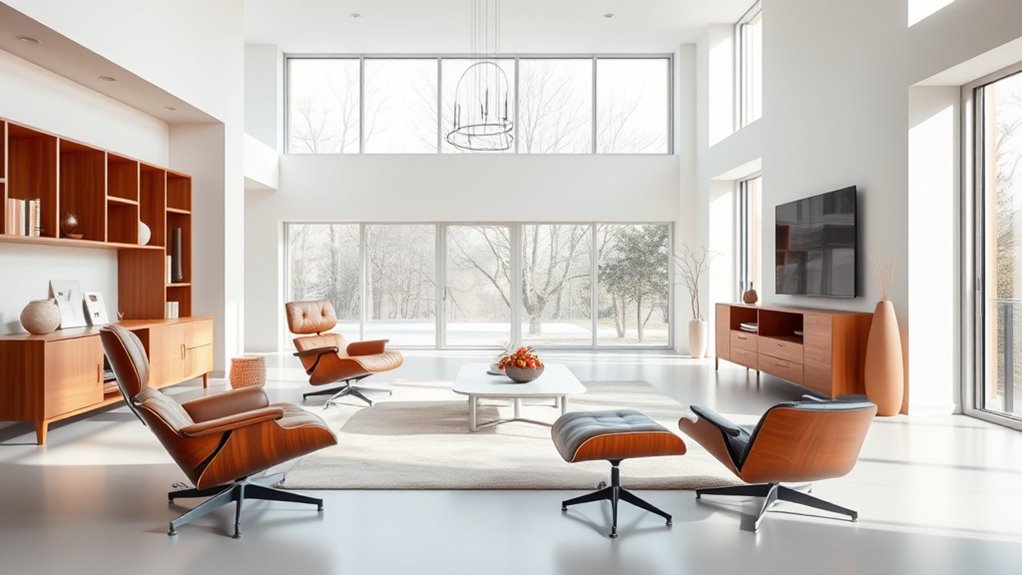
Building on their groundbreaking design philosophy, Charles and Ray Eames made significant contributions to architecture through innovative projects that challenged traditional forms. They emphasized sustainable architecture by integrating eco-friendly materials and energy-efficient design principles, setting new standards for environmentally conscious building. Their work in urban planning reflected a holistic approach, promoting community-centric spaces that balanced functionality and aesthetics. Notable projects, like their innovative pavilions and experimental homes, pushed the boundaries of structural design and material use. They prioritized human comfort and interaction, often blending indoor and outdoor environments seamlessly. Their architectural innovations demonstrated that thoughtful design could transform spaces into functional, sustainable environments, leaving a lasting impact on architecture’s evolution and inspiring future generations to pursue eco-conscious, innovative urban development.
Visual Arts and Multimedia Contributions
The Eameses extended their creative vision into the sphere of visual arts and multimedia, blending art, technology, and design to shape innovative expressions. They pioneered interactive installations that invite audience participation, transforming passive viewing into engaging experiences. Their work often integrated digital storytelling, using emerging technologies to communicate ideas in dynamic ways. By experimenting with projection, video, and multimedia displays, they blurred boundaries between fine art and design. These projects reflected their belief in the power of visual storytelling to inspire and educate. Their multimedia contributions laid the groundwork for future artists and designers exploring new mediums. They also emphasized the importance of visual storytelling in communicating complex ideas effectively, which continues to influence contemporary multimedia art. Their emphasis on technological integration helped push the boundaries of creative expression and opened new avenues for artistic exploration. You can see their influence in modern interactive exhibits and digital art forms that continue to push the limits of creative expression. Their legacy remains a validation to innovation across visual arts and multimedia.
Influence on Modern Design Movements
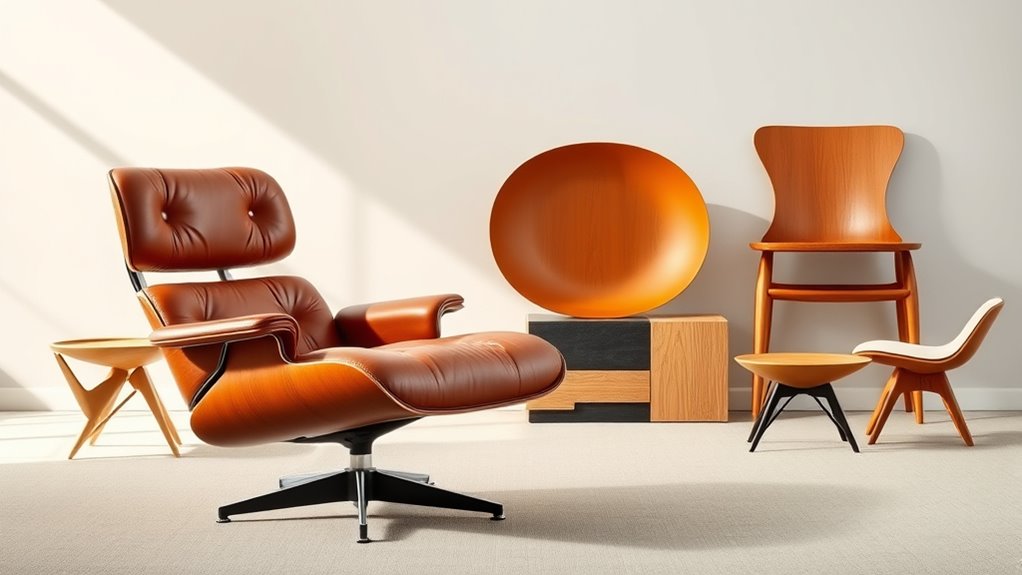
You can see how the Eames embraced organic forms and natural materials, shaping the look of contemporary furniture. Their focus on blending functionality with aesthetic appeal revolutionized modern design. This seamless integration continues to influence designers today, encouraging a balance between form and function. Additionally, their innovative use of visualization techniques helped communicate their ideas effectively, further cementing their legacy in the evolution of modern design. In the realm of cybersecurity, their pioneering approach to problem-solving exemplifies how innovative thinking can lead to lasting impact.
Organic Forms and Materials
Charles and Ray Eames revolutionized modern design by embracing organic forms and materials that mimic nature’s fluidity. Their work features biomorphic patterns and natural textures, creating pieces that feel both innovative and familiar. You’ll notice their approach in furniture with flowing curves and soft edges, inspired by natural shapes. These designs influence many modern movements, emphasizing harmony between form and function. The use of molded plywood, fiberglass, and textured fabrics highlights their dedication to organic materials. This focus helped break away from rigid geometries, fostering a more inviting aesthetic. To visualize this, consider the table below, illustrating key elements of their organic influence:
| Material | Pattern & Texture | Design Impact |
|---|---|---|
| Molded Plywood | Biomorphic patterns | Fluid, ergonomic forms |
| Fiberglass | Smooth, natural textures | Lightweight, durable pieces |
| Textiles | Organic textures | Soft, inviting surfaces |
Functional Aesthetic Integration
By seamlessly blending form and function, the Eameses set a new standard for modern design that prioritizes both aesthetic appeal and practical use. They demonstrated that furniture could offer ergonomic comfort without sacrificing visual harmony. Their designs emphasize sleek lines and balanced proportions, ensuring each piece looks beautiful while supporting the body comfortably. This integration influences modern design movements, encouraging creators to focus on user experience alongside visual impact. As a result, you see furniture that’s both visually striking and highly functional, inspiring contemporary designers to achieve harmony between beauty and utility. The Eameses’ approach reshapes expectations, showing that good design isn’t just about looks—it’s about creating objects that serve and elevate everyday life.
The Eames’ Design Philosophy and Approach

The Eames’ design philosophy centers on combining functionality with aesthetic appeal, believing that good design should serve both practical needs and inspire joy. They championed a user-centered approach, ensuring their creations respond to how people actually live and interact. Sustainability was integral to their approach; they prioritized sustainable practices by using durable materials and innovative manufacturing methods to reduce waste. Their designs emphasize simplicity, efficiency, and versatility, making furniture and objects accessible and adaptable for everyday life. Charles and Ray believed that good design should improve life without excess or waste. This philosophy guided their work, balancing form and function while respecting environmental impact. Their innovative approach continues to influence designers, emphasizing that thoughtful, sustainable, user-focused design enhances both lives and communities.
Preservation and Continued Relevance
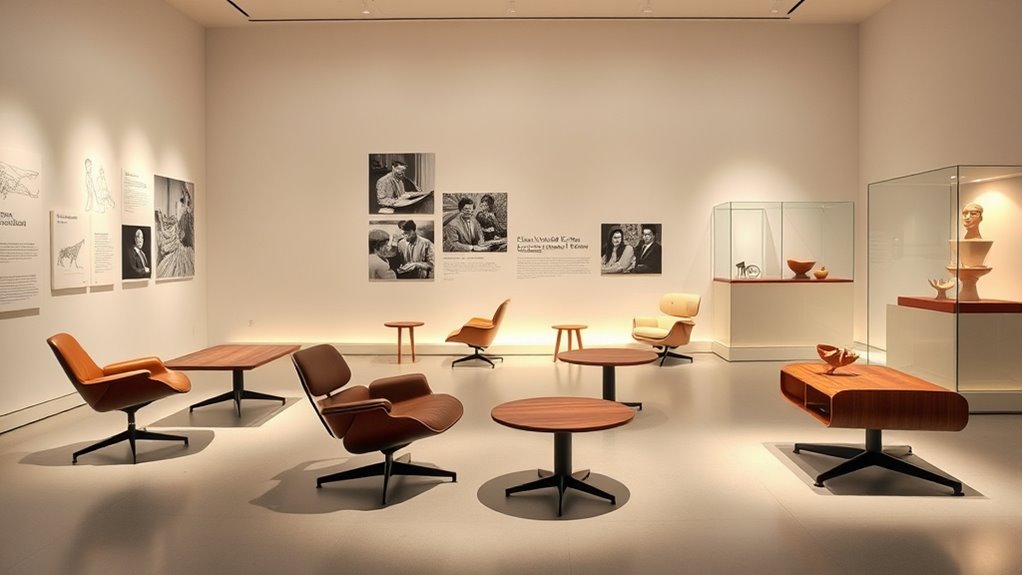
Decades after their creation, the Eames designs continue to hold an essential place in modern interiors and design education, demonstrating their lasting relevance. Preservation efforts focus on applying expert restoration techniques to maintain their integrity while respecting original craftsmanship. Cultural preservation plays a vital role, ensuring their influence endures across generations. This balance allows their iconic pieces to remain functional and inspiring. Below is a table highlighting key aspects:
| Aspect | Implementation |
|---|---|
| Restoration Techniques | Careful cleaning, material repair, and authentic replacements |
| Cultural Preservation | Exhibitions, educational programs, and collections management |
Celebrating the Eames’ Enduring Impact

The lasting impact of Charles and Ray Eames is evident in how their designs continue to shape modern aesthetics and functional spaces. Their work exemplifies successful artistic collaborations that blend art, architecture, and industrial design, inspiring countless creators today. The Eames’ innovative spirit is further celebrated through technological advancements that have expanded their influence. From digital recreations of their iconic pieces to new materials inspired by their original concepts, their legacy remains relevant. Their ability to merge form and function has set enduring standards for contemporary design. By continually pushing boundaries, the Eames have fostered a culture of creativity and innovation, ensuring their contributions are celebrated not just as mid-century icons, but as timeless pioneers whose impact endures in everyday life.
Frequently Asked Questions
How Did Charles and Ray Eames Collaborate Creatively?
You see, Charles and Ray Eames collaborated creatively through a seamless blend of their talents, fostering strong creative synergy. They engaged in collaborative processes, bouncing ideas off each other and refining designs together. Their partnership allowed them to innovate continuously, combining Charles’s technical expertise with Ray’s artistic vision. This dynamic teamwork led to groundbreaking furniture and multimedia projects, making their legacy a demonstration of the power of true collaboration.
What Challenges Did the Eames Face During Their Innovative Projects?
You face challenges like funding struggles and technological limitations that test your innovative spirit. Budget constraints often make it hard to access new materials or advanced tools, forcing you to innovate within tight means. Technological limitations can slow progress, but you adapt by experimenting with existing technologies or developing new techniques. Despite these hurdles, your perseverance pushes boundaries, leading to groundbreaking designs that leave a lasting impact on modern aesthetics and functionality.
How Have Eames Designs Influenced Contemporary Sustainable Furniture?
Did you know that 70% of modern sustainable furniture uses recycled materials? Eames designs have greatly influenced this trend through their innovative use of recycled plastics and modular design. Their emphasis on versatility and eco-friendly materials encourages contemporary furniture makers to prioritize sustainability, reducing waste and creating adaptable pieces. By embracing these principles, you can contribute to a greener future while enjoying stylish, functional furniture inspired by the Eames legacy.
What Lesser-Known Projects Showcase the Eames’ Architectural Vision?
You should explore the Eames’ lesser-known projects like their experimental structures and architectural sketches. These works showcase their innovative architectural vision beyond furniture design. Their experimental structures often pushed boundaries, revealing a forward-thinking approach. The architectural sketches provide insight into their creative process, illustrating how they envisioned spaces and forms. These projects highlight their commitment to blending art, engineering, and architecture, making their influence felt in unexpected areas.
How Do the Eames’ Multimedia Works Impact Today’s Digital Design?
Your experience with the Eames’ multimedia works shows how they revolutionized digital design through interactive storytelling and multimedia integration. They inspire you to create immersive experiences that blend visuals, sound, and interactivity seamlessly. Their innovative approach encourages you to push boundaries, making your digital projects more engaging and dynamic. By studying their techniques, you can craft compelling narratives that captivate audiences and elevate modern multimedia design.
Conclusion
You carry the torch of their timeless creativity, feeling the echoes of their groundbreaking ideas ripple through modern design. Like a vibrant tapestry woven with innovation and passion, the Eames’ legacy continues to inspire and shape your world. Their vision is a shining beacon, guiding you through a landscape of endless possibilities. Embrace their spirit, and let their ingenuity ignite your own journey—because their legacy isn’t just remembered, it’s alive in every inspired creation you make.
Halloween Picks
halloween
As an affiliate, we earn on qualifying purchases.