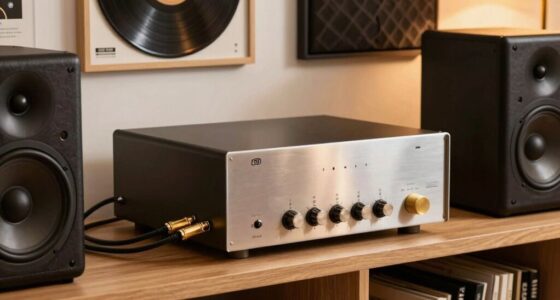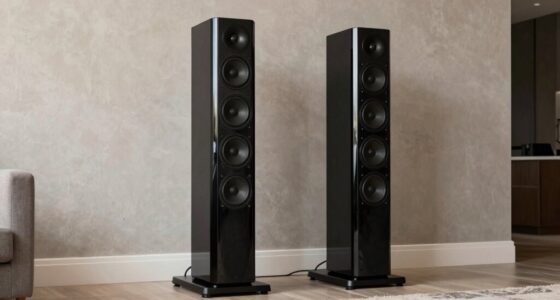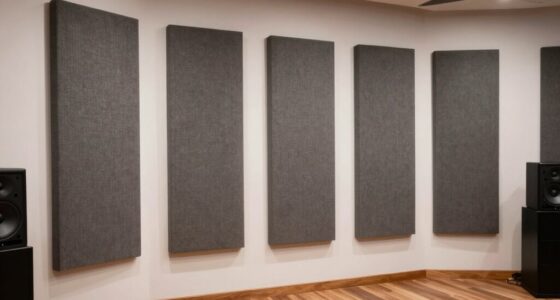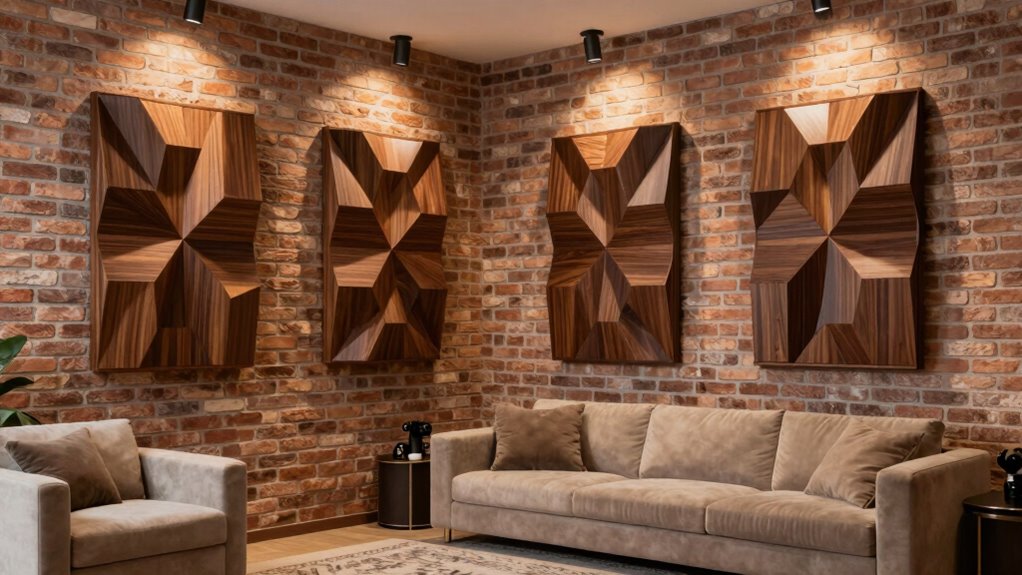

You should place sound diffusers on back or side walls of your home theater or media room to disperse sound waves evenly and reduce echo. In dedicated music or recording spaces, position them behind instruments or listening areas for cleaner sound. Strategically placing diffusers behind sound sources or reflective surfaces enhances clarity. They also serve as stylish decor, blending with your interior. Keep exploring to discover more effective ways to optimize your space.

Get furniture and decor delivered free with Prime
- Fast, free delivery on millions of items
- Prime Video, Amazon Music and more included
- Member-only deals all year
Key Takeaways
- Install along back or side walls of home theater or media rooms to evenly disperse sound waves and reduce echo.
- Position behind music instruments or listening areas to prevent sound bouncing into microphones or speakers.
- Place on reflective surfaces or behind sound sources to optimize acoustic diffusion and clarity.
- Use as decorative wall panels in living or entertainment spaces to enhance aesthetics and sound quality.
- Incorporate in corners or large wall areas for comprehensive sound treatment and improved overall acoustics.
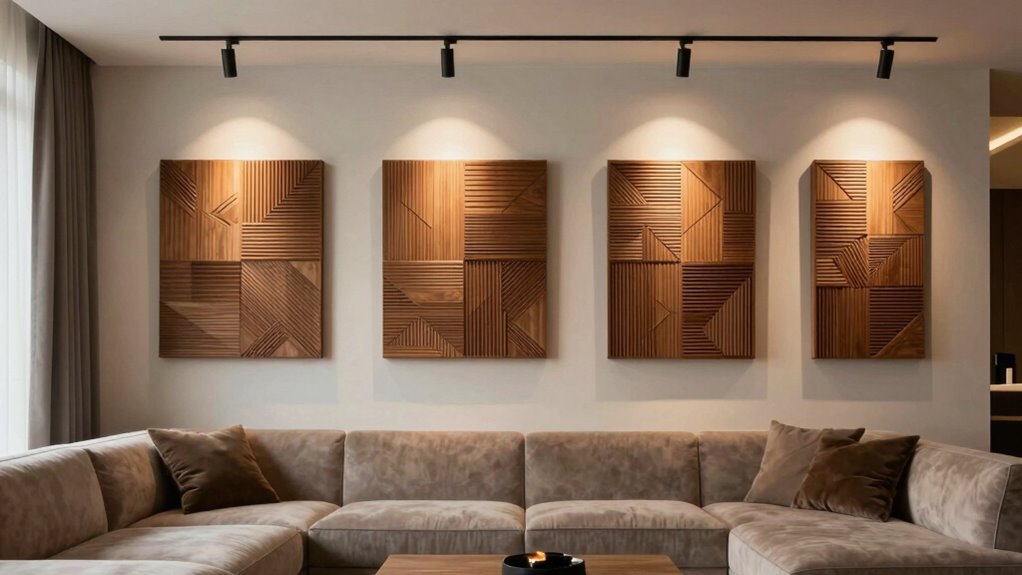
If you’re looking to improve the acoustics in your home, sound diffusers are a practical solution. They help scatter sound waves rather than absorb or reflect them, creating a more balanced and natural acoustic environment. When you incorporate sound diffusers into your space, you’re not just enhancing sound quality; you’re also adding an element of interior decor that can complement your style. Proper placement of diffusers ensures they’re effective, making them a smart choice for any room where sound clarity matters.
Start by considering your home theater or media room. These spaces often suffer from echo and muffled audio, which can diminish your viewing experience. Installing sound diffusers along the back or sides of the room helps disperse sound waves evenly, reducing harsh reflections and dead spots. This improves clarity and creates a more immersive experience. Because diffusers come in various designs and finishes, you can select ones that blend seamlessly with your decor, turning functional acoustic treatment into a visual statement.
Sound diffusers in media rooms enhance clarity and blend seamlessly with your decor for an immersive experience.
If you have a dedicated music or recording space, placement becomes even more critical. Here, diffusers are best positioned on walls behind your instruments or listening area. This setup prevents sound from bouncing directly back into microphones or speakers, ensuring cleaner recordings and better sound fidelity. In these spaces, diffusers also serve as part of your interior decor, adding a stylish touch that elevates the room’s aesthetic. Their visual appeal can complement vintage or modern themes alike, and choosing the right design helps your space feel intentional and thoughtfully curated. Incorporating sound treatment options can further enhance their effectiveness and overall acoustic performance. Additionally, understanding acoustic principles can help you optimize diffuser placement for maximum benefit. Using proper acoustic design techniques can ensure your diffusers work as efficiently as possible to improve sound quality. Moreover, considering room size and shape can help you determine the most effective diffuser placement for your specific space.
As an affiliate, we earn on qualifying purchases.
Frequently Asked Questions
How Do Sound Diffusers Compare to Acoustic Panels?
Sound diffusers and acoustic panels both improve room acoustics, but diffusers blend better with your room aesthetics and maintain a natural sound. Diffusers scatter sound waves, reducing echo without deadening the space, while panels absorb sound, which can sometimes make rooms feel dull. Installation challenges are usually less with diffusers, as they often look more like decor. Choose diffusers if you want sound improvement without sacrificing style or facing complex installation.
Can Sound Diffusers Improve Home Recording Studio Acoustics?
Yes, sound diffusers can considerably improve your home recording studio’s acoustics. Think of them as the architects of sound, shaping echoes and reflections. Properly placed in key areas like the rear wall or ceiling, they enhance room placement and create an acoustic balance that keeps recordings clear and natural. This setup reduces muddiness and boosts clarity, giving your sound a professional edge without making your space feel overly dead or sterile.
Are There DIY Options for Making Sound Diffusers?
Yes, you can create DIY sound diffusers with some DIY craftsmanship and creative designs. Using everyday materials like wood, foam, or even cardboard, you can craft effective diffusers tailored to your space. Experiment with different shapes and patterns to enhance your room’s acoustics. There are plenty of online tutorials and ideas that inspire unique, budget-friendly solutions, making it easy to improve sound quality without professional help.
How Often Should Sound Diffusers Be Cleaned or Maintained?
Think of your sound diffusers as silent guardians of your space’s acoustic health. You should clean them every few months, depending on dust buildup, with gentle vacuuming or a soft cloth. Maintenance tips include avoiding harsh chemicals and checking for damage regularly. Keeping them tidy guarantees peak sound diffusion, like a well-tuned orchestra, so your room remains a haven of balanced sound and clear acoustics.
What Are the Best Materials for Effective Sound Diffusers?
You should choose sound diffusers made from materials like wood, foam, or plastic, as they offer great material durability and effective sound diffusion. Wood provides an appealing aesthetic and durability, making it a popular choice. Foam is lightweight and easy to install, while plastic offers cost-effective options with decent durability. Consider your space’s style and your maintenance preferences to select the best material, ensuring your diffusers last and look great.
acoustic diffusers for home theater
As an affiliate, we earn on qualifying purchases.
As an affiliate, we earn on qualifying purchases.
Conclusion
Now that you know the perfect places to position sound diffusers, you’ll be able to boost your home’s acoustics effortlessly. By balancing brightness with bass and preventing pesky echoes, you’ll create a cozy, enchanting space. Don’t delay—dive into decorating with diffusers, and you’ll discover a delightful difference in your daily domain. With a little clever planning, your home will become a harmonious haven where sound soars smoothly and serenely.
sound treatment diffuser for recording studio
As an affiliate, we earn on qualifying purchases.
As an affiliate, we earn on qualifying purchases.
As an affiliate, we earn on qualifying purchases.
Fall Picks
fall essentials
As an affiliate, we earn on qualifying purchases.