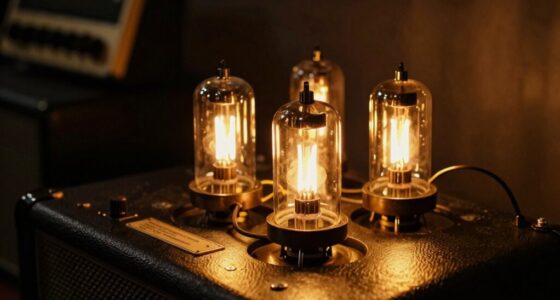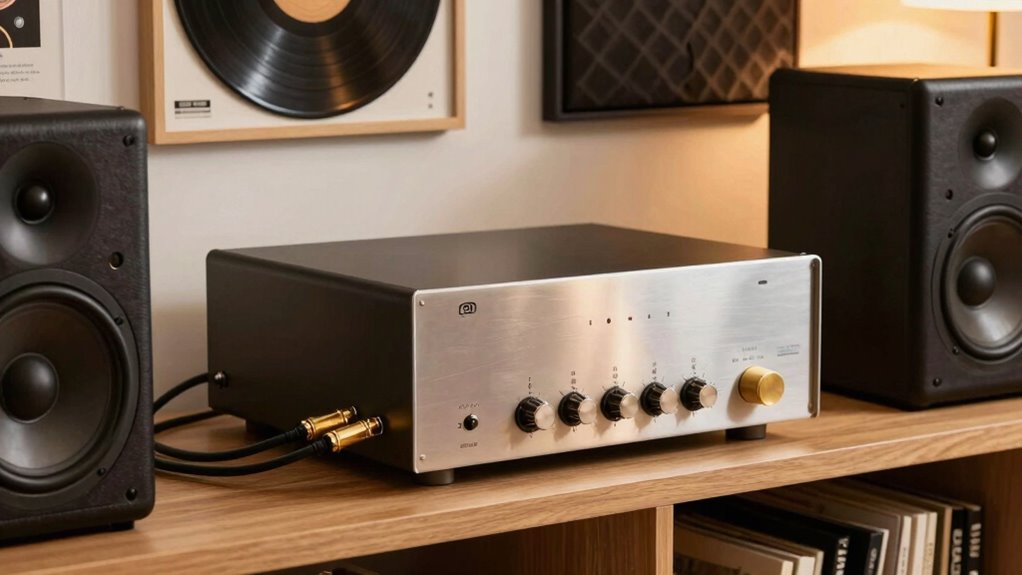

Class A amplifiers bring pure, natural sound quality to your room by operating with continuous conduction of output transistors, ensuring accurate and detailed audio. They focus on high linearity and minimal distortion, so every note sounds clear and true to the recording. While they produce more heat and waste energy, the result is a smoother, more lifelike listening experience that reveals more of your music’s nuances. To discover how this impacts your system, keep exploring what makes Class A amplifiers unique.

Get furniture and decor delivered free with Prime
- Fast, free delivery on millions of items
- Prime Video, Amazon Music and more included
- Member-only deals all year
Key Takeaways
- Provide exceptionally pure, natural, and detailed sound quality ideal for critical listening.
- Deliver consistent, linear audio performance regardless of signal level.
- Enhance music realism by faithfully reproducing recordings with minimal distortion.
- Require robust cooling and heat management due to high power dissipation and continuous operation.
- Consume more energy and generate more heat, impacting system efficiency and long-term reliability.
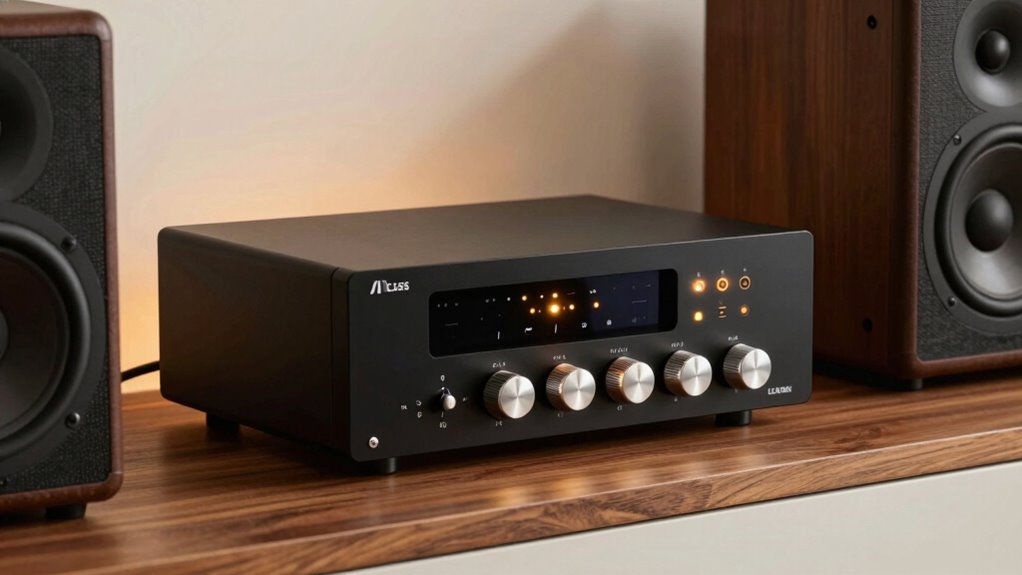
Have you ever wondered why Class A amplifiers are renowned for their exceptional sound quality? It’s because they operate with a unique approach to amplification that prioritizes purity and fidelity. Unlike other amplifier classes, Class A designs conduct the output transistors continuously, meaning they’re always on and actively amplifying the signal. This constant operation results in a very linear, accurate sound reproduction, which is why audiophiles often favor them for critical listening. When you choose a Class A amplifier, you’re investing in a piece of gear that delivers a smooth, detailed, and natural sound that can truly bring music to life in your room.
However, this performance comes with some trade-offs. One key aspect you need to understand is power efficiency. Class A amplifiers are not known for their efficiency; in fact, they tend to convert a lot of electrical energy directly into heat rather than useful audio power. Because the output devices are always conducting, they draw a steady amount of current regardless of the signal level, which means they waste a significant portion of power. This inefficiency influences your overall system design, as you’ll need a robust power supply and careful consideration of the amplifier’s placement. The constant heat dissipation becomes a central concern because the more power it consumes, the more heat it produces. Additionally, power management plays a critical role in maintaining system stability and performance.
Heat dissipation is another critical factor you’ll need to address. Class A amplifiers run hot, so proper ventilation and cooling are essential to prevent overheating that could damage components or degrade performance. Many audiophiles and technicians recommend placing these amplifiers in well-ventilated areas or using dedicated cooling systems. Effective heat management is vital for maintaining optimal performance and longevity of your equipment. Properly managing heat dissipation not only preserves component integrity but also ensures sustained audio quality over time. Moreover, selecting the right cooling solutions can significantly enhance the overall reliability and lifespan of your amplifier.
As an affiliate, we earn on qualifying purchases.
Frequently Asked Questions
How Do Class a Amplifiers Compare in Efficiency to Other Classes?
Class A amplifiers are less efficient than other classes, like Class AB or Class D, because they consume more power and generate more heat. You’ll notice higher power consumption, which can lead to increased energy costs. Additionally, they produce significant heat, requiring better cooling solutions. While they offer superior sound quality, their inefficiency makes them less practical for long-term use if energy efficiency and heat management are priorities.
Are Class a Amplifiers Suitable for Portable Audio Devices?
Think of a Class A amplifier as a steady lighthouse—reliable but not built for portability. They aren’t ideal for portable audio devices because they need substantial power and generate heat, making battery compatibility a challenge. If you’re after mobility, these amplifiers aren’t the best choice. Instead, look for compact, efficient options designed to run on portable power sources, ensuring your device stays lightweight and easy to carry.
What Maintenance Is Required for Class a Amplifier Systems?
You need to regularly check the cooling requirements for your Class A amplifier systems, as they generate significant heat that demands proper ventilation or cooling solutions. Additionally, monitor power consumption since these amplifiers tend to be less energy-efficient, constantly drawing high power levels. Keep vents clear, clean cooling components, and guarantee your setup is well-ventilated to maintain peak performance and prevent overheating.
Can Class a Amplifiers Be Integrated With Modern Digital Systems?
You can definitely integrate Class A amplifiers with modern digital systems. Surprisingly, many high-end Class A amps now feature digital inputs like USB, Ethernet, and Bluetooth, making digital integration smooth. They’re designed for modern compatibility, allowing you to connect your favorite streaming devices or digital sources effortlessly. This blend of classic sound quality and digital convenience ensures your system stays current while delivering exceptional audio performance.
What Are the Common Misconceptions About Class a Amplifiers?
Many believe that Class A amplifiers always deliver a vintage sound, but that’s not true—they can produce modern clarity too. Some think heat management isn’t a concern, yet these amps generate significant heat, requiring proper cooling. People often assume they’re inefficient, but they offer high-quality sound with minimal distortion. Remember, their reputation for vintage warmth and heat production isn’t an automatic guarantee of sound quality—careful setup matters.
As an affiliate, we earn on qualifying purchases.
Conclusion
In the end, choosing a Class A amplifier transforms your room into a sanctuary of pure sonic bliss, elevating every note to celestial heights. It’s not just amplification; it’s an art form that makes your system breathe with life, turning ordinary listening into an extraordinary experience. With a Class A amplifier, you don’t just hear music—you feel it, almost as if the artist is performing right there in your space, rewriting the very essence of sound.
As an affiliate, we earn on qualifying purchases.
As an affiliate, we earn on qualifying purchases.
Halloween Picks
halloween
As an affiliate, we earn on qualifying purchases.