TL;DR

Get furniture and decor delivered free — and shop member deals
- Fast, free delivery on millions of items
- Access to Prime Big Deal Days deals on October 6–7
- Prime Video, Amazon Music and more included
House Beautiful’s retrospective traces wallpaper trends from subdued early-1940s designs to the colorful postwar patterns that followed, then through the distinctive looks of each later decade. Its account describes oversized botanicals, murals and textured finishes among styles seen in the 2020s, while noting that the decade is still underway.
House Beautiful has published a decade-by-decade retrospective of wallpaper styles, tracing changes from muted wartime palettes in the early 1940s to the botanical prints, murals and textured wallcoverings it says are visible in today’s interiors. The article uses examples from past issues of the magazine and cautions that the 2020s are not far enough along for a definitive style to emerge.
The retrospective describes the 1940s as a decade of change: wallpaper in the first half of the decade tended toward drab, subdued tones during World War II, while designs became more colorful and playful after the war. House Beautiful points to bold florals, Art Deco-like geometry and combinations of traditional and modern motifs in a design featured in its April 1946 issue.
For the 1950s, the report highlights busy midcentury designs, including novelty motifs such as boomerangs, aquariums and kitchen utensils, alongside pastel colors and floral bouquets. In the 1960s, graphic florals and geometric patterns used contrasting colors; orange, brown and green were among the hues it identifies. Psychedelic swirls and abstract designs also appeared.
The following decades brought further shifts. The 1970s amplified large-scale, repeating patterns and used materials such as vinyl and grasscloth. In the 1980s, the article describes both chintz and prairie-style florals and vivid abstract designs associated with the Memphis Group. Its examples include a room with wallpaper, ceiling borders and a border mimicking wainscoting. The 1990s leaned toward lighter palettes, subtle patterns and country-cottage or romantic looks, though damask also returned.
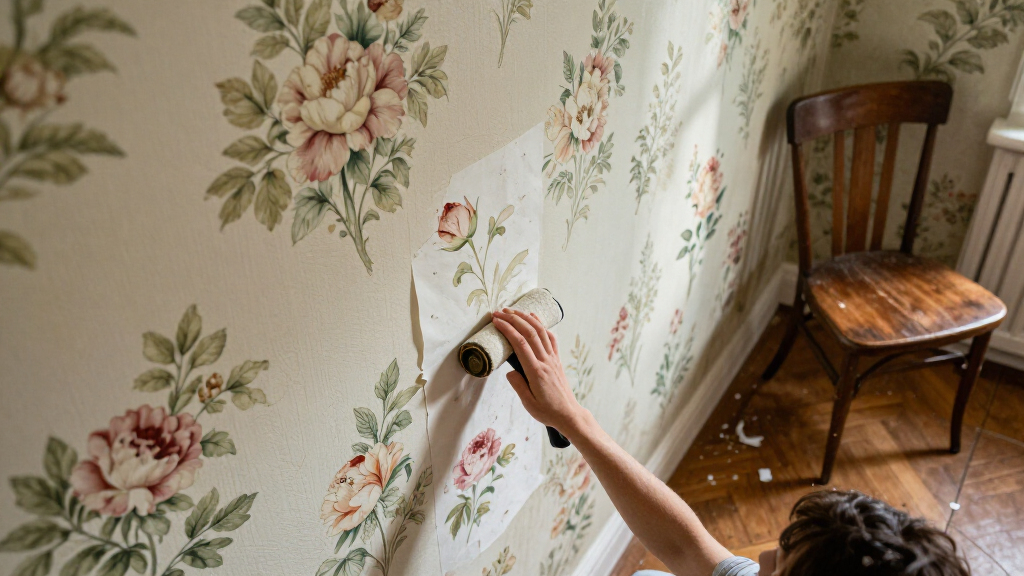
According to the article, early-2000s interiors favored shabby-chic florals and traditional patterns such as toile, while later designs incorporated brighter, computer-generated abstracts. In the 2010s, peel-and-stick wallpaper expanded the options for renters and DIY decorators; textured grasscloth and trompe l’oeil effects were also prominent. For the 2020s, House Beautiful points to oversized florals, richly colored botanicals, murals and continued interest in texture.
Wallpaper Tracks Changing Home Tastes
The retrospective offers readers a visual shorthand for how home decoration has shifted with changing tastes and technology. Wallpaper moved from postwar optimism and midcentury novelty toward the restrained palettes associated with the 1990s, then to products and patterns shaped by digital design and easier installation. Peel-and-stick options, in particular, can make a traditionally fixed decorating choice more practical for renters or people seeking a temporary change, as the report observes.
The history may also help readers identify styles in older homes or understand why certain prints feel tied to a particular era. But the article is a design retrospective, not a survey of sales or a measurement of how common each style was. Its decade-by-decade labels describe trends and examples, not rules that applied to every home.
As an affiliate, we earn on qualifying purchases.
From Wartime Walls to Digital Prints
The account is anchored in House Beautiful’s own archives, citing rooms and wallpaper examples published in issues dating from 1946 to 2014. Those examples give the article a timeline, but they represent selected editorial features rather than a complete record of wallpaper production or household use.
Its framing also reflects uneven historical periods. The 1940s section distinguishes between wartime restraint and the more colorful postwar years, while the 2000s section notes that the early and late parts of the decade looked different. The article treats the 2020s as an ongoing period, rather than assigning the decade a settled visual identity.
peel and stick wallpaper for renters
As an affiliate, we earn on qualifying purchases.
As an affiliate, we earn on qualifying purchases.
The 2020s Style Is Still Forming
No definitive look for the 2020s can yet be established, the article says, because the decade is still underway. Oversized florals, botanical designs, murals and grasscloth are presented as trends seen so far, not as a final verdict on the period.
The source material does not provide sales figures, market research or a comparison of how widely each style was adopted. It also does not specify the report’s publication date. The historical descriptions should therefore be read as House Beautiful’s editorial account of notable designs, rather than quantitative claims about the wallpaper market.
As an affiliate, we earn on qualifying purchases.
More Years Will Clarify the Trend
There is no announced follow-up or future milestone in the source material. As the 2020s continue, additional design coverage and later retrospective reporting may show whether the current interest in murals, botanicals and textured finishes becomes the era’s lasting signature or gives way to other styles.
For now, House Beautiful’s account leaves the decade open-ended: readers can compare the looks already appearing in homes with the historic examples, but any conclusion about what will define the 2020s remains provisional.
As an affiliate, we earn on qualifying purchases.
Key Questions
What wallpaper trends does the article associate with the 2020s?
House Beautiful points to oversized florals, richly colored botanical prints, wallpaper murals and textured finishes such as grasscloth. It describes these as styles visible so far, not a settled definition of the decade.
How did wallpaper change after World War II?
The report says early-1940s wallpaper often used subdued tones, while the second half of the decade brought more color, bold florals, geometric designs and a mix of traditional and modern motifs.
What made 2010s wallpaper different?
The article highlights the availability of peel-and-stick wallpaper, which it says offered another option for renters and DIY decorators. It also points to textured grasscloth, trompe l’oeil effects and minimalist geometric prints such as chevron.
Is this a survey of the most popular wallpaper in each decade?
No. It is a House Beautiful editorial retrospective using selected examples from the magazine’s archives. The supplied material does not include market data or measurements of how widely particular patterns were used.
Source: rss
Halloween Picks
halloween
As an affiliate, we earn on qualifying purchases.