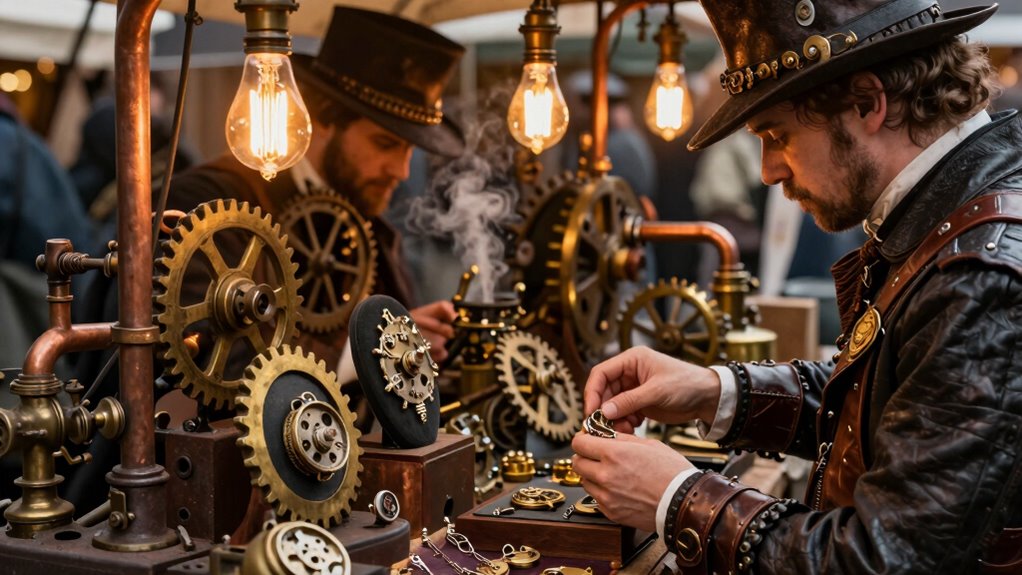

The Machine Age shapes your appreciation of industrial and steampunk taste by blending sleek, technological designs with Victorian craftsmanship. It emphasizes materials like copper, brass, and iron, showcasing visible gears and mechanical parts that highlight durability and artistry. This era celebrates ingenuity, detailed handiwork, and a dialogue between elegance and engineering. As you explore further, you’ll uncover how these influences create a unique, timeless aesthetic that combines craftsmanship with industrial innovation.

Get furniture and decor delivered free with Prime
- Fast, free delivery on millions of items
- Prime Video, Amazon Music and more included
- Member-only deals all year
Key Takeaways
- The Machine Age introduced sleek, metallic designs and visible mechanical parts, influencing both industrial and steampunk aesthetics.
- Technological advancements fostered craftsmanship emphasizing durability, precision, and intricate detailing.
- Industrial materials like copper, brass, and iron became central to aesthetic expression in both styles.
- The era’s innovations celebrated engineering marvels, shaping a visual language of progress and craftsmanship.
- Steampunk merged Victorian elegance with industrial elements, creating a fusion inspired by Machine Age technological optimism.
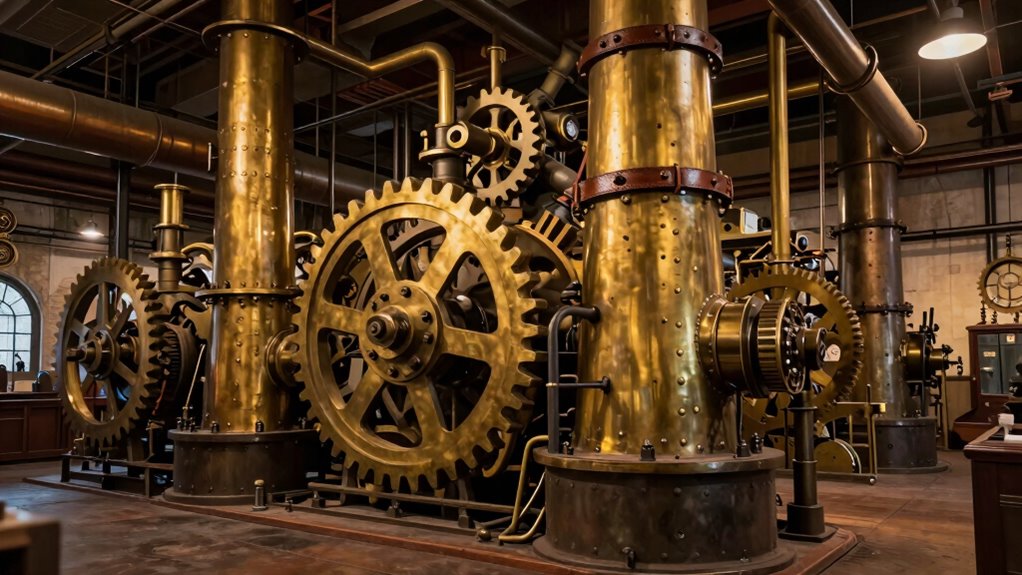
Have you ever wondered how the bold aesthetics of the Machine Age seamlessly blend with the intricate charm of steampunk? It’s a fascinating fusion that draws from two distinct yet surprisingly compatible worlds. The Machine Age, spanning the late 19th and early 20th centuries, was driven by rapid technological advancements and the rise of industrialization. Its aesthetic is characterized by sleek lines, metallic surfaces, and a sense of progress and innovation. When you look at steampunk, you see this influence reflected through a lens that romanticizes Victorian aesthetics and industrial revolution craftsmanship.
Victorian aesthetics, with their ornate details, dark woods, and elaborate ornamentation, serve as the perfect counterpoint to the Machine Age’s streamlined, functional design. You can spot this in steampunk by the way it combines the elegance of the Victorian era’s fashion and architecture with mechanical elements. It’s as if you’re stepping into an alternate history where craftsmanship from the industrial revolution is preserved and celebrated. Brass gears, riveted metal panels, and clockwork mechanisms are woven into everything from clothing to décor, echoing the meticulous handiwork of that time. This craftsmanship emphasizes durability and artistry, reflecting a period when every piece was made with skill and precision.
Victorian elegance meets industrial craftsmanship through brass gears, rivets, and clockwork—celebrating durability, artistry, and meticulous skill.
The influence of the industrial revolution is clear in the materials and techniques used. You notice how steampunk designs incorporate industrial materials like copper, brass, and iron, all of which were fundamental to the manufacturing processes of that era. The emphasis on visible gears, rivets, and mechanical parts celebrates the ingenuity and labor of the industrial revolution. You’re drawn to the way these elements are not hidden but displayed proudly, reflecting a respect for craftsmanship and technological achievement. It’s as if every piece tells a story of innovation, labor, and artistry from the age when machines transformed society. Additionally, the use of metals and craftsmanship highlights the importance of materiality and skill in this style. The appreciation for technological marvels and their detailed construction plays a significant role in shaping the visual identity of steampunk. The integration of industrial techniques further underscores how these designs honor the labor and ingenuity of the industrial revolution. Recognizing the industrial aesthetic as a whole helps deepen your understanding of how these elements create a cohesive and immersive visual language. This fusion doesn’t just appeal to your sense of style; it invites you to appreciate the craftsmanship and technological marvels that helped shape a new world. It’s a timeless dialogue between elegance and engineering, craftsmanship and progress, all woven into the mesmerizing fabric of steampunk.
As an affiliate, we earn on qualifying purchases.
Frequently Asked Questions
How Did Technological Advancements Influence Everyday Fashion During the Machine Age?
You notice that technological advancements during the Machine Age influenced your everyday fashion by incorporating industrial motifs and mechanical symbolism. Clothing features gears, cogs, and metallic accents, reflecting the era’s fascination with machinery. Fabrics like leather and metal become prominent, emphasizing durability and innovation. These elements create a futuristic yet gritty aesthetic, making your style a tribute to progress and the industrial revolution, blending functionality with bold, mechanical-inspired design.
Are There Specific Materials Unique to Steampunk Design Inspired by the Machine Age?
Yes, steampunk design often features materials inspired by the Machine Age, like Victorian metalwork and brass embellishments. You’ll notice these materials in jewelry, accessories, and decor, giving your pieces a vintage yet mechanical feel. Brass, with its warm tone, enhances the industrial aesthetic, while Victorian metalwork adds intricate details. These materials help you create authentic steampunk styles rooted in the technological innovations of the era.
How Did Societal Views on Machinery Evolve Alongside Steampunk Aesthetics?
Did you know that during the industrial revolution, societal perceptions shifted from viewing machinery as a threat to seeing it as progress? In steampunk, this evolution is reflected through a nostalgic admiration for machinery’s craftsmanship and innovation. You embrace this blend of past and future, celebrating the era’s ingenuity while recognizing its impact on society. Steampunk aesthetics mirror this transformation, highlighting both awe and critique of technological advancement.
What Role Did Literature and Media Play in Popularizing Machine Age-Inspired Styles?
You see, literature and media play a vital role in popularizing machine age-inspired styles by showcasing industrial symbolism and evoking technological nostalgia. Through stories, films, and art, you’re immersed in worlds where gears, steam, and machinery symbolize progress and innovation. This exposure sparks fascination and admiration for the era’s craftsmanship, influencing fashion, design, and cultural attitudes, making steampunk and industrial aesthetics widely appealing and deeply ingrained in popular culture.
How Do Modern Designers Incorporate Machine Age Elements Into Contemporary Fashion?
You incorporate machine age elements into contemporary fashion by blending innovative textile techniques with futuristic accessory designs. You create structured silhouettes that evoke industrial machinery, use metallic fabrics to mirror steampunk aesthetics, and craft accessories resembling gears and cogs. You combine sleek lines with mechanical details, emphasize functionality alongside form, and infuse your designs with a sense of progress and innovation. This approach results in styles that are both modern and rooted in the machine age’s visionary spirit.
As an affiliate, we earn on qualifying purchases.
Conclusion
As you reflect on how the Machine Age influences our tastes, it’s clear that our fascination with machinery and innovation runs deep. Steampunk, with its retro-futuristic charm, invites you to blend history with imagination. Do you see yourself embracing this blend of past and future, or is it just a fleeting trend? Ultimately, understanding our love for these mechanical aesthetics reveals how we’re constantly shaping and reshaping our cultural identity through technology.
As an affiliate, we earn on qualifying purchases.
metallic industrial pendant lights
As an affiliate, we earn on qualifying purchases.
As an affiliate, we earn on qualifying purchases.
Halloween Picks
halloween
As an affiliate, we earn on qualifying purchases.