
TL;DR

Get furniture and decor delivered free with Prime
- Fast, free delivery on millions of items
- Prime Video, Amazon Music and more included
- Member-only deals all year
A Veranda report gathers advice from gallery, auction and interior-design professionals on deciding whether to buy a work of art. They recommend weighing how it makes you feel and what it means to you, while checking practical factors such as size and where it could hang; they do not present emotional connection as a guarantee of financial return.
Veranda has published a guide to choosing art, drawing on gallery, auction and interior-design professionals who say buyers should consider their emotional response and the work’s fit with their home before committing. The advice matters to people facing a potentially costly purchase: the experts describe personal connection as a useful guide, not proof that a piece will rise in value or suit every room.
Liz Lidgett, founder and owner of Liz Lidgett Gallery in Des Moines, advises buyers who feel overwhelmed by the choices to consult a trusted gallerist, designer or curator. She says a professional who represents or supports an artist is showing confidence in that artist’s work and career. Buyers can also browse established online sellers and galleries, the report says, but the final decision remains personal.
The report suggests asking how a work makes you feel, whether it brings up a memory, and whether it contributes to the story of a home. Lauren Robbins, owner of Lauren Robbins Interiors in Augusta, Georgia, says she imagines passing pieces on to her children and explaining where she found them and what they mean to her. She also says emotionally investing in a work can make its financial cost easier to accept; this is her account of buying art, not a financial-performance assessment.
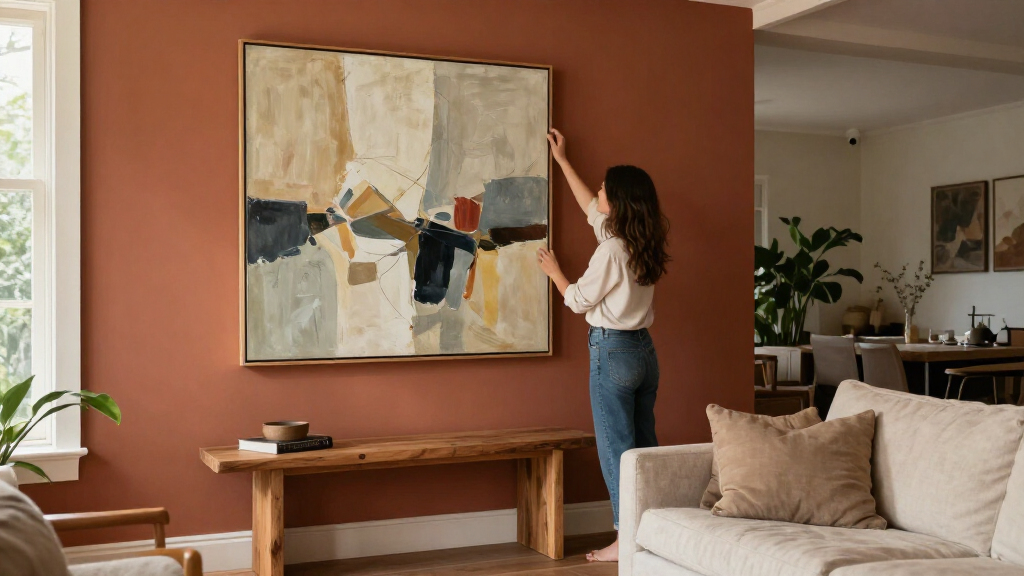
Practical considerations matter alongside personal response. Robbins advises considering a work’s scale in relation to the room and its architectural features. Jenn Marder, co-owner of Pepper Home Decor in New Jersey, cautions against choosing art merely to match a rug, wall color or current decorating scheme. She argues that people can change those details more readily than a collection, and that a piece a buyer loves may move with them.
Personal Meaning Before Price
Art purchases can involve substantial expense, and the source does not offer a formula that can predict whether a buyer will continue to love a work or whether it will gain market value. The experts’ advice instead helps buyers distinguish personal value from investment claims: a memorable response, a connection to a place or person, or a story the owner wants to preserve may be meaningful reasons to buy, but none guarantees resale value.
The approach also challenges the idea that artwork must coordinate precisely with a room’s current decor. Marder’s advice is that a work can stand on its own and remain part of a home as furnishings or paint colors change. That can help buyers think beyond a single room, while still checking whether the piece can be displayed safely and at a suitable scale.
Products Worth Considering

Levoit Core 400S-P Smart Air Purifier for Large Rooms

LEVOIT Vital 200S-P Smart Air Purifier for Large Rooms

Philips Hue Large Smart Light Tube, Black – White and Color Ambiance LED Color-Changing Light – 1 Pack
As an affiliate, we earn on qualifying purchases.
Advice From Art Professionals
The Veranda report brings together perspectives from several parts of the art and home-design business. Its sources include a gallery owner, an interior designer, a home-decor retailer and the director of fine art at New Orleans Auction Galleries. Their recommendations focus on how to choose and live with art, rather than on a standardized appraisal process or a market forecast.
Jelena Restovic James, the auction house’s director of fine art, recommends visiting exhibitions or local galleries and choosing work that forms a personal connection, rather than relying on trends or what other people own. The report also discusses art that recalls travel or family memories and pieces that help bring a room’s story together. It advises buyers to assess the work’s dimensions against features such as a mantel before making a commitment.
“Anyone and everyone can enjoy collecting art. You deserve to live with art on the walls.”
— Liz Lidgett, founder and owner of Liz Lidgett Gallery
No Guarantee of Future Value
The report provides expert opinions and personal buying practices, not evidence that any particular emotional response predicts long-term satisfaction, resale price or investment performance. It does not assess the value, authenticity or condition of a specific work, and it offers no universal rule for how much a buyer should spend.
Practical questions also depend on the individual work and home. The source excerpt raises scale and placement but does not provide a full checklist for hanging, installation, conservation or insurance. Buyers considering a high-cost work may need advice specific to its provenance, condition and price; the report’s general guidance cannot settle those issues.
Questions Before You Buy
The report’s next step for readers is to slow down and test the choice against their own priorities: what feeling they want in the room, whether the work moves them, what memories it brings back, and whether they can picture it in more than one place. Buyers who want help narrowing options can speak with a trusted gallerist, curator or designer, or visit a local exhibition or gallery, as the experts recommend.
Before paying, buyers can also check the work’s dimensions against the intended wall and architectural features, and ask appropriate questions about the piece and its price. The source does not identify a specific upcoming event or deadline; its guidance is directed at individual purchasing decisions.
Key Questions
How can I tell if I have found the right piece of art?
The experts quoted by Veranda suggest paying attention to whether the work creates a strong response, brings up a memory or feels meaningful to you. These are personal signals, not guarantees that you will always feel the same way or that the work will increase in value.
Should art match my furniture or wall color?
Jenn Marder advises buyers not to make matching the main test. Furnishings and paint can change, she says, while artwork may move with its owner. Consider whether the work suits your taste and can live comfortably in the home without requiring exact color coordination.
Is buying a piece I love a good financial investment?
The report does not claim that emotional attachment predicts financial returns. Lauren Robbins says personal connection can make the cost easier for her to accept, but buyers should not treat that experience as a forecast of resale value.
What practical checks should I make before buying?
Consider the work’s dimensions and how they relate to the intended wall, mantel and other architectural features. For a costly purchase, the general advice in the report does not replace work-specific questions about condition, authenticity, provenance or price.
Source: rss