
TL;DR

Get furniture and decor delivered free with Prime
- Fast, free delivery on millions of items
- Prime Video, Amazon Music and more included
- Member-only deals all year
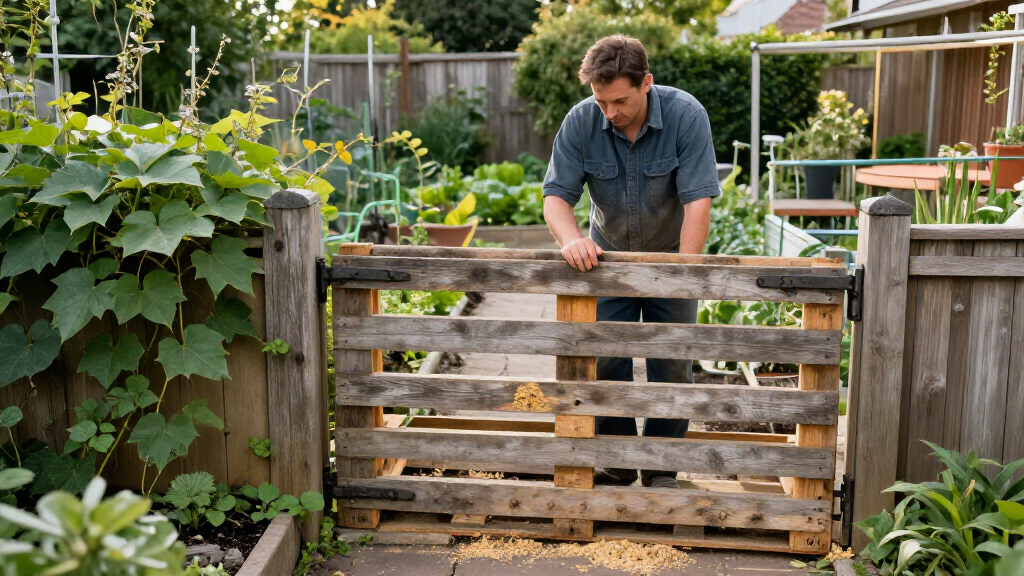
A Hunker report highlights a ChattersDIY project that turns reclaimed pallet boards into a rustic garden gate. The build uses a framed structure, diagonal brace, hinges and latch; the source does not provide a project cost, dimensions or a tested estimate of durability.
A ChattersDIY garden-gate project highlighted by Hunker shows how boards reclaimed from old wooden pallets can be assembled into a rustic entrance for a garden. The design uses a rectangular frame, a diagonal brace and vertical boards, offering a reuse option for homeowners seeking a custom gate without buying new gate boards; the report gives no verified cost or durability figures.
The project begins with dismantling pallets and selecting usable boards. Hunker’s report advises discarding wood that is badly warped or split, removing nails and sanding the pieces before cutting them to size. The suggested materials include pallet wood, exterior screws, hinges rated for the gate’s weight, a latch and an outdoor paint or stain. Tools listed include a tape measure, drill, saw, clamps and equipment for taking the pallets apart.
For the gate structure, the report describes a rectangular frame with a diagonal wooden brace running from the lower hinge corner toward the upper latch corner. Vertical pallet boards are then attached across the frame. The spacing can be adjusted: wider gaps create a more open appearance, while closer boards provide more screening. Hunker says the gate can be coordinated with a nearby fence by matching its height and board spacing; an arched fence top is another possible design choice.
Before installation, the wood should receive an exterior finish, including on its cut ends, and be allowed to dry. The gate can then be supported on temporary blocks while the hinges are attached to the frame and a sturdy post. After fitting the latch and removing the blocks, the builder should check that the gate swings freely. These are instructions reported for the project, not a published engineering test or a guarantee that every pallet gate will suit every opening.
A Reuse Option for Garden Entrances
The project’s appeal is its combination of reclaimed material and a practical yard feature. Reusing pallet boards may reduce the need to purchase new boards for the gate itself, while allowing a homeowner to set the gate’s height, finish and board spacing to fit a particular garden entrance. Hunker presents the approach as budget-friendly, but does not publish a bill of materials, local prices or a comparison with ready-made gates, so readers cannot infer a specific saving from the report.
The design also makes clear that appearance and function depend on choices made during construction. Closely spaced boards can screen the entrance more than widely spaced ones, while a diagonal brace is included to help resist sagging. The finished gate still depends on sound lumber, secure supports and hinges suited to its weight. A decorative paint color, handle or garden-name plaque can personalize the result, but those additions do not replace the need for a gate that is properly supported and swings without dragging.
Products Worth Considering

Philips Hue Festavia Globe Outdoor String Lights, 32 Bulbs, 91 ft

Philips Hue Secure Wired Video Doorbell, 2K, Black

Philips Hue Bridge Pro Smart Lighting Hub
As an affiliate, we earn on qualifying purchases.
How the Pallet Build Is Designed
Hunker describes the gate as one of the wood-pallet projects demonstrated by the YouTube channel ChattersDIY. The report places it among possible uses for a garden entrance beside a shed, a fenced vegetable patch or a side-yard walkway. Its weathered boards are presented as a style that may fit cottage-style planting beds, though the final look will depend on the condition and finish of the reclaimed wood.
The article frames the project as an alternative for people who find that pricing a new gate and its materials makes a garden upgrade more expensive than expected. It does not identify the particular pallets used in the demonstration, give the gate’s dimensions, or state whether the wood was treated. Those details matter when adapting the idea: pallet boards vary in condition and size, and the report’s general instructions do not establish that any reclaimed pallet is suitable for outdoor construction.
“A rectangular frame with a diagonal wooden brace running from the lower hinge corner toward the upper latch corner”
— Hunker, reporting on the ChattersDIY project
Costs, Materials and Durability
The source does not state how much the project cost, how long construction took, or the gate’s dimensions. It also does not provide a test of how well the design holds up in different weather conditions. The phrase “virtually no cost” appears in the report’s description of the finished project, but no itemized estimate is provided; hinges, screws, finish and support posts may still involve expense.
It is also unclear where the pallets came from, how they were used previously, or whether the wood was treated. The report advises rejecting damaged boards and applying an exterior finish, but it does not identify a specific finish or provide a wood-treatment assessment. Readers should inspect reclaimed material and check whether it is suitable for their intended use. The project instructions do not specify local permit or property-line requirements, which may vary with the location and the larger fence installation.
Plan the Opening Before Assembly
The next step for anyone adapting the project is to measure the opening and confirm that the existing posts—or planned supports—are sturdy enough for a working gate. The builder can then choose board spacing, sort and prepare the pallet wood, and assemble the frame with its diagonal brace. Hunker’s instructions call for exterior screws, suitable hinges, a latch and an outdoor finish, followed by a swing check after installation.
The report does not announce a follow-up test, revised design or further project update. The practical outcome will depend on the condition of the reclaimed boards and the quality of the supports and installation. Anyone proceeding should verify those details for their own site rather than treating the featured build as a measured specification.
Key Questions
What materials does the pallet-wood gate project use?
The Hunker report lists reclaimed pallet boards, exterior screws, hinges and a latch, plus an exterior paint or stain. It also recommends having sturdy posts or supports ready.
How does the design help prevent sagging?
The described build uses a diagonal brace from the lower hinge corner toward the upper latch corner. The report says this is intended to help resist sagging, but does not provide engineering measurements or a performance test.
Can the gate provide privacy?
Its screening depends on how closely the vertical boards are spaced. Hunker says closer spacing provides more privacy than a more open arrangement, without specifying a privacy level.
Does the report say the gate costs nothing to build?
No itemized price or verified total is provided. Although the report presents reused pallets as a budget-friendly option, hardware, finish and supports may still cost money.
What should be checked before installing it?
Measure the opening, inspect the boards for damage, prepare and finish the wood, and confirm the support post and weight-rated hinges are appropriate. After attaching the latch, check that the gate swings freely and does not drag.
Source: rss