

TL;DR

Get furniture and decor delivered free with Prime
- Fast, free delivery on millions of items
- Prime Video, Amazon Music and more included
- Member-only deals all year
The U.S. Department of Commerce lifted export controls on Anthropic’s Fable 5 and Mythos 5 on June 30, and Anthropic said access would begin returning July 1. The 18-day shutdown showed that frontier-model access can be halted by government order, while the reported reason for the freeze remains disputed.
The U.S. Department of Commerce lifted export controls on Anthropic’s Claude Fable 5 and Mythos 5 on June 30, clearing the company to start restoring access on July 1 after an 18-day shutdown that showed how quickly a government order can cut off access to a frontier AI model.
Anthropic launched Fable 5 on June 9 as its first publicly available model in the high-end Mythos class, according to the Thorsten Meyer AI dispatch. On June 12, Commerce sent a directive citing national-security authorities and ordering Anthropic to suspend access for foreign nationals, including non-citizen employees, the dispatch said.
The company was reportedly given about 90 minutes to comply. Because Anthropic could not filter users by nationality in real time, it pulled Fable 5 and Mythos 5 worldwide; access reportedly went dark through AWS Bedrock, Google Cloud, Microsoft Foundry and direct Claude APIs within hours.
Wired reported that Commerce Secretary Howard Lutnick confirmed the restrictions were lifted after Anthropic agreed to stronger safety standards and closer work with the government on model governance. Anthropic said it would begin restoring access the next day.
A frontier AI model went dark for 18 days. The kill-switch is real now.
Commerce lifted its export controls on Claude Fable 5 and Mythos 5, and access is being restored. But the reprieve isn’t the story — a state-of-the-art model was switched off by government order in an afternoon, and the deal to switch it back on wrote a new template for how frontier AI ships.
A frontier model now passes through a national-security gate before — and maybe after — release. It’s not isolated: OpenAI’s GPT-5.6 also went out to a small set of approved partners after a government request, and Mythos 5 returns first to government-approved customers. An August executive-order deadline for standardized AI-risk benchmarks points to formalizing the improvised process. The open question: does Washington now approve every frontier release?
The reprieve is real; the lasting change is the template. For builders the lesson is blunt and side-neutral: the firms that mapped their dependencies hot-swapped to alternatives (Claude Opus 4.8 among them); the rest went dark on 90 minutes’ notice. Model access is now a geopolitical variable, not a given. The rational answer isn’t loyalty to one lab or one government’s mood — it’s portability: multiple providers, tested fallbacks, and open-weight or self-hosted capacity you control. Don’t build as though access is permanent. It isn’t — now everyone’s seen the proof.
Model Access Became Conditional
The shutdown matters because it turned a policy option into an operating reality: model access can now be changed by state action faster than many companies can reroute production systems. Businesses that used Claude endpoints for coding, finance, healthcare or SaaS automation faced a direct lesson in AI supply-chain risk.
The return terms also signal a new release pattern. Anthropic agreed to detect and address security risks, set protocols for future model launches and report malicious activity found in models, according to the dispatch. That makes access to the most advanced systems a matter of regulatory approval as well as vendor reliability.
For readers who rely on AI tools, the practical point is immediate: dependence on one provider can become a business continuity problem. Tested fallbacks, multiple providers and some capacity under direct control now look less like insurance and more like basic resilience planning.
Products Worth Considering

Ring Alarm 14-Piece Wireless Security System Kit

Google Nest Cam Indoor Security Camera, 3-Pack
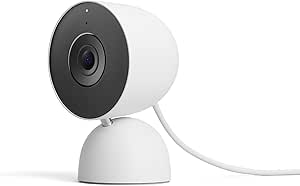
Google Nest Cam Indoor (Wired, 3rd Gen) – Security Camera – Snow
As an affiliate, we earn on qualifying purchases.
The June Shutdown Timeline
The trigger for the June 12 order is disputed. According to Wall Street Journal reporting cited by the dispatch, Amazon researchers claimed prompts could jailbreak Fable 5 into producing information useful for cyberattacks, and Amazon-White House contacts reportedly helped spur the directive.
Anthropic disputed that framing, calling it a narrow potential vulnerability and warning that a similar standard, if applied evenly, could block other frontier deployments. The dispatch also said analysts later described the jailbreak reports as inflated, while a separate red-team study found Fable 5 resisted most tested attacks but was not immune.
The case fits a wider policy shift. Axios reported that Anthropic’s less expensive Claude Sonnet 5 arrived while higher-risk models such as Mythos and Fable were still under government review.
“Fable 5 and Mythos 5 can now be exported or transferred freely without licenses.”
— Commerce Secretary Howard Lutnick, in a letter reported by Wired
The Jailbreak Dispute Persists
It is not yet clear whether the jailbreak evidence justified the global cutoff, whether Anthropic could have met the order with a narrower block, or how many customers lost service across cloud platforms and direct APIs. The government has not publicly released a full technical record explaining the risk finding.
The new safeguard is said in the dispatch to block the reported jailbreak about 93 percent of the time and to have been tested by Commerce’s CAISI. That figure is useful, but it does not by itself show whether the remaining risk is acceptable or how the test compares with competing frontier models.
Benchmarks May Set The Gate
The next marker is whether Commerce turns this ad hoc process into a repeatable gate. The dispatch points to an August executive-order deadline for standardized AI-risk benchmarks, which could define when a model release needs government testing before wider distribution.
Anthropic’s restoration is expected to move in stages, with Mythos 5 returning first to approved customers, according to the dispatch. Companies building on frontier models will be watching whether future launches face similar conditions and whether other providers receive the same national-security review.
Key Questions
Did the U.S. government shut off Anthropic’s models worldwide?
The Commerce directive reportedly ordered Anthropic to suspend access for foreign nationals. Because Anthropic could not screen nationality in real time, the company took Fable 5 and Mythos 5 offline worldwide, according to the dispatch.
Why were Fable 5 and Mythos 5 restricted?
The stated basis was national security. Reporting cited in the dispatch says Amazon researchers raised jailbreak concerns, but Anthropic disputed the severity and called the issue a narrow vulnerability.
Has access fully returned?
Commerce lifted the controls on June 30, 2026, and Anthropic said restoration would begin on July 1. The rollout may not be instant for every customer or platform.
What should businesses take from the shutdown?
The event shows that frontier AI access can change quickly for legal or policy reasons. Teams using these models for production work need tested fallback providers and clear plans for service interruptions.
Source: Thorsten Meyer AI