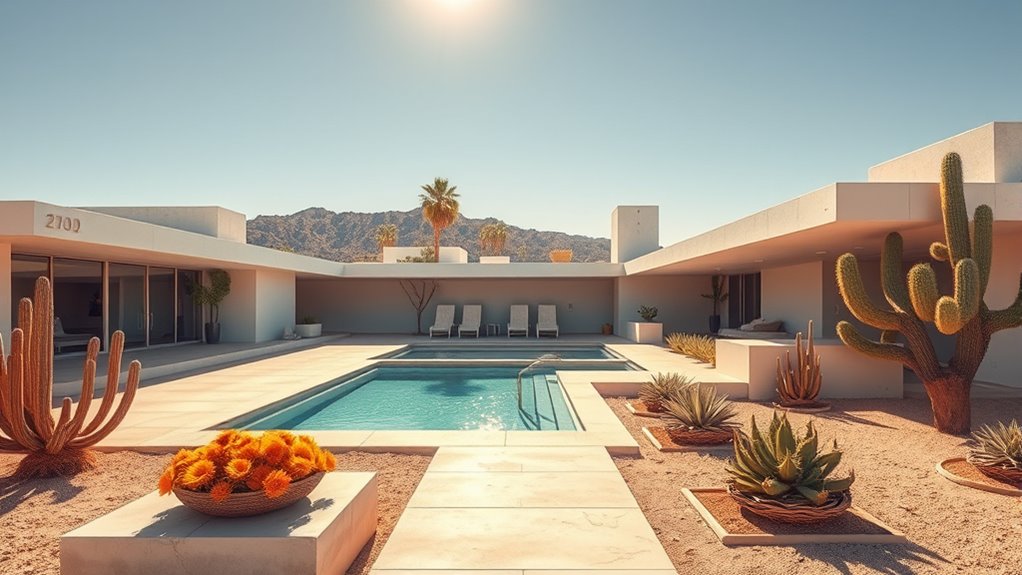

In Palm Springs, Mid-Century Modern design blends sleek architecture with drought-tolerant desert landscaping. You’ll notice bold structures with flat roofs, large windows, and open spaces that connect indoor and outdoor living. The style emphasizes minimalism, geometric forms, and innovative materials, all harmonized with native plants and xeriscaping to reduce water use. This unique aesthetic combines modern innovation with natural beauty—if you continue exploring, you’ll uncover even more fascinating design trends.

Get furniture and decor delivered free with Prime
- Fast, free delivery on millions of items
- Prime Video, Amazon Music and more included
- Member-only deals all year
Key Takeaways
- Emphasis on clean lines, geometric shapes, and sleek minimalism in architectural design.
- Use of bold materials like steel, glass, and concrete to create innovative structures.
- Incorporation of large windows and open floor plans for indoor-outdoor living and desert views.
- Landscaping with drought-tolerant, native plants such as cacti and succulents for low water use.
- Focus on environmental harmony through sustainable design, shading, cross-ventilation, and xeriscaping.

Have you ever wondered what makes Palm Springs a haven for Mid-Century Modern design? It’s a combination of bold architectural innovation and thoughtful desert landscaping that creates a unique aesthetic. This style emerged in the post-World War II era, reflecting a desire for sleek, functional, and forward-thinking homes that harmonized with the desert environment. Architects in Palm Springs didn’t just adapt existing designs; they reimagined what modern living could look like, emphasizing open floor plans, expansive glass walls, and innovative materials that pushed boundaries. These homes often feature flat roofs, clean lines, and geometric shapes, showcasing a commitment to simplicity yet sophistication. The desert landscape plays a vital role in this design ethos, inspiring architects to incorporate native flora, xeriscaping, and outdoor living spaces that blend seamlessly with the natural surroundings.
When you walk through Palm Springs, you notice how architectural innovation is evident in every detail. The use of innovative materials like steel, glass, and concrete allowed architects to achieve daring shapes and large, uninterrupted windows that maximize views of the surrounding desert. This approach not only enhanced aesthetics but also improved functionality, making homes more energy-efficient in the hot climate. The open-plan layouts promote a sense of spaciousness, inviting the outdoors inside and vice versa. These homes often feature innovative cooling techniques, such as strategic shading and cross-ventilation, which reflect a deep understanding of desert conditions. This integration of form and function exemplifies how Palm Springs’ architects pushed the boundaries of modern design while respecting the environmental context. Additionally, color accuracy in materials and finishes contributes to the cohesive and vibrant visual appeal characteristic of Mid-Century Modern homes.
Desert landscaping further elevates the Mid-Century Modern charm, emphasizing low-maintenance, drought-tolerant plants that require minimal water but add visual interest. Cacti, succulents, and native grasses are strategically placed to complement the architecture, making the outdoor space an extension of the indoor living area. These landscapes are more than just aesthetic choices; they’re practical solutions that reduce water usage and sustain the desert ecosystem. You’ll notice how the landscaping is carefully curated to highlight clean lines and geometric forms, echoing the architecture’s minimalist aesthetic. This thoughtful integration of desert landscaping not only preserves the natural beauty but also reinforces the innovative spirit of Palm Springs’ design. Together, architecture and landscape create a cohesive environment that’s both stylish and sustainable, making Palm Springs a true icon of Mid-Century Modern living.
Frequently Asked Questions
What Are the Key Architectural Features of Palm Springs Mid-Century Modern Homes?
You’ll notice that Palm Springs mid-century modern homes feature open floor plans that create a seamless flow between living spaces, making the home feel spacious. Large glass windows are a hallmark, bringing in natural light and offering stunning desert views. Flat roofs and clean lines emphasize simplicity and function, while integration with the surrounding landscape enhances the desert aesthetic. These elements combine to create iconic, stylish, and functional desert homes.
How Has Desert Climate Influenced Design Choices in Palm Springs?
Imagine the blazing sun overhead as you walk through a Palm Springs home. You notice desert landscaping with native plants that thrive in the heat, and cooling materials like stucco and tile that reflect sunlight. The desert climate shapes your design choices, encouraging open floor plans for airflow and shaded patios to beat the heat. These elements create a comfortable retreat that harmonizes with the arid environment.
Are There Sustainable or Eco-Friendly Trends in Palm Springs Modern Design?
You’ll notice that sustainable materials and eco-conscious landscaping are increasingly popular in Palm Springs modern design. Using eco-friendly materials like reclaimed wood and low-impact concrete helps reduce your carbon footprint. Incorporate xeriscaping and native plants to conserve water and blend seamlessly with the desert environment. This approach not only promotes sustainability but also enhances your home’s harmony with the stunning desert landscape, making your space both stylish and eco-responsible.
Which Designers or Architects Shaped the Mid-Century Modern Movement in Palm Springs?
You should know that Frank Lloyd Wright and Albert Frey are the key figures who shaped Palm Springs’ mid-century modern movement. Wright’s organic architecture inspired harmonious designs, while Frey’s innovative use of concrete and glass defined the desert aesthetic. They combined functionality with sleek, clean lines, transforming the landscape. Their visionary ideas continue to influence designers and architects today, making Palm Springs a timeless symbol of modernist brilliance.
How Can I Incorporate Palm Springs Modern Elements Into a Contemporary Home?
To incorporate Palm Springs modern elements into your contemporary home, start with bold color palettes inspired by desert hues—think vibrant oranges, lush teals, and sandy neutrals. Choose furniture selections that feature clean lines, organic shapes, and retro touches, like low-profile sofas or sunburst mirrors. Incorporate large windows and outdoor-indoor living spaces to embrace the desert landscape, creating a relaxed yet stylish vibe that pays homage to mid-century modern design.
Conclusion
Embracing Palm Springs’ mid-century modern style means you’re stepping into a timeless desert oasis of sleek lines and bold design. As the saying goes, “A picture is worth a thousand words,” and these homes speak volumes about elegance and innovation. So, don’t be afraid to incorporate these trends into your space—after all, a well-designed home isn’t just seen, it’s felt. Immerse yourself in the desert’s charm and make your space truly stand out.
Halloween Picks
halloween
As an affiliate, we earn on qualifying purchases.