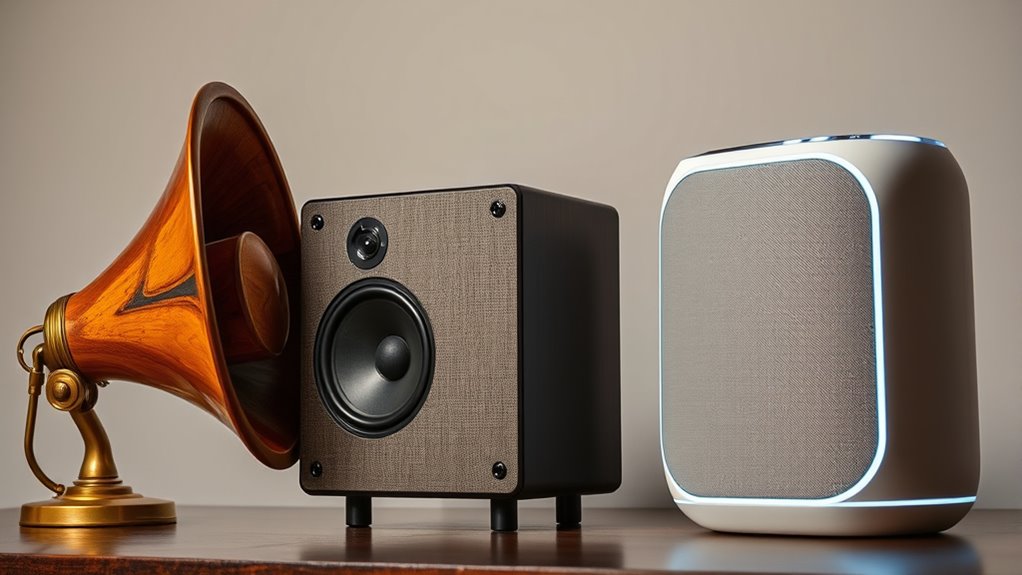

The evolution of speakers takes you from early, bulky horns and mechanical systems to modern, compact wireless and smart devices. Over time, technological advances introduced magnetic components, making speakers more efficient and portable. Wireless tech like Bluetooth and Wi-Fi simplified setups, allowing streaming and mobility. Today, smart speakers with AI and voice recognition offer seamless interaction and improved sound quality. If you keep exploring, you’ll uncover even more exciting innovations shaping how we experience sound.
Open a free Amazon Business account
Business pricing, bulk buying and tax-exempt orders.
As an affiliate, we earn on qualifying purchases.
Key Takeaways
- Early speakers used large horns and mechanical systems to amplify sound, laying the foundation for audio technology.
- Transitioned to electric speakers with magnetic components, enabling smaller, more efficient, and portable devices.
- Wireless technology introduced mobility, allowing streaming via Bluetooth and Wi-Fi, enhancing convenience and sound quality.
- Modern features like multiple drivers and passive radiators improve sound richness, bass, and overall audio experience.
- Smart speakers integrate voice recognition and AI, offering seamless control, connectivity, and future enhancements in sound quality.
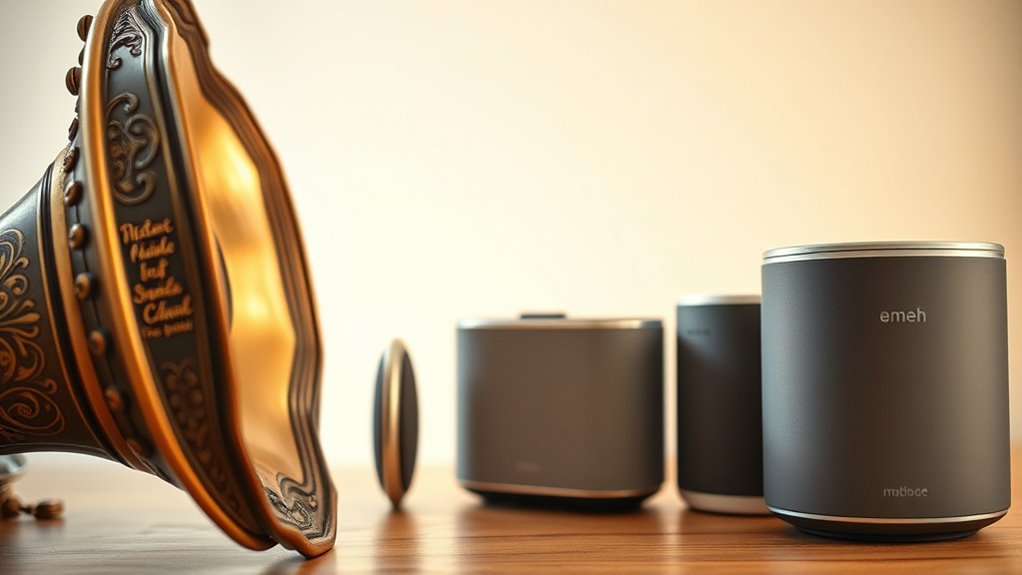
Have you ever wondered how speakers have transformed over time? It’s fascinating to see how they have evolved from simple devices into sophisticated, smart gadgets that fit seamlessly into your daily life. Early speakers relied heavily on large, cumbersome designs like horns and mechanical systems, which, while innovative for their time, had significant limitations in sound quality and portability. As technology advanced, engineers started focusing on improving sound clarity and volume, which led to the development of electric speakers. These initial models used basic transducers and magnetic components, making them more efficient but still relatively bulky. Over the decades, innovations in materials and design allowed speakers to become smaller without sacrificing sound quality, paving the way for the compact, high-performance devices we use today.
The advent of wireless technology marked a turning point in the evolution of speakers. No longer tethered by cords, you gained the freedom to move your speaker anywhere within your home or even outdoors. Wireless speakers brought convenience and versatility, allowing you to stream music directly from your smartphone, tablet, or laptop. This shift also improved sound quality in many cases, as manufacturers began integrating advanced wireless protocols like Bluetooth and Wi-Fi, which transmit audio with greater fidelity and less interference. As a result, you could enjoy richer, clearer sound without the clutter of wires, making your listening experience more immersive. The push for better wireless sound quality led to the development of features like multiple drivers, passive radiators, and adaptive equalizers, all working together to deliver a more dynamic and balanced audio experience.
Today, the evolution continues with smart speakers that combine wireless technology with voice recognition and artificial intelligence. These devices are no longer just about sound; they’re about interaction, convenience, and integration into your smart home ecosystem. With smart speakers, you can ask questions, control your smart devices, and access music services effortlessly, all while enjoying high sound quality. The integration of wireless technology in these devices ensures that your commands are transmitted instantly and accurately, creating a seamless user experience. As technology progresses, you can expect future speakers to offer even better sound quality, more intelligent features, and increased connectivity options. The ongoing innovations in sound quality enhancements reflect a relentless pursuit of better sound, greater convenience, and more innovative ways to keep us connected through sound. From the early days of horns to today’s smart speakers, the journey showcases continuous progress driven by technological advancements.
As an affiliate, we earn on qualifying purchases.
Frequently Asked Questions
How Do Smart Speakers Connect to Other Smart Home Devices?
Smart speakers connect to other smart home devices through wireless connectivity options like Wi-Fi or Bluetooth. You simply use voice command integration to control lights, thermostats, and more, making your smart home more convenient. To set this up, make sure your devices are compatible and linked to the same network. Once connected, you can manage everything seamlessly with voice commands, creating a unified, hands-free experience.
What Materials Are Used in Modern Speaker Manufacturing?
Imagine a symphony crafted from innovative materials—modern speakers use a blend of plastics, metals, and composites that symbolize progress. You’ll find speaker material innovations centered on sustainability, like biodegradable plastics and recycled metals, reflecting eco-conscious manufacturing. These materials not only enhance sound quality but also reduce environmental impact, forging a harmonious balance between performance and sustainability. As a result, your smart speaker becomes a symbol of technological and ecological advancement.
How Do Speakers Impact Audio Quality Over Time?
Over time, speakers can impact your audio quality by experiencing wear and tear that affects sound clarity. Factors like aging diaphragms or deteriorating components can cause distortion or muffled sound. Well-designed acoustic design helps mitigate these effects, maintaining sound clarity longer. Regular maintenance and choosing quality materials guarantee your speakers deliver consistent audio performance, allowing you to enjoy crisp, clear sound even after extensive use.
Are There Eco-Friendly Options for Speaker Production?
Imagine holding a sleek, eco-friendly speaker made from sustainable materials; yes, there are options. You can choose products crafted through eco-friendly manufacturing processes that minimize environmental impact. Brands now prioritize using recycled plastics, bamboo, and biodegradable components. By selecting these options, you support sustainability, reduce waste, and enjoy high-quality sound. Your choices matter, and eco-conscious speakers show that innovation and environmental responsibility go hand in hand.
What Is the Future Technology Expected in Speaker Development?
You can expect future speaker technology to focus on wireless advancements, making connections faster and more reliable with minimal latency. Sound customization will also improve, allowing you to personalize audio settings seamlessly through smart apps or voice commands. These innovations aim to deliver richer, more immersive sound experiences while maintaining convenience and flexibility, ensuring your listening experience keeps evolving with cutting-edge features that adapt to your preferences.
As an affiliate, we earn on qualifying purchases.
Conclusion
As you’ve seen, speakers have gracefully transformed from simple horns to sleek smart devices, quietly enhancing your daily life. This evolution hints at a future where technology seamlessly blends into your world, whispering convenience and connection. While change can feel subtle, it’s guiding you toward a more effortless, harmonious experience. Embrace the journey, knowing that every new development is gently shaping a smarter, more connected tomorrow—one whisper at a time.
As an affiliate, we earn on qualifying purchases.
As an affiliate, we earn on qualifying purchases.
Fall Picks
fall essentials
As an affiliate, we earn on qualifying purchases.