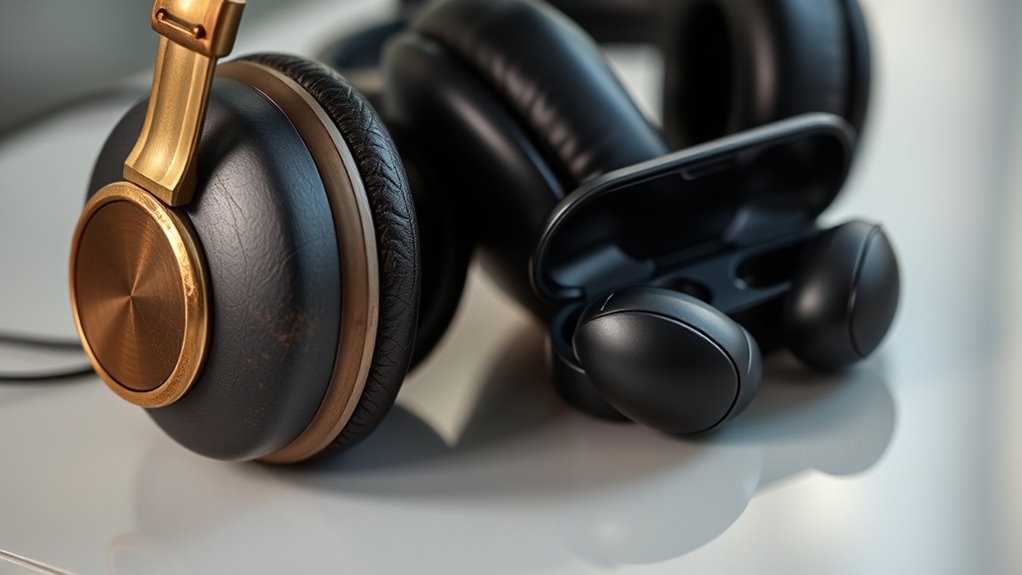

Vintage headphones still hold up well if you value warm, rich sound and unique retro designs that many modern models can’t replicate. They often feature solid craftsmanship and a nostalgic appeal, especially for collectors and audiophiles. However, they lack modern tech like noise cancelation and precise tuning. Whether vintage or modern suits you depends on your taste for sound signature, style, and features. Keep exploring to discover which type best fits your listening lifestyle.
Key Takeaways
- Vintage headphones excel in delivering warm, rich sound signatures favored by purists, while modern models offer clearer, more precise audio.
- Retro designs and durable materials give vintage headphones a nostalgic, stylish appeal, contrasting with sleek, ergonomic modern aesthetics.
- Modern headphones feature advanced technologies like noise-canceling and digital tuning, enhancing sound clarity and convenience over vintage models.
- Vintage headphones may lack comfort for long use but showcase craftsmanship and unique visual appeal; modern options prioritize lightweight comfort.
- Both vintage and modern headphones hold their value and appeal, depending on preferences for sound character, aesthetics, and technological features.
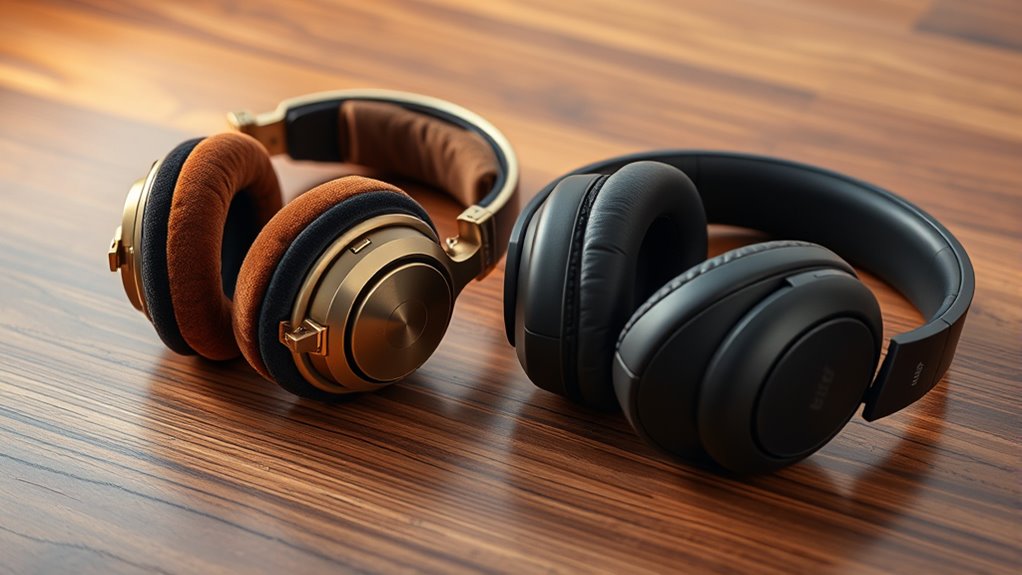
When comparing vintage headphones to modern ones, it’s clear that each offers a unique listening experience. Vintage models often have a charm that’s hard to ignore, and many audiophiles swear by their sound quality and distinctive design aesthetics. You might find that older headphones deliver a warmth and richness in their sound that some modern counterparts struggle to replicate. They tend to emphasize midrange frequencies, giving vocals and instruments a natural, full-bodied quality. Some vintage headphones also feature unique driver technologies and acoustic designs that produce a smooth, immersive listening experience. Additionally, vintage headphones often have a distinctive sound signature that appeals to purists and collectors alike.
On the other hand, the design aesthetics of vintage headphones evoke nostalgia and a sense of style that’s often more tactile and visually striking than contemporary versions. Many vintage models showcase bold colors, distinctive shapes, and high-quality materials like leather and chrome, making them stand out as fashion statements. Their build quality can feel solid and durable, with a craftsmanship that reflects the era they were made in. This visual appeal appeals to collectors and those who appreciate a retro vibe, blending functionality with artistic expression.
However, when it comes to sound quality, modern headphones have made significant advancements. They incorporate cutting-edge technology like noise-canceling features, advanced driver designs, and digital tuning, which help deliver clearer, more precise audio across a wider frequency range. Modern headphones also tend to be more consistent in sound reproduction, thanks to quality control standards and technological innovations. While vintage headphones can sound warm and full, they might lack the clarity and bass response that today’s high-tech models offer, especially at lower price points.
In terms of design aesthetics, modern headphones lean toward sleek minimalism, lightweight materials, and ergonomic comfort. They’re often designed with portability and versatility in mind, making them suitable for daily use, workouts, or long listening sessions. While vintage headphones might have a more distinctive appearance, they can sometimes feel bulkier or less comfortable for extended wear. Nonetheless, their retro charm can make them a statement piece, adding personality to your gear collection.
Ultimately, choosing between vintage and modern headphones depends on what matters most to you. If you value sound warmth, nostalgic design, and craftsmanship, vintage models might be your go-to. But if you prioritize technological features, sound clarity, and contemporary comfort, modern headphones could better suit your needs. Either way, both offer unique experiences, and exploring their differences can deepen your appreciation for the art of listening.

Retro Over-Ear Headphone,Vintage Feelings Underwire Headphones,Retro Lightweight Earphones,Hi-Fi Stereo Earphone Headset,Headphone,for Most Mobile Phones Playback Pevices Headphones (Orange)
🎧 Vintage Style: Retro over-ear headphones with an orange, lightweight design for a nostalgic feel.
As an affiliate, we earn on qualifying purchases.
As an affiliate, we earn on qualifying purchases.
Frequently Asked Questions
Can Vintage Headphones Be Safely Used With Modern Devices?
Yes, vintage headphones can be safely used with modern devices if you consider style compatibility and connector adaptation. You might need an adapter to match older connectors, like 1/4-inch jacks, to your device’s output. Make sure the impedance isn’t too high for your device’s headphone jack, and check for any compatibility issues. With the right adapters and precautions, you can enjoy your vintage headphones without damaging your modern tech.
Do Vintage Headphones Require Special Maintenance or Repairs?
Your vintage headphones do need special maintenance and repairs, like a delicate dance with restoration techniques. You should regularly clean and inspect the wiring and ear cups, replacing worn parts to keep them in tune. Proper care preserves their collector’s value and guarantees ideal sound quality. If you stumble upon issues, consult specialists who understand vintage tech—restoration keeps these gems singing and retains their timeless charm.
How Do Vintage Headphones Compare in Noise Isolation?
Vintage headphones generally provide less noise isolation than modern ones, so you might notice more noise leakage and ambient noise interruptions. Their ear cups often lack advanced sealing technology, making it harder to block out external sounds. If you’re seeking immersive listening, vintage models may fall short compared to contemporary designs that prioritize noise-canceling features and better sound isolation. Keep this in mind when choosing headphones for noisy environments.
What Are the Typical Lifespan and Durability of Vintage Headphones?
Vintage headphones often last 20-30 years, showcasing impressive long-term reliability thanks to vintage craftsmanship. You’ll find that well-maintained models with quality materials can still deliver great sound, but their durability depends on proper care. Unlike modern headphones, which might use cheaper components, vintage ones often feature sturdy construction. If you handle them carefully, they can serve you for decades, making them a worthwhile investment for audio enthusiasts.
Are Vintage Headphones Suitable for Professional Audio Editing?
Vintage headphones can be suitable for professional audio editing if you prioritize unique design aesthetics and are willing to manage potential limitations. While some may offer decent audio fidelity, they often lack the precision and consistency of modern models. You might find their sound quality satisfactory for certain tasks, but for critical editing, investing in contemporary headphones usually provides more accurate and reliable audio reproduction.

Soundcore by Anker Q20i Hybrid Active Noise Cancelling Headphones, Wireless Over-Ear Bluetooth, 40H Long ANC Playtime, Hi-Res Audio, Big Bass, Customize via an App, Transparency Mode (Black)
Hybrid Active Noise Cancelling: 2 internal and 2 external mics work in tandem to detect external noise and…
As an affiliate, we earn on qualifying purchases.
As an affiliate, we earn on qualifying purchases.
Conclusion
Ultimately, choosing between vintage and modern headphones is like selecting a favorite storybook—you might prefer the timeless charm of vintage, or the sleek innovation of modern. Each has its own voice and character, but both can transport you to new worlds. So, trust your ears and follow your heart; after all, the best pair is the one that resonates with you most. Remember, great sound is a journey, not just a destination.
Retro Over-Ear Headphone,Vintage Feelings Underwire Headphones,Retro Lightweight Earphones,Hi-Fi Stereo Earphone Headset,Headphone,for Most Mobile Phones Playback Pevices Headphones (Orange)
🎧 Vintage Style: Retro over-ear headphones with an orange, lightweight design for a nostalgic feel.
As an affiliate, we earn on qualifying purchases.
As an affiliate, we earn on qualifying purchases.

Retro Over-Ear Headphone,Vintage Feelings Underwire Headphones,Retro Lightweight Earphones,Hi-Fi Stereo Earphone Headset,Headphone,for Most Mobile Phones Playback Pevices Headphones (Black)
🎧 Vintage Style: Retro over-ear headphones with an orange, lightweight design for a nostalgic feel.
As an affiliate, we earn on qualifying purchases.
As an affiliate, we earn on qualifying purchases.