
Vintage synthesizers are making a strong comeback in music because of their unique analog warmth and authentic sound qualities you can’t find in digital gear. Their tactile knobs and sliders let you shape sounds in a more expressive way, while circuit bending opens up unexpected sonic possibilities. The aging components add character, giving each instrument a distinct personality. If you’re curious about how these timeless instruments continue to influence modern music, you’ll find plenty more fascinating details ahead.
Key Takeaways
- Vintage synthesizers produce warm, full-bodied analog sounds valued for their authenticity and sonic character.
- Circuit bending vintage synths creates unique, chaotic textures that inspire modern experimental music.
- The aging components of vintage gear add distinct personality and imperfections, enhancing their nostalgic appeal.
- Their timeless sound and tactile interface make vintage synths popular tools for contemporary music production.
- Collecting and customizing vintage synths fosters creative exploration and keeps their retro sounds relevant today.
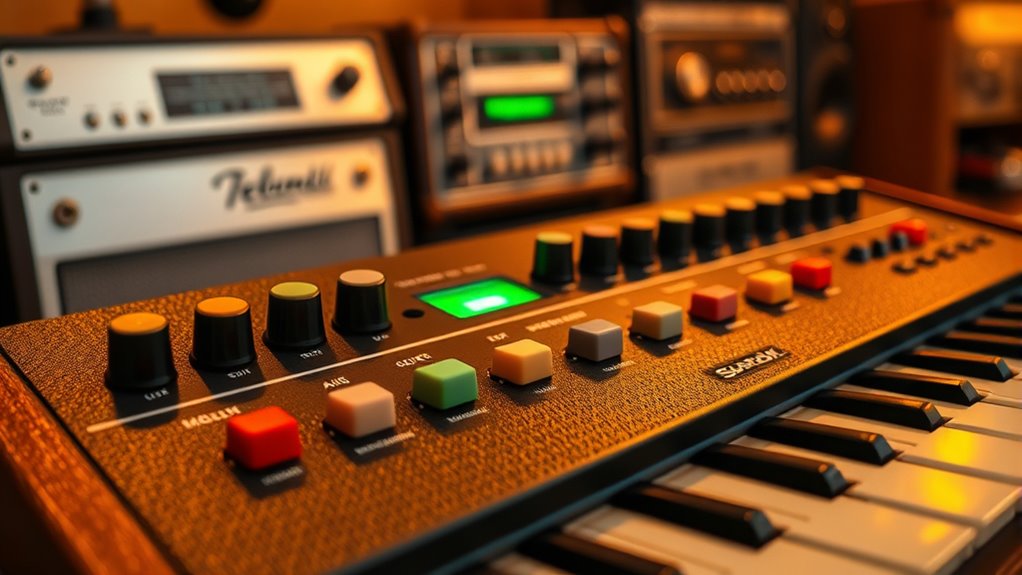
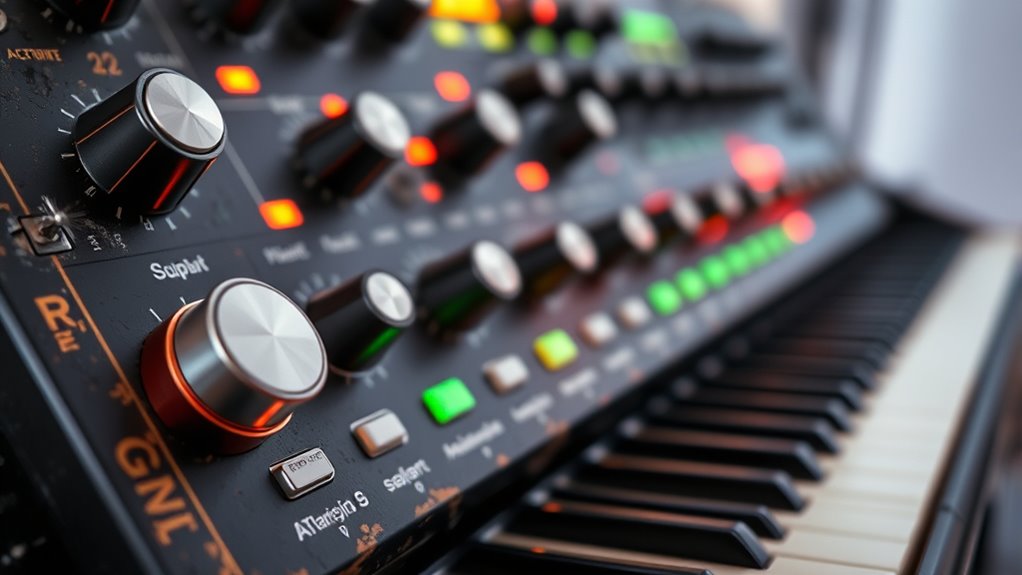
Vintage synthesizers capture the imagination of musicians and collectors alike with their distinctive sounds and timeless appeal. When you immerse yourself in the world of these classic instruments, you’ll quickly notice how their analog warmth creates a richness that modern digital synths often struggle to replicate. This warmth stems from the way voltage-controlled oscillators, filters, and amplifiers interact, producing a full-bodied, organic sound that resonates deeply with listeners. The tactile experience of turning knobs and sliders adds to this authenticity, giving you a hands-on connection to the music you’re shaping. Many artists seek out vintage models not just for their sonic qualities but also for their historical significance, making them prized possessions in any collection.
Vintage synths offer warm, organic sounds and tactile playability that modern digital instruments often lack.
One of the most compelling aspects of vintage synthesizers is the potential for circuit bending. This creative practice involves deliberately modifying the internal circuitry of these old instruments to produce unexpected, often chaotic sounds. When you experiment with circuit bending, you’re essentially revealing hidden layers of sonic possibilities that weren’t initially intended by the original designers. This process can turn a seemingly standard synth into a unique instrument, capable of producing glitchy textures, alien sounds, or unpredictable modulations. Circuit bending invites you to be playful and inventive, transforming familiar sounds into something entirely new and personal. It’s a way to fuse the nostalgic charm of vintage gear with a modern, experimental edge, appealing to musicians eager to push sonic boundaries.
The appeal of vintage synthesizers isn’t limited to their sound alone; it’s also about the character they acquire over time. Many of these instruments develop a certain personality, with slight variations in tuning and aging components adding to their charm. When you restore or maintain a vintage synth, you engage in a process that deepens your understanding of electronic music’s history. Plus, the imperfections—such as slight pitch fluctuations or the gritty quality of worn-out filters—can add a layer of authenticity to your music, making it stand out in a digital-dominated landscape. Additionally, aging components can influence the instrument’s overall tone, contributing to its unique sonic fingerprint.
In today’s music scene, vintage synthesizers are making a comeback precisely because of their analog warmth and the limitless creative potential through circuit bending. Musicians appreciate how these instruments inject a sense of timelessness into their work, blending nostalgic tones with contemporary production. Whether you’re collecting them as historical artifacts or actively integrating them into your studio, vintage synths offer a tactile, expressive experience that modern gear simply can’t match. Their unique sound signatures, combined with the possibility of customizing and bending circuits, guarantee they remain relevant and inspiring in any genre or musical pursuit.
Top picks for "vintage synthesizer retro"
Open Amazon search results for this keyword.
As an affiliate, we earn on qualifying purchases.
Frequently Asked Questions
How Do Vintage Synthesizers Differ From Modern Digital Ones?
You’ll notice vintage synthesizers differ from modern digital ones by offering that rich, analog warmth that’s hard to replicate. They often have a more tactile, hands-on user interface, allowing you to tweak parameters directly for unique sounds. Digital synths tend to be more versatile and easier to program, but vintage models provide a character and organic feel that many musicians still crave for authentic, warm tones in their music.
Are Vintage Synthesizers More Challenging to Maintain Than New Models?
You’ll find vintage synthesizers more challenging to maintain than modern models, mainly due to their age. About 60% of owners report frequent maintenance challenges, and repair costs can be markedly higher because parts are rare or obsolete. You might spend more time troubleshooting issues and sourcing parts, but many enthusiasts find the unique sound and character worth the extra effort. So, expect a bit more hands-on care with vintage gear.
Can Vintage Synthesizers Connect Seamlessly With Current Music Production Software?
Yes, vintage synthesizers can connect seamlessly with current music production software. You’ll want to check their MIDI integration capabilities, as many models have MIDI ports for easy connection. Ensuring software compatibility is essential; most modern DAWs support MIDI data from vintage gear. With the right cables and possibly some adapters, you can integrate your vintage synths smoothly into your setup, allowing you to harness their unique sounds effortlessly.
What Are the Most Iconic Vintage Synthesizer Models Used in Famous Recordings?
You immediately recognize the iconic sounds of the Minimoog, the Roland Jupiter-8, and the ARP Odyssey, which define vintage synthesizer history. These models deliver analog warmth, unique character, and timeless appeal in famous recordings. You hear their influence in classic tracks from artists like David Bowie and Depeche Mode, where their distinctive tones shape the soundscape. Their legendary status continues to inspire modern music, blending past and present seamlessly.
How Has the Resurgence of Vintage Synths Influenced Contemporary Music Genres?
You notice that the resurgence of vintage synths injects your music with analog warmth, making your sounds richer and more textured. This trend encourages genre fusion, blending retro tones with modern styles like electronic, pop, and indie. By incorporating these iconic instruments, you create unique soundscapes that stand out, connecting nostalgic vibes with contemporary innovation. The result is a fresh, authentic feel that resonates deeply with your audience.
Conclusion
Don’t let the age of vintage synthesizers scare you away; their timeless sounds can truly elevate your music. While some might worry about maintenance or complexity, many modern tools and tutorials make them accessible. Embrace these retro instruments, and you’ll discover rich, unique tones that add character and depth to your creations. Immerse yourself with confidence—you might find that vintage synths are exactly what your music needs to stand out.