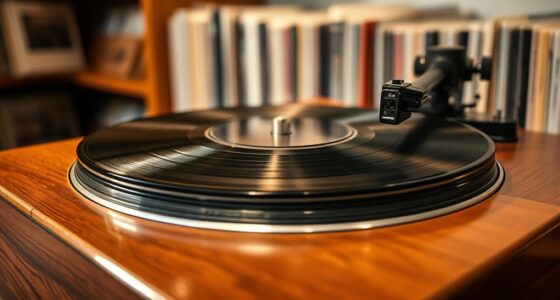
To digitize your vinyl collection without losing its magic, start by using a good turntable with a quality cartridge and connect it to your computer via a reliable USB interface. Record in lossless formats like WAV or FLAC, monitor levels carefully, and do test runs first. Use audio editing software to remove noise without sacrificing warmth. Organize your files with proper tags and artwork. Want to keep that authentic sound while making your collection easily accessible? Keep exploring for more tips.

Get furniture and decor delivered free with Prime
- Fast, free delivery on millions of items
- Prime Video, Amazon Music and more included
- Member-only deals all year
Key Takeaways
- Use a high-quality turntable and reliable audio interface to ensure authentic sound capture without sacrificing warmth.
- Record in lossless formats like WAV or FLAC to preserve the richness and depth of vinyl sound.
- Conduct test recordings and monitor levels to prevent distortion and maintain audio fidelity.
- Edit recordings carefully to remove noise and pops, ensuring the original character remains intact.
- Tag and organize digital files properly to keep the nostalgic and cultural value of your vinyl collection.
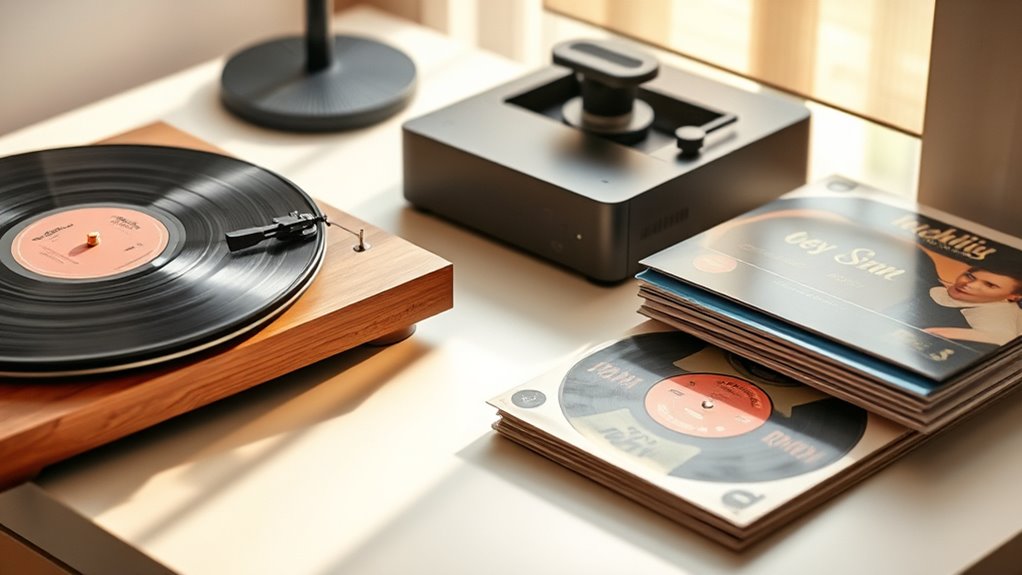
If you’re looking to preserve your vinyl collection and make it more accessible, digitizing your records is a practical solution. Vinyl preservation isn’t just about backing up your collection; it’s about ensuring that the rich sound and character of your records remain intact for years to come. When you digitize, you can enjoy your favorite albums anywhere—on your phone, computer, or digital player—without risking wear and tear on the original vinyl. But the key to a successful transition lies in maintaining audio quality, so your digital copies don’t lose the warmth and depth that make vinyl special.
Digitize your vinyl to preserve sound quality and enjoy albums anywhere without damaging your collection.
To start, you’ll need the right equipment. A good turntable with a quality cartridge is essential, as it directly influences the audio quality you’ll capture. Pair this with a reliable audio interface or a USB turntable designed for digitizing, which converts the analog sound into a digital format. Using high-quality cables ensures minimal signal loss, helping preserve the original sound’s richness. Once you have your setup, connect your turntable to your computer and choose the appropriate recording software. Many free or affordable options exist, but look for one that allows you to record in a lossless format like WAV or FLAC. These formats retain the full audio fidelity, which is critical for vinyl preservation.
When you start recording, make sure your turntable is properly set up—level, clean, and free of dust. Record at a consistent speed to avoid pitch issues, and monitor the recording levels to prevent distortion. It’s worth doing a few test runs before committing to the full album. During the recording, avoid interruptions or background noise, as these can compromise the audio quality. Once the recording is complete, you’ll want to use editing software to remove any unwanted noise, clicks, or pops that are common in vinyl recordings. This step helps ensure your digital files sound as close as possible to the original.
Additionally, understanding vinyl sound quality and how it differs from digital audio can help you better preserve the warmth and depth of your recordings. Finally, organize your digital library meticulously. Tag each file with album information, track titles, and artwork. This not only makes your collection easier to navigate but also preserves the cultural and nostalgic value of your vinyl. Remember, the goal isn’t just to create digital copies but to do so in a way that respects and maintains the essence of your vinyl records. With the right approach, you can enjoy the magic of your favorite albums anytime, all while safeguarding your collection’s integrity for future generations.
Frequently Asked Questions
What Equipment Is Essential for High-Quality Vinyl Digitization?
To achieve high-quality vinyl digitization, you need a good turntable setup with a clean cartridge and stylus, ensuring clear sound. An essential piece is an analog-to-digital converter, which captures the audio accurately. You might also consider a phono preamp if your turntable lacks one. These components work together to preserve the warmth of your vinyl while delivering crisp, digital sound for your collection.
How Do I Prevent Audio Quality Loss During Digitization?
To prevent audio quality loss during digitization, focus on maintaining audio fidelity by using a high-quality turntable and an appropriate analog-to-digital converter. Keep your setup clean and free from dust to minimize pops and crackles. Use noise reduction software carefully to eliminate background noise without sacrificing sound detail. Adjust recording levels properly to avoid clipping, ensuring your digital files capture the warmth and richness of your vinyl records.
Can I Digitize Rare or Fragile Vinyl Records Safely?
You can safely digitize rare or fragile vinyl records by handling fragile inserts gently with cotton gloves, avoiding unnecessary pressure. Use a high-quality, gentle stylus and a clean turntable to prevent damage during playback. Carefully preserve cover art by keeping records in protective sleeves. This way, you enjoy digital copies without risking your valuable collection, all while maintaining the integrity of your rare finds.
What File Formats Are Best for Preserving Sound Quality?
You should choose lossless compression formats like FLAC or WAV to preserve sound quality when digitizing your vinyl. These formats retain all audio data, ensuring no quality loss. Pay attention to bit depth; a higher bit depth, like 24-bit, captures more detail and dynamic range. This way, you preserve the richness and warmth of your vinyl recordings, keeping the magic alive in your digital collection.
How Do I Organize and Tag My Digital Music Library Effectively?
You should start by using metadata management tools to accurately tag your digital music files with details like artist, album, and genre. Organize your library into folders or playlists for easy access, and regularly update tags to keep everything consistent. Curate playlists based on mood, genre, or activity, ensuring your collection remains enjoyable and well-structured. This approach keeps your digital music library organized, making it simple to find and enjoy your favorite tracks.
Conclusion
Once you’ve digitized your vinyl collection, it’s like capturing lightning in a bottle—preserving its magic while making it easier to enjoy anytime. Remember, the soul of your records isn’t lost in the digital domain; it’s simply transformed, ready to spark memories with a tap of a finger. So, embrace the process and let your music’s spirit shine through, bridging the warmth of vinyl with the convenience of modern technology. Your collection’s soul lives on, brighter than ever.
Halloween Picks
halloween
As an affiliate, we earn on qualifying purchases.