
Reel-to-reel tape machines use magnetic tape to record and reproduce high-quality audio with rich warmth and character. They involve precise tape path alignment, head calibration, and proper maintenance for peak sound. Different systems, like open-reel or half-inch decks, offer various features suited for professional or home use. Tape quality and formulation greatly impact sound fidelity and durability. If you keep exploring, you’ll discover how these machines continue to influence modern music and gear enthusiasts alike.
Key Takeaways
- Reel-to-reel tape machines record and reproduce sound using magnetic tape, offering high fidelity and analog warmth.
- Proper head alignment and tape maintenance are crucial for optimal audio quality and machine longevity.
- Different systems vary in size, fidelity, and features, such as open-reel, half-inch, and compact models.
- Regular cleaning, lubrication, and calibration help prevent issues and preserve vintage machine performance.
- Tape formulation and storage conditions significantly impact sound quality, durability, and the lifespan of recordings.

Audio Tape Takeup Reel Empty Reel 7 Inch Blank Reel to Reel Tape for 1/4 Inch Tape Aluminum Alloy Opening Machine Part Takeup Reel, 3 Holes Empty Tape Reel for Recording (Silver)
Universal Compatibility: The Empty Tape Reel is designed to fit any open reel machine suitable for 1/4 inch…
As an affiliate, we earn on qualifying purchases.
As an affiliate, we earn on qualifying purchases.
The Basics of Reel-to-Reel Tape Machines

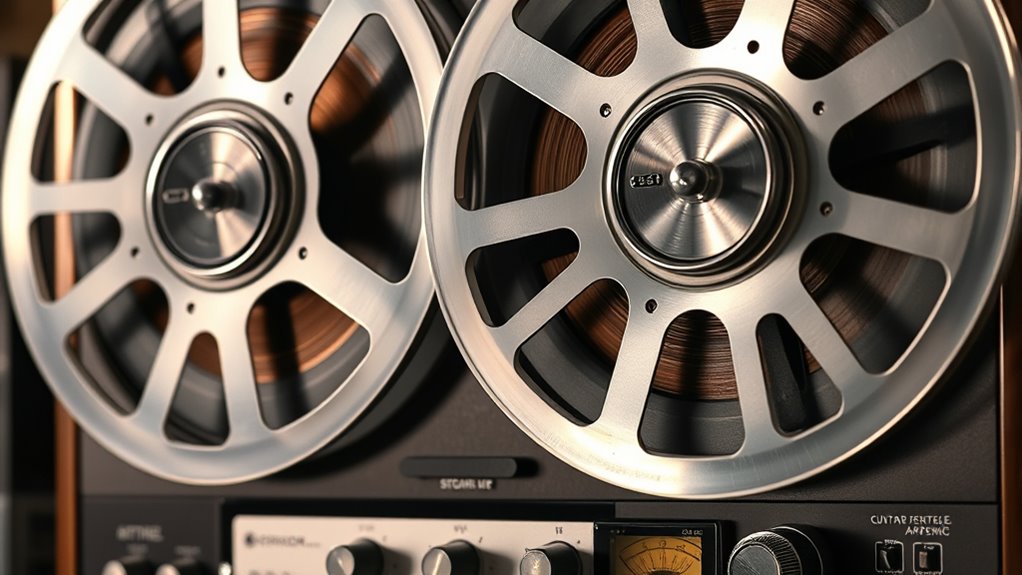
Reel-to-reel tape machines are classic audio recording devices that use magnetic tape to capture sound. This technology brings a sense of analog nostalgia, reminding you of a time when recording meant manual control and warmth. As sound hits the tape, it experiences tape saturation, adding a pleasing harmonic distortion that enhances the audio’s character. This effect is highly valued by audiophiles and musicians alike, as it imparts a unique richness you can’t easily replicate with digital tools. The reels themselves hold the magnetic tape, which moves smoothly across the heads during recording and playback. Understanding these basics helps you appreciate how reel-to-reel machines preserve a vintage aesthetic while delivering a distinctive, warm sound signature. Additionally, head alignment is crucial for optimal sound quality and minimizing wow and flutter during playback. Proper maintenance of components like the reels and tape path ensures consistent performance and sound fidelity over time.

72GB Magnetic Voice Activated Recorder – (7000 Hours) Digital Voice Recorder with Playback, Dictaphone Recording Device Portable Tape Recorder with DSP 5.0-AI Noise Reduction for Work Lectures Meeting
【Magnetic Recorder Anywhere】With its strong magnetic design, this voice recorder offers ultimate convenience by easily fitting anywhere. The…
As an affiliate, we earn on qualifying purchases.
As an affiliate, we earn on qualifying purchases.
How Tape Machines Record and Play Back Sound

When a tape machine records sound, it converts electrical signals into magnetic patterns on the tape surface. This process relies on magnetic storage, where the recording head magnetizes tiny areas of the tape in response to the audio signal’s voltage. During playback, the replay head detects these magnetic variations, converting them back into electrical signals. This method preserves high audio fidelity because magnetic storage faithfully captures the nuances of the original sound. The tape’s magnetic particles retain the recorded pattern, allowing for clear, accurate sound reproduction. The quality of recording and playback depends on factors like tape quality, head alignment, and signal levels. Magnetic recording also allows for the possibility of multiple takes and edits, making reel-to-reel tape machines highly valued in professional audio environments. This magnetic process makes reel-to-reel tape machines ideal for professional audio work, delivering warm, rich sound with excellent detail. Additionally, tape calibration plays a critical role in maintaining optimal sound quality over time.
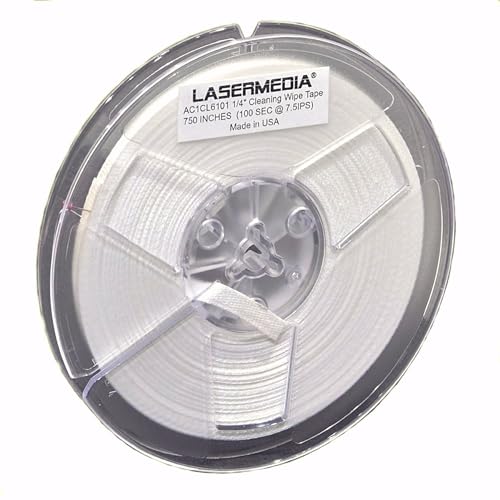
Open Reel Audio Cleaning Tape for 1/4" Tape Decks 100 Second Play Time at 7.5 IPS NEW ITEM!
Cleans AND Polishes Your Guides and Heads Edge to Edge especially those hard to get corners of your…
As an affiliate, we earn on qualifying purchases.
As an affiliate, we earn on qualifying purchases.
Types of Reel-to-Reel Systems and Their Features
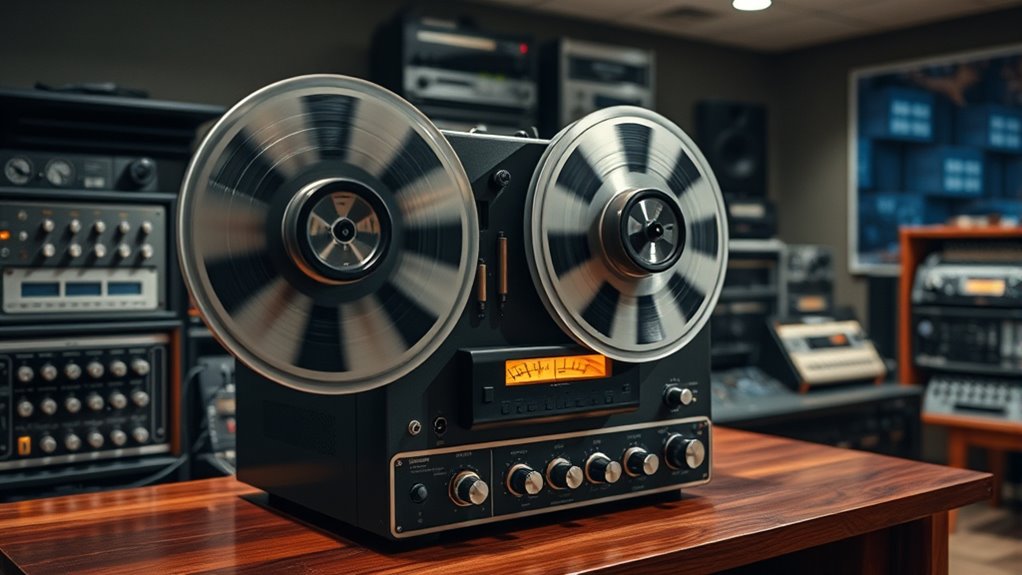
There are several types of reel-to-reel systems, each designed to serve different recording and playback needs. These systems mainly consist of various tape decks that handle magnetic tape differently. Open-reel systems feature large, standalone tape decks allowing for longer recording times and easier maintenance. They’re often used in professional studios for high-quality sound. Half-inch and quarter-inch tape decks are common, with half-inch decks offering higher fidelity and more tracks, ideal for multitrack recording. Compact reel-to-reel systems are designed for home use, combining user-friendly features with decent sound quality. Some tape decks incorporate automatic features like tape tension control and multiple-speed playback. Understanding these types helps you choose the right system based on your recording requirements and the specific characteristics of magnetic tape. Additionally, Self-Directed IRA strategies can give investors more control over alternative assets, which may be relevant when considering high-fidelity and specialized recording equipment. Recognizing the different tape formats and their compatibility can significantly impact your recording quality and workflow efficiency. Moreover, selecting a system with automatic calibration can simplify setup and ensure consistent playback performance. Being aware of the tape format compatibility can help prevent issues related to recording fidelity and hardware interoperability.

WEISUYUUS 1Pair 1/4inch NABs Hubs Optical Shaft Adapters Rubber Reels to Reels Tape Opener NABs Hubs Adapters
❀Compatible Models: Reels to Reels tape Recorders 1/4inch opener for B67 for G8M2, to meet your various usage…
As an affiliate, we earn on qualifying purchases.
As an affiliate, we earn on qualifying purchases.
Understanding Tape Path and Signal Flow

Understanding how the tape moves through a reel-to-reel system is key to grasping how sound signals are recorded and played back. The magnetic tape’s path guides the signal flow from the source to the playback head. When recording, the tape passes through various components, including the erase, record, and playback heads, which shape the signal. During playback, the signal flows in reverse, converting magnetic patterns back into audio.
The tape’s movement through the system controls how sound signals are recorded and played back.
Here’s a quick overview:
- The tape unwinds from the reel and moves past the recording or playback heads.
- The magnetic tape carries the signal, which is transformed into electrical signals for recording or sound during playback.
- The tape then rewinds or advances to the next section, ensuring continuous signal flow for high-quality sound.
Maintenance and Troubleshooting Tips

Regular maintenance is crucial to keep your reel-to-reel tape machine running smoothly and prevent common issues. Follow a consistent lubrication schedule to ensure moving parts operate quietly and efficiently. Use the recommended lubricants and apply them sparingly to avoid buildup. Regularly check and clean the tape path to prevent debris from causing playback problems. Calibration procedures are indispensable for maintaining accurate tape speed and signal quality; perform these checks periodically using proper tools and reference signals. If you notice wow, flutter, or audio dropout, revisit your calibration steps. Keep an eye on belt tension and replace worn parts promptly. Proper maintenance reduces wear, extends your machine’s lifespan, and keeps your recordings sounding their best. Additionally, understanding the maintenance and troubleshooting techniques specific to tape machines can help identify issues early and save time and cost on repairs. Recognizing common failure points enables proactive repair and minimizes downtime, especially since certain issues can be linked to specific components or Louisiana alimony laws that influence the equipment’s operational stability.
The Significance of Tape Quality and Tape Types

The quality of your tape directly impacts the sound you get, so choosing the right material and formulation is essential. Durable tapes resist wear and maintain consistent playback, while different formulations can enhance your desired sound quality. Understanding these factors helps you select tapes that optimize your recordings and prolong your equipment’s life. Additionally, selecting tapes with advanced filtration can help reduce the buildup of debris and dust, further preserving tape quality over time. Proper storage conditions, such as controlled temperature and humidity, also plays a crucial role in maintaining tape integrity and ensuring longevity. Regularly monitoring and replacing degraded tapes is important to prevent deterioration and preserve your recordings for years to come.
Tape Material and Durability
Choosing the right tape material can considerably impact the longevity and performance of your recordings. The quality of the magnetic backing influences durability and how well your tape resists wear over time. Different tape types have varying tape lifespan, affecting how long your recordings stay pristine. To optimize results, consider these factors:
- Magnetic backing quality: Higher-grade backing reduces stretching and degradation.
- Tape formulation: Some formulations resist humidity and oxidation better, extending tape lifespan.
- Storage conditions: Proper storage prevents magnetic deterioration and physical damage.
Ensuring you select a tape with the appropriate formulation can also help maintain tape durability and overall recording quality over time.
Selecting the appropriate tape material guarantees your recordings remain clear and intact for years, making your reel-to-reel experience more reliable and enjoyable.
Tape Formulations and Sound Quality
Since tape formulation directly affects sound quality, selecting the right type can make a noticeable difference in your recordings. The magnetic coatings on tape influence how well the signal is stored and reproduced, impacting clarity, warmth, and dynamic range. Different tape formulations—such as high-output, low-noise, or bias-specific types—are designed for particular recording needs. For example, metal particle tapes offer brighter sound, while ferric formulations provide a warmer tone. Choosing the appropriate tape formulation guarantees maximum fidelity and reduces issues like hiss or distortion. Understanding these variations allows you to match tape types with your recording style, ultimately improving sound quality. Tape formulations play a crucial role in achieving the desired sonic characteristics and ensuring professional-sounding recordings with greater consistency.
The Revival of Reel-to-Reel in Modern Music Production
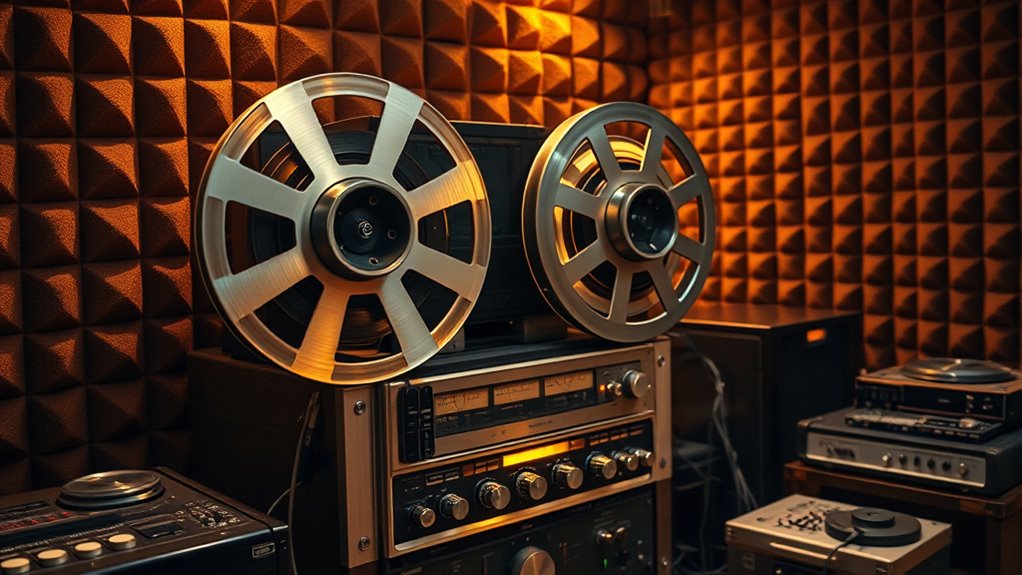
As digital recording has become the standard, many musicians and producers are rediscovering the unique qualities of reel-to-reel tape. You’re drawn to its analog warmth and the subtle tape saturation that adds character to your recordings. This revival isn’t just nostalgia—it offers a fresh way to craft sounds that feel organic and vibrant.
Here are three reasons why reel-to-reel is making a comeback:
- Enhanced Sound Quality – Tape’s natural compression and harmonics create a richer, more immersive mix.
- Creative Flexibility – Analog workflows inspire experimentation with tape speed, bias, and saturation.
- Unique Aesthetic – The vintage vibe and tactile process add authenticity to your music.
This resurgence highlights the enduring appeal of tape in modern production.
Collecting and Preserving Vintage Tape Machines

With the renewed interest in reel-to-reel tape for modern music, more enthusiasts are seeking out vintage tape machines to capture that authentic analog sound. When collecting, focus on machines with original vintage connectors; these guarantee authentic signal flow and ease of maintenance. Preserving your tape machine involves regular cleaning, proper lubrication, and storing it in a controlled environment to prevent deterioration. Many collectors visit tape museum displays to learn best practices and see well-maintained examples. Restoring vintage tape machines can be rewarding but requires patience and some technical skill. By carefully selecting and maintaining your equipment, you keep the legacy alive while enjoying the unique warmth of analog recordings. Proper preservation not only sustains the machine’s functionality but also preserves its historical value.
Comparing Reel-To-Reel With Digital Recording Techniques
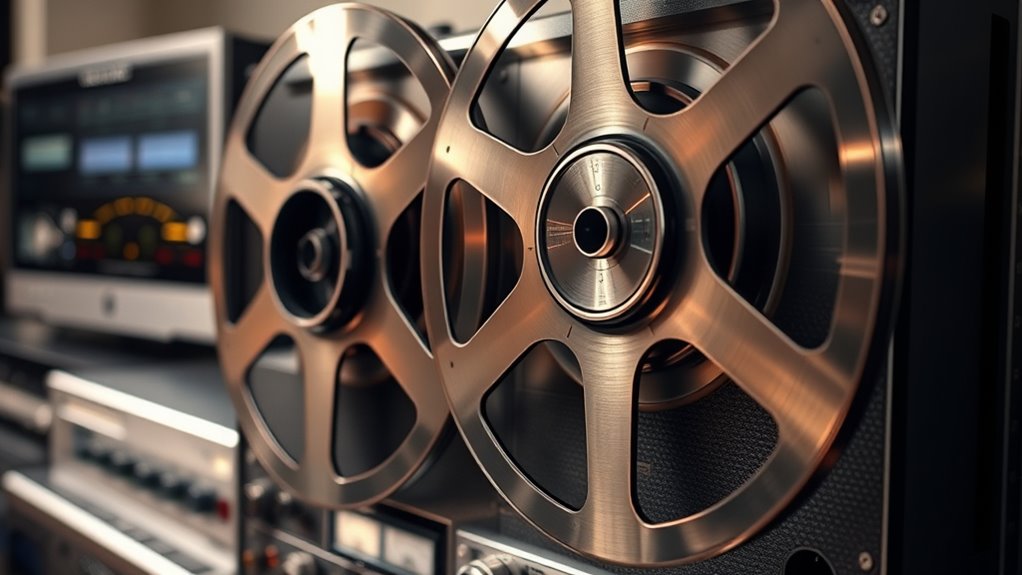
Reel-to-reel tape recording offers a warm, organic sound that many audiophiles and musicians still cherish, even in the digital age. Compared to digital recording, reel-to-reel provides natural saturation and subtle harmonic distortions, giving recordings a richer feel. Digital techniques excel in areas like convenience and editing speed but often rely on digital compression, which can reduce audio warmth. Additionally, digital storage scalability allows you to easily expand your library without physical limits, unlike tape which requires more space and maintenance.
Reel-to-reel offers warm, organic sound with natural saturation and harmonic richness unmatched by digital recording.
Here are key differences:
- Reel-to-reel offers authentic analog warmth, digital emphasizes clarity.
- Digital storage is scalable; tape needs physical space.
- Digital compression can impact sound quality, tape preserves natural tone.
Frequently Asked Questions
How Do Tape Speed Variations Affect Sound Quality?
You’ll notice that changing the tape speed impacts sound fidelity considerably. Higher tape speeds generally produce clearer, more detailed recordings because the audio signal is better preserved. Conversely, slower speeds can cause a loss of high frequencies and introduce more noise, reducing overall sound quality. So, adjusting tape speed directly influences how accurately your recordings capture the original sound, making it essential to match the speed to your desired audio clarity.
What Are Common Issues Causing Tape Hiss or Noise?
Imagine a quiet lake disturbed by ripples—that’s what causes tape hiss or noise. Common issues include tape degradation, where the magnetic particles wear down, and electrical interference, which corrupts the signal. These disturbances introduce unwanted noise, making your recordings sound murky. Regular maintenance, proper shielding, and using fresh tape help minimize hiss. Keep your tape path clean to prevent debris from amplifying noise, ensuring your sound stays clear and crisp.
Can Reel-To-Reel Machines Be Integrated With Digital Setups?
Yes, reel-to-reel machines can be integrated with digital setups. You can connect your tape machine to digital audio interfaces for seamless digital integration, allowing you to record or transfer audio directly to your computer. Modern compatibility options, like AD/DA converters and MIDI synchronization, make it easier to blend vintage tape machines with your digital workflow. This setup preserves the warmth of tape while leveraging the convenience of digital editing and storage.
What Are the Best Practices for Storing and Preserving Tape Heads?
You should regularly perform head cleaning to prevent buildup and ensure clear audio. Store your tape heads in a cool, stable environment, ideally between 60-70°F, to prevent deterioration. Keep the heads covered or in a protective case when not in use, and avoid exposing them to excessive humidity or dust. Proper storage and routine cleaning will extend the lifespan of your tape heads and maintain ideal performance.
How Do I Identify Authentic Vintage Reel-To-Reel Models?
Imagine you’re browsing online and spot a Teac reel-to-reel. To verify it’s authentic, check vintage brand markers like the logo’s font and placement. Then, look for the model number on the front or side panels; genuine models often have clear, engraved markings. Cross-reference these details with trusted vintage reel-to-reel databases or collector guides. This process helps confirm you’re getting a true classic, not a reproduction.
Conclusion
Now that you know the ins and outs of reel-to-reel tape machines, you might wonder if their warm, vintage sound will ever truly fade away. As technology advances, a hidden world of analog enthusiasts keeps the spirit alive, preserving these machines for future ears. Will tape’s rich character continue to influence music’s evolution? The answer stays just out of reach—waiting for those willing to explore its timeless magic. Are you ready to uncover what’s next?