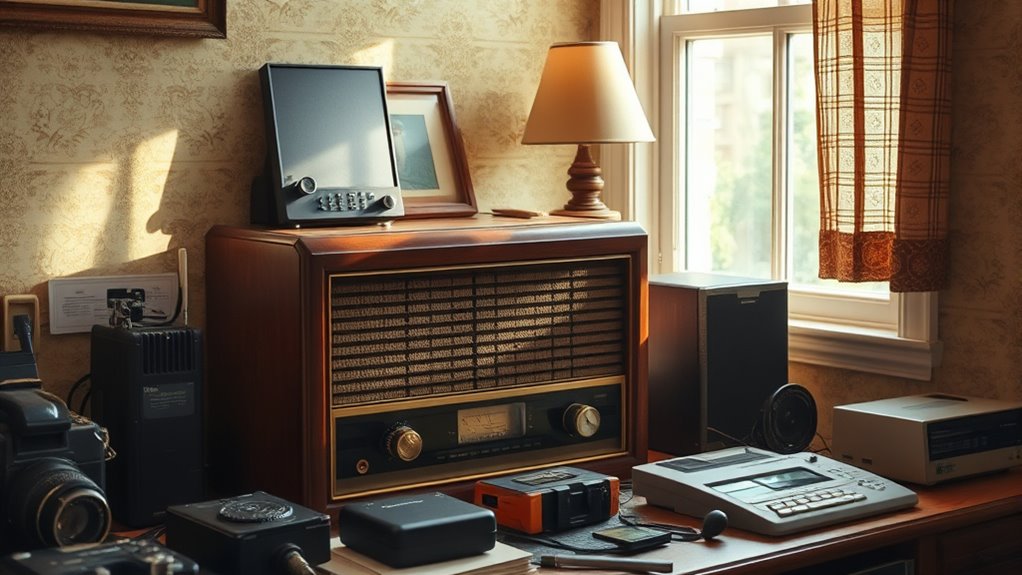

Nostalgia for retro tech happens because certain objects and memories act as powerful triggers that connect you to happier, simpler times. When you encounter vintage gadgets or images, they evoke positive feelings like safety, happiness, or excitement, creating a strong emotional bond. These feelings offer comfort and stability, especially during stressful moments. If you keep exploring, you’ll discover how these memories shape your sense of identity and foster a longing for the past’s innocence.
Key Takeaways
- Nostalgia is triggered by sensory cues and objects that connect us emotionally to positive past experiences.
- Retro tech evokes feelings of safety, happiness, and identity, reinforcing emotional bonds.
- It provides a mental refuge, offering comfort and stability during stressful or uncertain times.
- Visual and sensory cues from vintage gadgets enhance the authenticity and emotional resonance of memories.
- The desire for retro tech fulfills a need for reassurance, continuity, and a sense of “home” in a complex world.
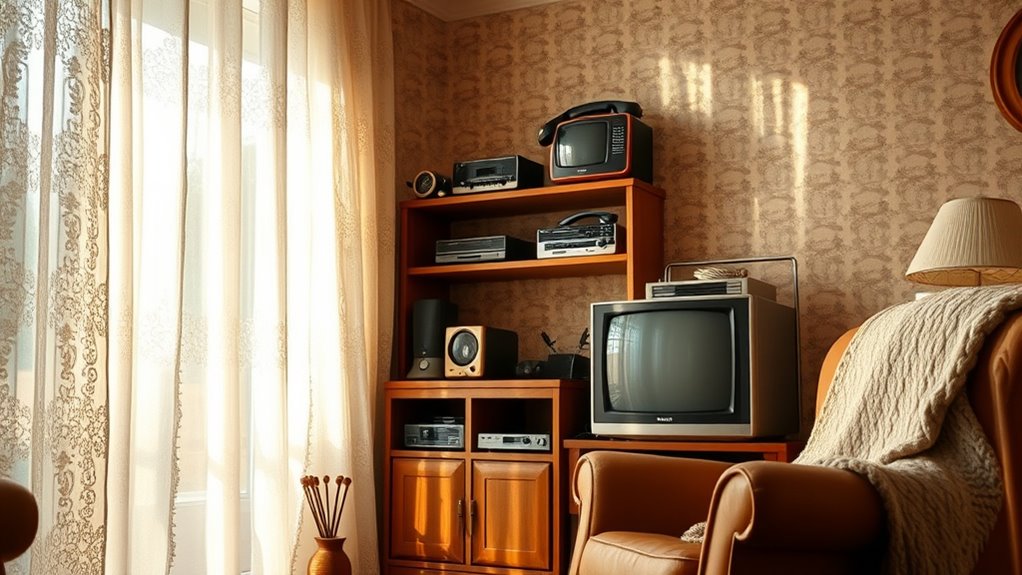
Have you ever wondered why certain memories flood your mind with warmth and longing? It’s because specific experiences and objects act as powerful memory triggers, pulling you back to moments that felt meaningful and comforting. When you encounter a vintage gadget or listen to a song from your youth, those items serve as cues that release your past. These triggers aren’t random; they’re tied to your emotional attachment, creating a vivid bridge between your present self and treasured memories. That emotional connection makes the nostalgia feel so real and intense, as if you’re reliving those moments all over again.
Your brain associates retro tech with feelings of nostalgia because it links these objects to times when you felt safe, happy, or excited. For example, holding a classic Game Boy might remind you of carefree afternoons spent gaming with friends. The emotional attachment to these objects is rooted in the positive feelings they evoke, reinforcing why you’re drawn to them even years later. It’s not just about wanting to own a piece of the past; it’s about reconnecting with a sense of identity and comfort that those objects symbolize. When you see an old Walkman or hear a familiar ringtone, your brain rapidly retrieves the associated memories, making you feel a rush of warmth and familiarity.
Holding a vintage gadget sparks joyful memories that reconnect us with our past and sense of comfort.
This emotional attachment also explains why nostalgia is so powerful. It acts as a mental refuge during stressful or uncertain times, offering a sense of stability and continuity. Retro tech, in particular, holds a special place because it often symbolizes simpler times, unspoiled by modern complexities. You may feel a desire to revisit those days, to recapture the innocence or excitement you associate with your childhood or youth. This longing isn’t just about the object itself but about the emotions and stories woven into your personal history. When you indulge in nostalgia, you’re basically reconnecting with a part of yourself that feels authentic and reassuring.
Additionally, the color accuracy of vintage technology often contributes to its nostalgic appeal by providing images that feel more authentic and emotionally resonant, even if they aren’t perfectly calibrated by today’s standards.
In fundamentally, the psychology of nostalgia reveals that memory triggers and emotional attachment are what make retro tech so appealing. They tap into deep-seated feelings, allowing you to momentarily escape the pressures of today and relive the joys of the past. Your brain craves these connections because they provide comfort, identity, and a sense of continuity. That’s why, even as time moves forward, you find yourself drawn repeatedly to the objects and memories that make you feel truly at home.
Frequently Asked Questions
How Does Nostalgia Influence Our Current Technology Preferences?
Nostalgia influences your current technology preferences by sparking a digital revival of old devices and designs. You develop emotional attachment to retro tech because it reminds you of simpler times, making you feel comforted and connected. This emotional bond drives your desire to incorporate vintage elements into modern gadgets, blending past and present. As a result, nostalgia shapes your choices, making you seek out tech that evokes fond memories and a sense of familiarity.
Can Nostalgia Improve Mental Health and Well-Being?
Nostalgia can boost your mental health and well-being by enhancing memory recall and providing emotional resilience. When you revisit cherished memories from the past, it helps you feel more connected and grounded, especially during stressful times. This positive reflection can elevate your mood, reduce feelings of loneliness, and strengthen your coping skills. Embracing nostalgic moments allows you to nurture a sense of stability and comfort in your life.
Why Do Certain Retro Gadgets Become More Popular Over Time?
Certain retro gadgets become more popular over time because of their vintage appeal and the ongoing tech revival. You’re drawn to these devices because they remind you of simpler times and offer a sense of authenticity that modern tech often lacks. As innovation slows or nostalgia deepens, more people seek out these classics, appreciating their unique design and tactile feel. This cycle keeps vintage gadgets trendy and highly valued in today’s tech landscape.
How Does Childhood Experience Shape Nostalgic Feelings?
You’re more likely to feel nostalgic because childhood experiences create strong emotional attachments, with studies showing that childhood memories are more emotionally charged than adult ones. Memory triggers like sights, sounds, or smells can instantly evoke feelings from that time. These triggers help you reconnect to those moments, shaping your nostalgic feelings and making you crave familiar retro tech that reminds you of simpler, joyful days.
Is Nostalgia Linked to a Desire for Simplicity in Modern Life?
Yes, nostalgia is linked to a desire for simplicity in modern life. You might seek out retro tech or engage in a digital detox to reconnect with a sense of simplified living. These actions help you escape the chaos of constant connectivity, providing a calming, familiar experience. By embracing nostalgic elements, you can find peace and clarity, making everyday life feel more manageable and meaningful amidst modern complexities.
Conclusion
So, next time you find yourself longing for that vintage gadget, remember—it’s not just about the tech. You’re actually craving a simpler time, a break from the chaos. Nostalgia’s just your brain’s way of selling you the illusion that life was better back then. But hey, who’s really winning here? Keep chasing those retro dreams, and maybe you’ll forget that progress has a way of making everything… well, a little less charming.