

Common vintage turntable problems include cartridge misalignment and pulley slip, which can cause uneven wear, distorted sound, or speed inconsistency. To fix these issues, check and realign the cartridge using alignment protractors and adjust tracking force carefully. For pulley slip, ensure the belt is tight and replace if worn, then tighten pulley screws and clean components. Continuing further will help you troubleshoot these problems more effectively and restore optimum performance.

Get furniture and decor delivered free with Prime
- Fast, free delivery on millions of items
- Prime Video, Amazon Music and more included
- Member-only deals all year
Key Takeaways
- Check and correct cartridge alignment using protractors to prevent distortion and record wear.
- Inspect and replace worn or loose belts, ensuring proper tension for consistent platter speed.
- Tighten or realign pulley mounting screws to fix pulley slip and maintain accurate rotation.
- Use a tracking force gauge to set proper stylus pressure, avoiding uneven wear and skipping.
- Regularly clean components with isopropyl alcohol and perform maintenance to prevent common vintage turntable issues.
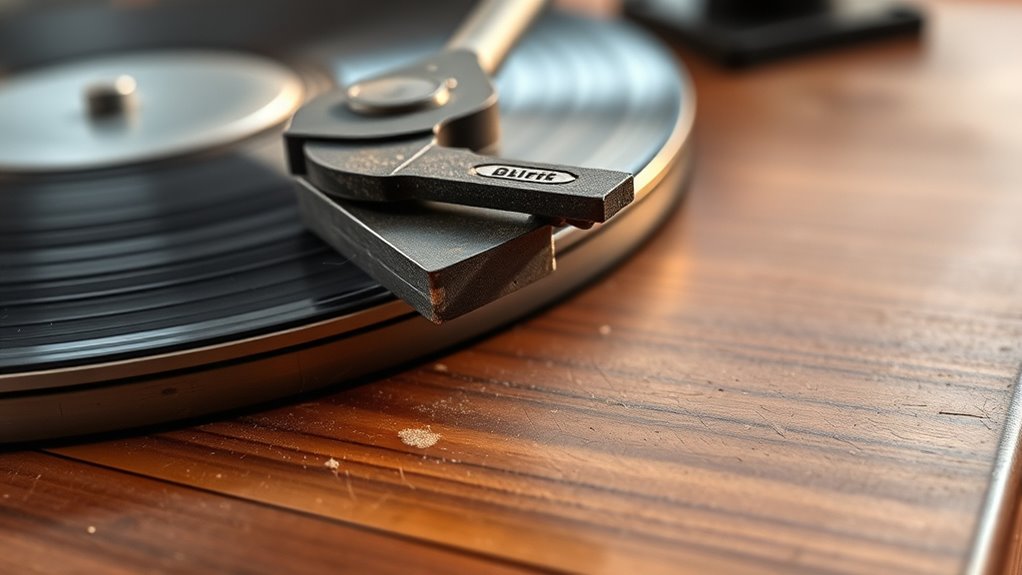
Vintage turntables can offer a warm, nostalgic sound, but they often come with a range of problems that can disrupt your listening experience. One of the most common issues is cartridge misalignment. If your cartridge isn’t properly aligned, you’ll notice uneven wear on your records, distorted sound, or even skipping. To fix this, you need to carefully check the cartridge’s position and angle. Use a tracking force gauge and alignment protractors to ensure the cartridge sits perfectly parallel to the record grooves. This process might seem technical, but taking your time to align the cartridge correctly can dramatically improve sound quality and prevent damage to your vinyl. Proper maintenance and regular checks can help prevent many common issues with vintage turntables.
Another frequent problem is pulley slip, especially with vintage belt-driven turntables. Over time, the pulley, which helps regulate the platter’s speed, can slip or become misaligned. When this happens, your turntable may run too fast, too slow, or inconsistently. To address pulley slip, first turn off and unplug your turntable. Inspect the pulley for any visible signs of wear or debris. Sometimes, the belt can slip off or become loose, causing the pulley to lose its grip. If the belt is loose, replacing it with a new, properly sized one often solves the issue. If the pulley itself is slipping, you may need to tighten the pulley’s mounting screw or realign it to ensure it stays in place during operation. In some cases, cleaning the pulley and belt with isopropyl alcohol helps remove dirt or grease that might cause slippage.
Both cartridge alignment and pulley slip are problems that, with some basic maintenance, you can fix yourself. Proper cartridge alignment not only improves sound fidelity but also extends the life of your records and stylus. Regularly inspecting the pulley and belt ensures consistent speed and prevents the motor from strain or damage. Always handle components gently, and if you’re unsure about adjustments, consult your turntable’s manual or seek advice from vintage audio specialists. Maintaining these elements keeps your turntable running smoothly, restoring that warm, rich sound vintage records are known for. Addressing these issues promptly can save you from more costly repairs down the line and help you fully enjoy your vinyl collection. Routine maintenance is key to preserving the longevity and performance of your vintage turntable.
vintage turntable cartridge alignment protractor
As an affiliate, we earn on qualifying purchases.
As an affiliate, we earn on qualifying purchases.
Frequently Asked Questions
How Do I Identify a Worn-Out Stylus?
You can identify a worn-out stylus by inspecting it carefully—look for visible damage, such as bent or missing parts. During stylus inspection, check for excessive wear or roughness on the tip. If it looks dull or damaged, it’s time for stylus replacement. Regularly inspecting your stylus guarantees it tracks properly and prevents record damage, so don’t hesitate to replace it when needed for ideal sound quality.
Can a Dirty Platter Affect Sound Quality?
A dirty platter can definitely affect sound quality, and it’s worth investigating if you notice sound distortion. When the platter isn’t clean, dust and grime can interfere with the record’s contact, causing skipping or muffled sound. Regularly cleaning the platter guarantees smooth rotation and better sound clarity. Keep it spotless, and you’ll enjoy richer, more accurate audio without the distraction of unwanted noise or distortion.
What Causes Uneven Tonearm Movement?
Uneven tonearm movement often results from improper tonearm balance or incorrect tracking force. When your tonearm isn’t properly balanced, it may drift or skip, affecting playback quality. Adjust the counterweight to guarantee the tonearm stays level, and set the tracking force according to your cartridge specifications. These adjustments help the tonearm move smoothly and evenly across the record, preventing uneven wear and improving sound clarity.
How Often Should I Lubricate Vintage Turntable Parts?
You should lubricate your vintage turntable parts during regular turntable maintenance, ideally every 6 to 12 months, depending on usage. Follow a proper lubrication schedule to keep the moving components running smoothly. Use the recommended oil or grease for your turntable’s motor and spindle. Regular lubrication prevents wear and ensures consistent performance, so make it a habit to check and lubricate as needed to extend your turntable’s lifespan.
Is It Safe to Upgrade Vintage Turntable Components?
Like a skilled surgeon, you can upgrade vintage turntable components, but safety considerations matter. You need to confirm that new parts are compatible with your turntable to avoid damage or performance issues. Research upgrade compatibility carefully, and follow proper procedures. If you’re unsure, consulting a professional helps prevent risks. Upgrading can restore or enhance your turntable’s sound, but always prioritize safety to preserve its vintage charm.
As an affiliate, we earn on qualifying purchases.
Conclusion
Now that you know how to spot and fix common vintage turntable problems, you’re better equipped to keep your beloved record player spinning smoothly. Regular maintenance is the secret sauce, ensuring your treasured machine doesn’t become a sinking ship in choppy waters. Think of your turntable as a delicate garden—you must tend to it with care and attention. With patience and a little know-how, you’ll keep your vinyl adventures flowing like a well-oiled machine.
turntable pulley screw tightening tool
As an affiliate, we earn on qualifying purchases.
As an affiliate, we earn on qualifying purchases.
As an affiliate, we earn on qualifying purchases.
Fall Picks
fall essentials
As an affiliate, we earn on qualifying purchases.