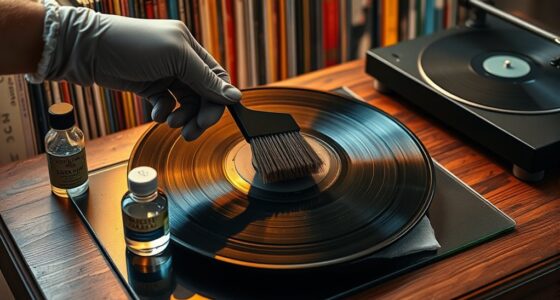
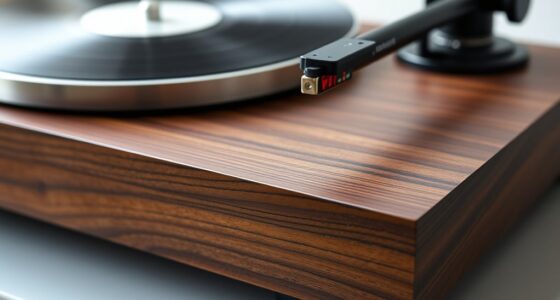
An RIAA preamp is essential for vinyl playback because it corrects the tone curve used during record creation, boosting bass and reducing treble to restore the original sound. It also amplifies the tiny signal from your turntable’s cartridge to line level, ensuring clear, detailed audio. Without it, the music would sound dull or distorted. If you want to understand how this secret sauce transforms your vinyl experience, keep exploring how it works.

Get furniture and decor delivered free with Prime
- Fast, free delivery on millions of items
- Prime Video, Amazon Music and more included
- Member-only deals all year
Key Takeaways
- An RIAA preamp compensates for the equalization curve used during vinyl recording and playback.
- It amplifies the weak cartridge signal to line level, ensuring clear, detailed sound.
- The preamp reverses the RIAA equalization, restoring the original sound balance.
- It enhances sound fidelity, reduces noise, and preserves vinyl and stylus longevity.
- Considered the “secret sauce” for achieving high-quality, authentic vinyl listening experiences.

If you’re into vinyl records, understanding how a RIAA preamp works is vital to getting the best sound quality. When you play your records, the sound output depends heavily on maintaining high audio fidelity, which is where a RIAA preamp becomes indispensable. Vinyl preservation isn’t just about handling records carefully; it also involves the equipment that ensures your music sounds as close to the original as possible. The RIAA preamp is designed specifically to tackle the unique challenges of vinyl playback, making sure your listening experience is rich, clear, and true to the artist’s intent.
Understanding RIAA preamps is essential for optimal vinyl sound quality and preservation.
At its core, a RIAA preamp compensates for the way records are cut and played back. When a record is pressed, the sound signal is reduced in bass frequencies and boosted in treble, a process known as equalization. This equalization curve was standardized by the Recording Industry Association of America (RIAA) to optimize vinyl storage and playback. However, if you simply connect a turntable directly to a speaker or amplifier, you’ll hear distorted sound with poor audio fidelity. That’s where the RIAA preamp steps in—it applies the inverse equalization curve, restoring the original sound balance.
The role of a RIAA preamp isn’t just about equalization; it’s also about boosting the weak signal from your cartridge to line level. The cartridge’s output is tiny, so without proper amplification, your music would sound faint and lacking detail. By amplifying this signal appropriately, the preamp ensures that every nuance, from subtle background sounds to powerful basslines, comes through clearly. This process preserves the integrity of your vinyl recordings, making sure that every detail is audible and that the listening experience remains authentic.
Using a high-quality RIAA preamp also helps with vinyl preservation over time. Since the preamp accurately reproduces the original sound, it reduces the need for excessive volume adjustments or additional processing that could introduce noise or distortion. This careful handling of the audio signal maintains the longevity of your records and stylus, ensuring your collection sounds great for years to come. Additionally, a high-quality preamp can improve color accuracy and overall sound fidelity, further enhancing your listening experience. In essence, a RIAA preamp is the secret sauce behind achieving pristine sound from your vinyl collection, bridging the gap between your record and your speakers with precision.
Top picks for "riaa preamp secret"
As an affiliate, we earn on qualifying purchases.
Frequently Asked Questions
Can I Use Any Preamp With My Turntable?
You can’t just use any preamp with your turntable, as preamp compatibility is vital for peak sound quality. A dedicated phono preamp, especially one with RIAA equalization, guarantees your records sound clear and detailed. Using an incompatible preamp might result in distorted or weak audio. Always check if your preamp supports your turntable’s output and matches your desired sound quality to get the best listening experience.
How Does an RIAA Preamp Differ From Other Preamps?
An RIAA preamp differs from other preamps by applying a specialized equalization curve essential for vinyl playback, restoring the original sound from your turntable. This process enhances audio fidelity, capturing the nuances of vinyl recordings. Unlike standard preamps, an RIAA preamp compensates for the limitations of vinyl production, ensuring your listening experience is true to the artist’s intent and rich in detail.
Is an RIAA Preamp Necessary for Modern Turntables?
Yes, an RIAA preamp is necessary for modern turntables to achieve ideal audio fidelity, especially as vinyl records experience a resurgence. It boosts the weak signal from your turntable and corrects the equalization curve, ensuring your playback sounds as close to the original recording as possible. Without it, your vinyl listening experience might lack clarity and depth, making the RIAA preamp essential for enjoying the full richness of your collection.
What’s the Impact of a Poor-Quality Preamp on Sound?
Imagine hearing a foggy window instead of crystal-clear audio—that’s what a poor-quality preamp does. It distorts your sound, muffling details and introducing unwanted noise. You lose the crispness and depth that bring your records alive. A low-quality preamp hampers audio clarity and fails to reduce noise effectively, leaving you with dull, indistinct sound. Invest in a good one to enjoy sharp, noise-free music that truly captures the richness of your vinyl.
How Do I Know if My Preamp Is Compatible With My System?
You can determine if your preamp is compatible with your system by checking its phono connections and matching them with your amplifier’s input options. Verify the preamp’s output is compatible with your amplifier’s input type, whether it’s RCA or another connection. Review your equipment specifications and manuals to confirm they support the same impedance and signal levels. If unsure, consult with a professional or the manufacturer to ensure seamless integration.
Conclusion
Think of the RIAA preamp as the bridge that guides your vinyl’s raw essence to your ears, transforming the silent whispers of grooves into a symphony. It’s the secret handshake between your record and your sound system, ensuring clarity and warmth. Without it, your music remains a hidden treasure, secured away. Embrace the RIAA preamp as the key to revealing the true soul of your records—where every note finds its voice and every story its heart.
Halloween Picks
halloween
As an affiliate, we earn on qualifying purchases.