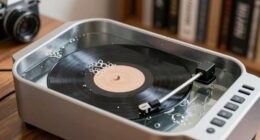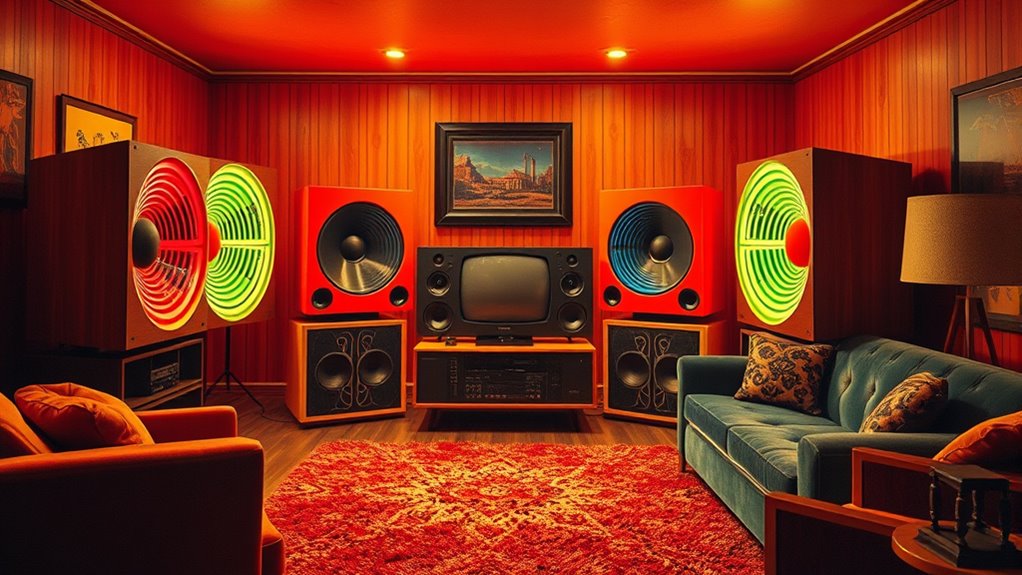

In the 1970s, quadraphonic sound revolutionized your listening experience by creating a more immersive, surround audio environment. It uses four channels to make instruments and vocals feel like they come from different directions, bringing a sense of space and realism to your favorite music. Though setup can be complex and special recordings were needed, the result was a richer, more dynamic sound that mimics live performances. Discover more about this fascinating audio innovation as you continue exploring.
Key Takeaways
- Quadraphonic sound, also known as 4.1 surround, emerged in the 1970s to create an immersive audio experience.
- It used four channels to produce a more spacious, realistic, and dynamic listening environment.
- Specialized vinyl records and equipment were required, making setup complex and often expensive.
- The format aimed to replicate the richness of live performances with enhanced sound placement.
- Its innovative approach influenced modern spatial audio and continues to impact surround sound technology today.
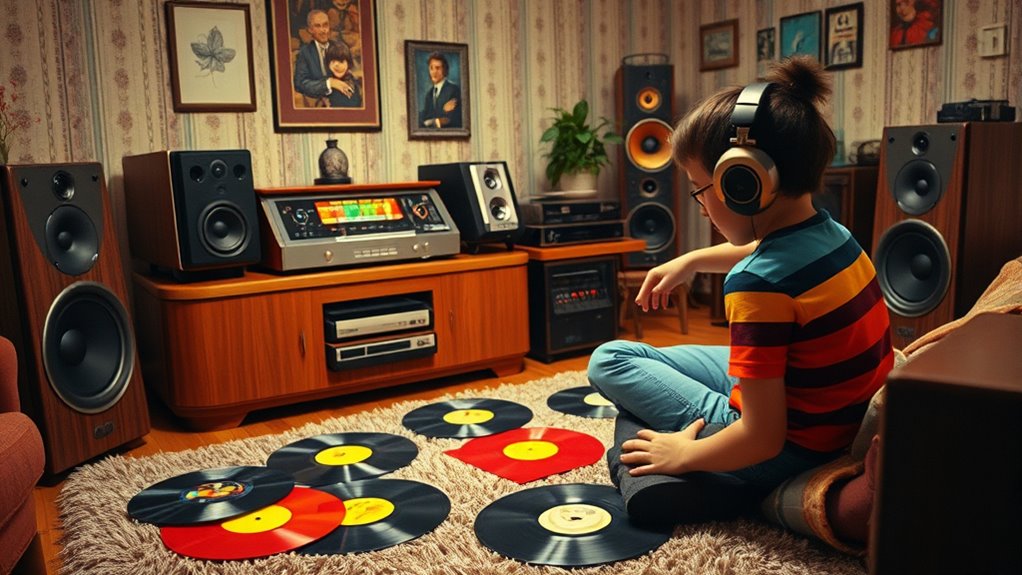
Quadraphonic sound, also known as 4.1 surround sound, is an advanced audio technology that creates a more immersive listening experience by delivering sound from four different channels. You might find this technology intriguing if you’re into high-quality audio, especially when exploring vinyl releases. Back in the 1970s, audiophiles and music enthusiasts were enthralled by how quadraphonic systems could enhance audio fidelity, making recordings feel alive and more realistic. When you listen to vinyl records on these systems, you notice a significant difference—the sound feels more spacious, dynamic, and detailed. This isn’t just about loudness; it’s about recreating the richness of a live performance right in your living room.
Vinyl releases, in particular, benefited from the advent of quadraphonic sound because they could utilize the full potential of the format’s high audio fidelity. Unlike stereo, which channels sound into two speakers, quadraphonic setups distribute audio across four channels, giving you a sense of direction and space that stereo can’t match. For you, this means that if you’re listening to a classic rock album or jazz record, instruments and vocals can seem to come from different directions, creating a more engaging and lifelike experience. The clarity and separation of sounds become more pronounced, allowing you to pick out nuances that might be lost in traditional stereo recordings.
However, embracing quadraphonic vinyl releases wasn’t without its challenges. The technology required special records and equipment, which could be complicated and expensive to set up. For you, this might mean hunting down specific pressings or investing in compatible hardware to enjoy the full effect. Despite these hurdles, the pursuit of audiophile-grade fidelity pushed the boundaries of what home audio could achieve at the time. The result was a richer, more textured sound that appealed to those craving the highest possible audio quality from their vinyl collections.
You also have to contemplate that not all quadraphonic recordings were created equal. Some albums were mixed specifically for this format, emphasizing spatial effects and sound placement, while others simply transferred stereo mixes into four channels, sometimes losing clarity or balance. Still, when done well, quadraphonic vinyl releases offered a listening experience that was both innovative and enthralling. If you appreciate the nuances of audio fidelity and enjoy immersing yourself in music, exploring these releases allows you to experience recordings in a way that feels closer to a live performance. In essence, quadraphonic sound was a bold step forward in how you could enjoy your vinyl collection, transforming ordinary listening into an extraordinary auditory adventure. Additionally, advancements in audio technology continue to influence how we experience spatial sound today.
Top picks for "quirky world quadraphonic"
Open Amazon search results for this keyword.
As an affiliate, we earn on qualifying purchases.
Frequently Asked Questions
How Did Quadraphonic Sound Influence Modern Surround Sound Systems?
Quadraphonic sound revolutionized your listening experience by introducing spatial imaging that creates a more immersive sound environment. This early surround system emphasized audio fidelity, inspiring modern surround sound systems like Dolby Atmos and 5.1 setups. Today, you benefit from improved channel separation and precise positioning of sounds, all thanks to the innovations sparked by quadraphonic technology, making your movie, music, and gaming experiences richer and more realistic.
Were There Specific Genres That Benefited Most From Quadraphonic Audio?
You often find that certain genres, like rock, jazz, and classical, benefited most from quadraphonic audio. As they say, “the proof is in the pudding,” and genre-specific enhancements notably improved the listener experience with richer sound and immersive effects. These genres, with their complex arrangements and dynamic ranges, truly came alive, giving you a deeper connection and making the music more engaging and memorable.
What Were the Main Technical Challenges of Implementing Quadraphonic Systems?
You face main technical challenges like maintaining phase alignment across all four channels, which is vital for a seamless surround experience. Source decoding also proves tricky because you need specialized equipment to accurately interpret the original recordings for quadraphonic playback. These issues made it difficult to produce consistent sound quality, limiting widespread adoption. Overcoming phase alignment and source decoding problems was essential to improve the system’s performance and user experience.
How Did Consumer Adoption of Quadraphonic Sound Impact the Music Industry?
You see that consumer skepticism about quadraphonic sound slowed its adoption, despite innovative marketing strategies trying to promote it. As a result, the music industry faced challenges in convincing listeners to invest in new equipment. This hesitation limited the widespread impact of quadraphonic systems, causing many labels and manufacturers to rethink their approach to surround audio. Ultimately, this slowed the evolution of immersive listening experiences during that era.
Are There Any Surviving Quadraphonic Recordings or Equipment Today?
Yes, you can find surviving quadraphonic recordings and vintage gear today. Restored archives preserve rare tapes and albums, allowing enthusiasts to experience the original sound. Vintage gear, like quadraphonic receivers and record players, is often available through specialized collectors and online marketplaces. By exploring these restored archives and vintage equipment, you get a unique chance to relive the immersive experience of 1970s surround audio.
Conclusion
As you explore the quirky world of quadraphonic sound, it’s fascinating to realize how this 1970s experiment unexpectedly paved the way for modern surround audio. Coincidentally, many of today’s immersive experiences trace back to those bold attempts at multi-channel sound. So next time you enjoy a surround soundtrack, remember that it all started with a daring handful of audiophiles who dared to think beyond stereo—making today’s audio magic possible.