
Phonographs, created in the late 19th century, use mechanical parts and large horns to amplify sound, offering vintage charm but lower fidelity. Turntables, developed later, feature sleek designs with electronic controls for cleaner, more precise playback. While phonographs evoke nostalgia and unique aesthetics, turntables prize sound quality and ease of use. Understanding their mechanical differences and historical evolution reveals why many still cherish these old-school devices—continuing this exploration uncovers even more fascinating details.

Get furniture and decor delivered free — and shop member deals
- Fast, free delivery on millions of items
- Access to Prime Big Deal Days deals on October 6–7
- Prime Video, Amazon Music and more included
Key Takeaways
- Phonographs use mechanical diaphragms and horns for sound amplification, while turntables rely on electronic components for playback.
- Phonographs typically feature vertical record placement and hand-crank motors; turntables have horizontal platters with electric motors.
- Turntables generally offer better sound fidelity, stability, and ease of use compared to the vintage, mechanically-driven phonographs.
- Collectors value phonographs for their antique charm and craftsmanship; turntables are prized for modern audio quality and reliability.
- Both produce authentic analog sound, but turntables incorporate modern features like auto-play and vibration reduction for improved listening.
vintage phonograph record player
As an affiliate, we earn on qualifying purchases.
As an affiliate, we earn on qualifying purchases.
Origins and Historical Development
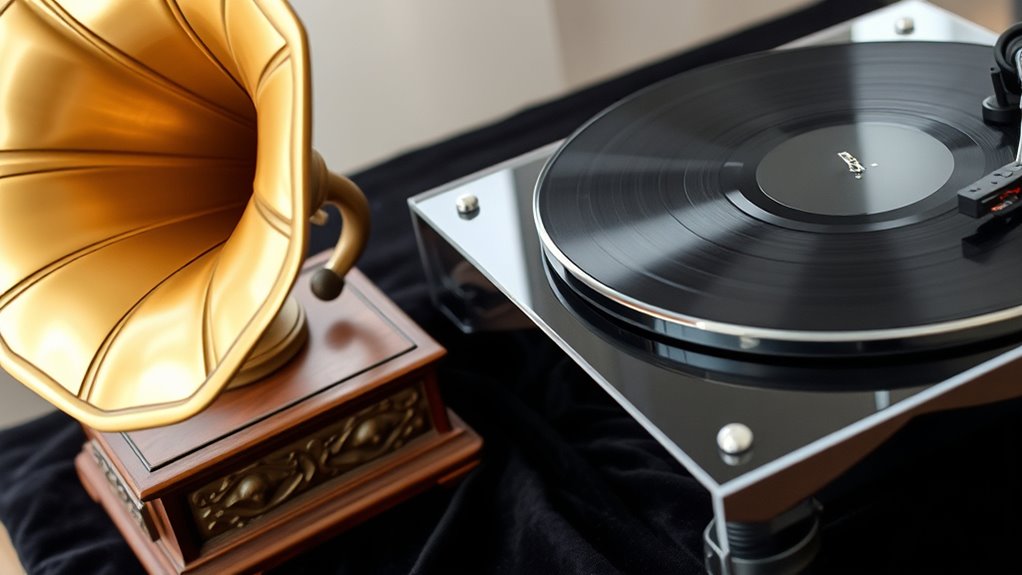
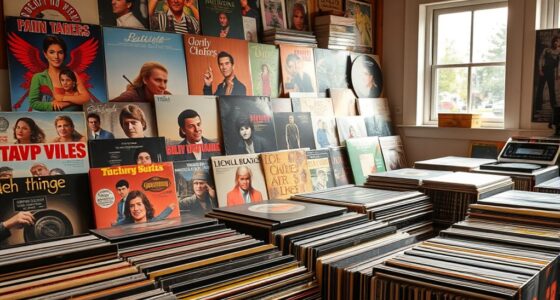
The origins of the phonograph and turntable trace back to the late 19th century, when inventors sought ways to record and reproduce sound. The phonograph, created by Thomas Edison, used cylinders to capture audio, setting the stage for future innovations. As technology advanced, the turntable emerged, replacing cylinders with flat discs and making mass production possible. Recently, the vinyl revival has sparked renewed interest, driven by collector trends that emphasize the warmth and authenticity of vinyl records. This resurgence has helped preserve the cultural significance of these devices, turning vintage equipment into prized collectibles. Both the phonograph and turntable reflect a rich history of technological progress and cultural shifts, highlighting how older audio formats continue to influence modern music appreciation. Additionally, the focus on proper maintenance and preservation plays a crucial role in extending the lifespan of these vintage devices, ensuring their continued enjoyment for future generations. Proper care involves understanding the materials used in manufacturing and implementing appropriate storage conditions to prevent deterioration and damage. Furthermore, advances in restoration techniques have allowed enthusiasts to restore and maintain these devices with greater accuracy and care. Staying informed about technological evolution also helps collectors and enthusiasts appreciate the ongoing influence of vintage audio equipment in today’s digital age. Moreover, understanding audio quality standards can guide enthusiasts in maintaining optimal sound performance over time.
As an affiliate, we earn on qualifying purchases.
Design and Mechanical Differences
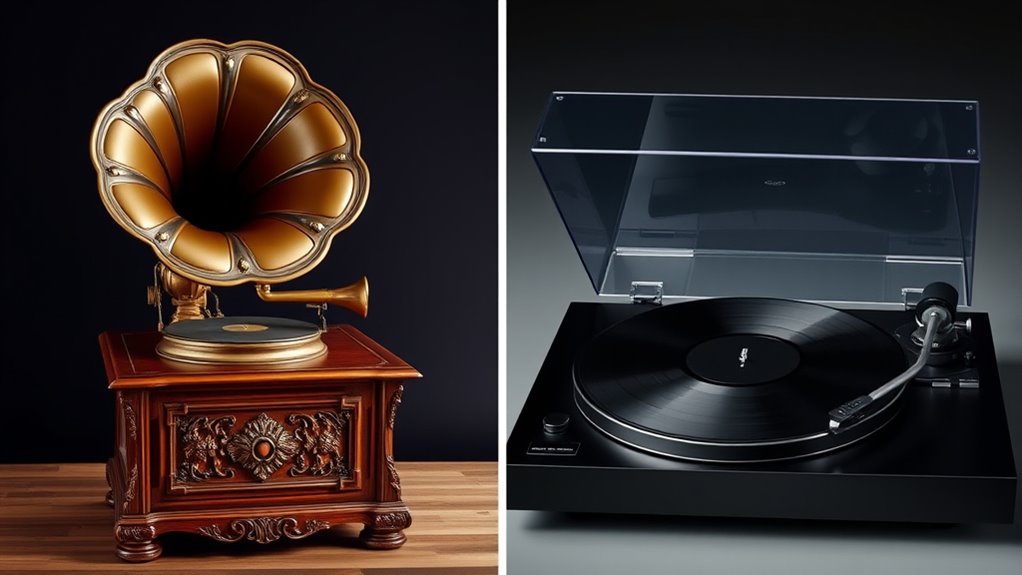
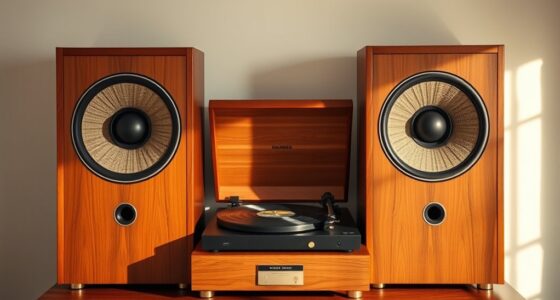
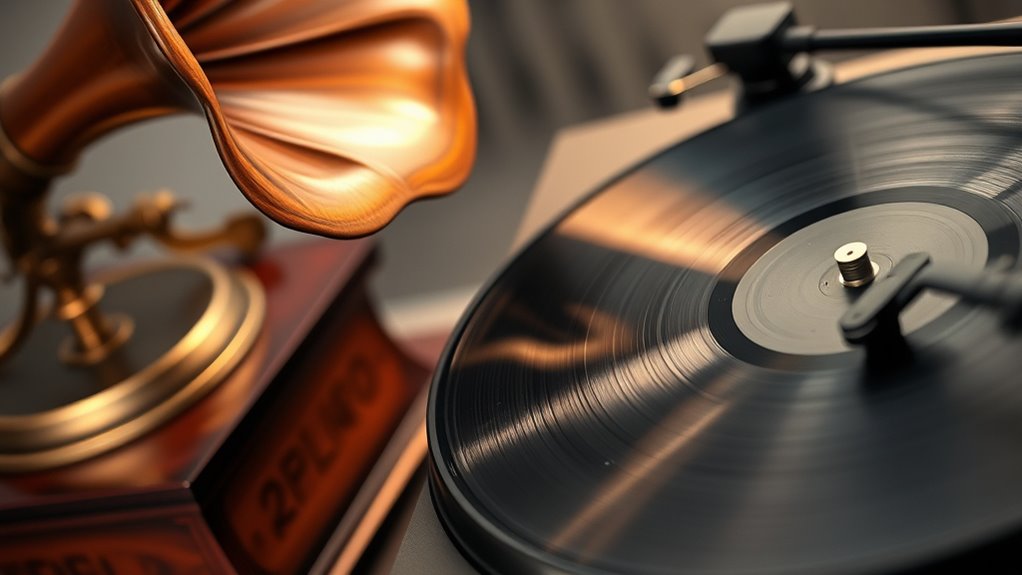
Building on their historical evolution, the design and mechanical differences between phonographs and turntables reflect significant technological shifts. A phonograph’s record player design relies on a vertical, horn-shaped amplifier and a tonearm with a stylus that directly transfers vibrations to a mechanical diaphragm. Its mechanical components include a hand-crank or early motor, a heavy turntable, and intricate gears. In contrast, a modern turntable features a streamlined, horizontal design with a belt or direct-drive motor for consistent rotation. Its mechanical components are simpler but more precise, with a balanced tonearm, platter, and electronic speed controls. These differences highlight how technological advancements transformed record player design, moving from purely mechanical systems to devices emphasizing stability, ease of use, and durability. Additionally, the transition to electronic components in turntables has improved data accuracy and playback quality, ensuring clearer sound reproduction and more reliable performance. The use of precision engineering in modern turntables also helps minimize vibrations and external interference, enhancing overall listening experience, and manufacturers often incorporate shock absorption features to further improve sound fidelity. Furthermore, ongoing innovations in material science continue to push the boundaries of durability and sound clarity in modern turntable design.
vinyl record player with vibration reduction
As an affiliate, we earn on qualifying purchases.
As an affiliate, we earn on qualifying purchases.
Sound Quality and Listening Experience
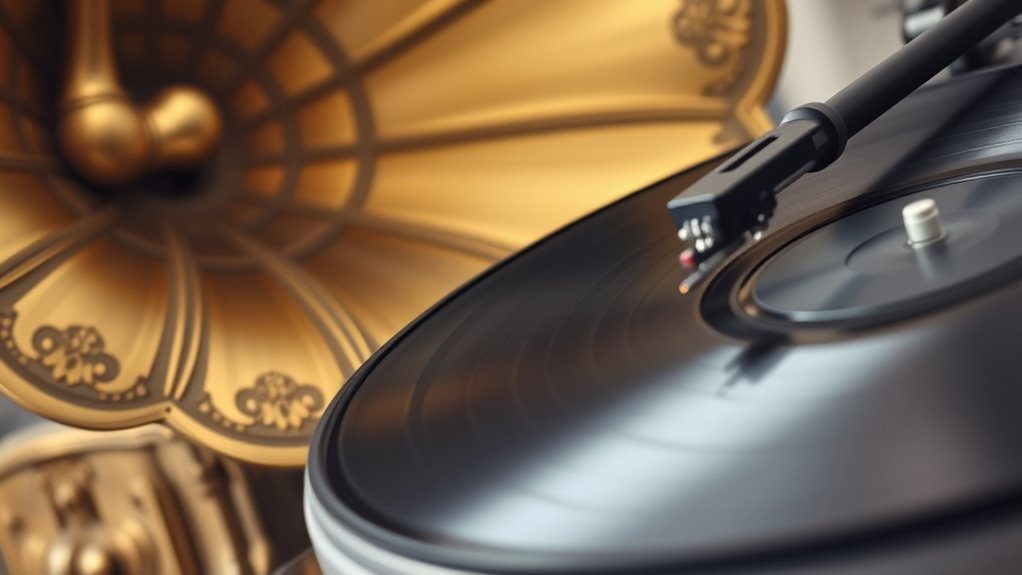
While both phonographs and turntables serve to play records, their sound quality and listening experiences differ markedly due to technological evolution. With a turntable, you often notice superior sound fidelity, capturing more detail and clarity in the music. Vinyl warmth adds a rich, immersive quality that digital formats can’t replicate, making your listening experience more emotionally engaging. Turntables typically provide smoother, more consistent playback, reducing distortions common in older phonographs. Their advanced tonearms and cartridges deliver a cleaner sound, enhancing the vinyl’s natural warmth. In contrast, phonographs may produce a more nostalgic, vintage sound that some listeners find charming. Overall, turntables give you a clearer, more precise listening experience, while phonographs evoke a warm, old-school vibe that appeals to collectors and enthusiasts. Additionally, modern turntables often incorporate auto functionality that ensures consistent playback and ease of use, further enhancing the listening experience. The technological advancements in turntable design have significantly improved durability and sound reproduction quality over time. Furthermore, improvements in sound engineering have helped to minimize vibrations and external noise, making modern turntables a preferred choice for audiophiles. Incorporating soundproofing materials can further improve audio clarity by reducing external interference. Modern innovations also include digital connectivity features, allowing seamless integration with other audio systems and recording devices.
antique phonograph restoration kit
As an affiliate, we earn on qualifying purchases.
As an affiliate, we earn on qualifying purchases.
Usage and Maintenance Considerations
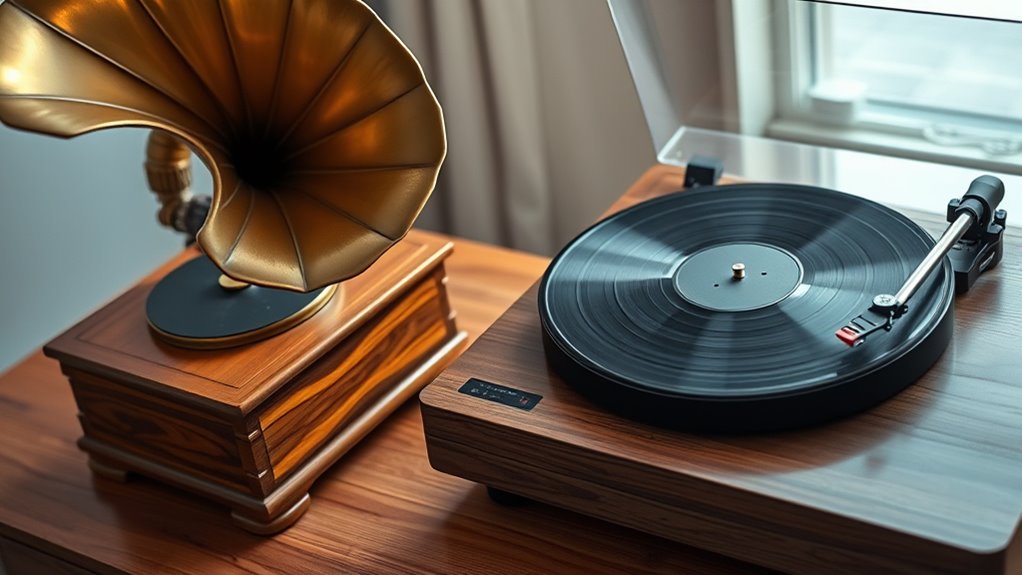
Maintaining and using a phonograph or turntable requires different levels of care and attention. Proper upkeep guarantees ideal sound and longevity. Here are key considerations:
- Regular cleaning techniques: Use a soft brush or cloth to gently remove dust from the stylus and record surface. Avoid harsh chemicals.
- Proper storage tips: Store records vertically in a cool, dry place away from direct sunlight. Keep the turntable covered when not in use.
- Handling records carefully: Always handle records by the edges to prevent fingerprints and oils from contaminating the grooves.
- Maintaining the tonearm and platter: Check for proper alignment and balance regularly, ensuring smooth operation and preventing wear.
Following these guidelines helps preserve your equipment and enjoy quality sound for years.
Modern Relevance and Collectibility
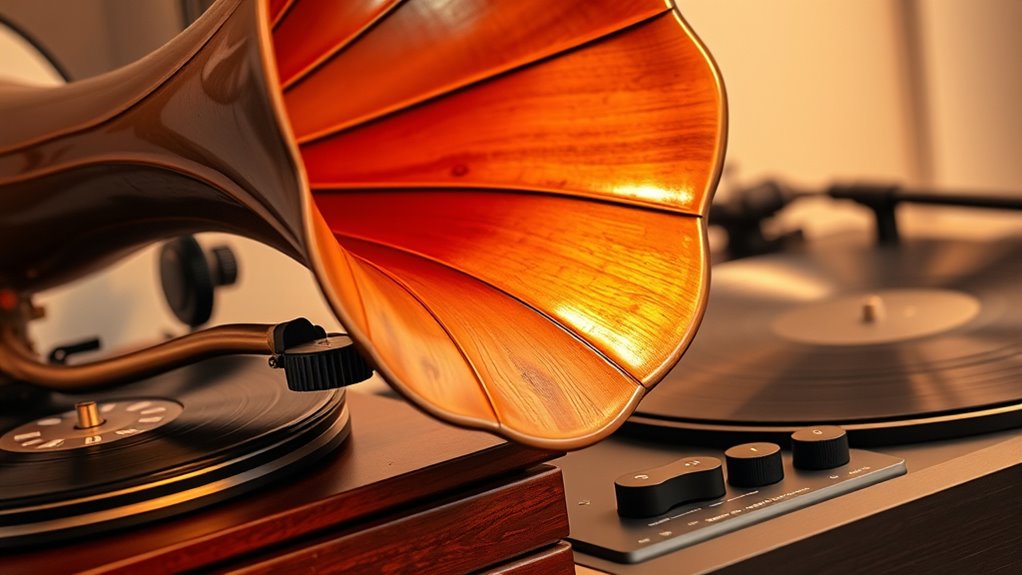
In recent years, both vintage phonographs and turntables have experienced a resurgence in popularity, driven by a growing appreciation for analog sound quality and nostalgic appeal. Their vintage appeal attracts collectors eager to preserve audio history, making these devices highly sought after in the collector’s market. Turntables, especially high-quality models, are prized for their craftsmanship and sound fidelity, often increasing in value over time. Phonographs, with their antique charm, appeal to those interested in historical audio technology. As a result, owning a well-preserved vintage piece can be both a nostalgic joy and a smart investment. Additionally, the vintage appeal of these devices continues to resonate with modern audiences, blending past craftsmanship with today’s appreciation for analog sound. Modern audio technology has also improved the usability and sound quality of turntables, maintaining their relevance in today’s market. Whether you’re a collector or a casual enthusiast, these old-school devices continue to hold modern relevance, blending past craftsmanship with today’s appreciation for analog sound. The collectibility of these items is also influenced by their rarity and condition, which can significantly impact their value in the market. Furthermore, advancements in restoration techniques help enthusiasts preserve and enhance these vintage devices, ensuring their longevity and continued desirability.
Frequently Asked Questions
How Do I Properly Set up a Turntable for Optimal Sound?
To properly set up your turntable for ideal sound, start with proper setup by placing it on a stable surface. Adjust the tonearm and cartridge for correct alignment, then perform audio calibration to guarantee accurate sound reproduction. Balance the tonearm’s tracking force and anti-skate settings, and verify the platter spins smoothly. Regularly check and fine-tune these settings to enjoy the best audio quality from your turntable.
Can a Phonograph Be Used With Modern Audio Systems?
Did you know that only 10% of vintage phonographs can be directly connected to modern audio systems? Yes, a vintage phonograph can be used with modern setups, but it often requires special adapters or preamps for compatibility. You’ll need to contemplate vintage compatibility and modern integration, ensuring you match the phonograph’s output with your system’s input. This way, you preserve the classic sound while enjoying today’s audio quality.
What Are the Costs Associated With Maintaining Vintage Turntables?
You’ll find that maintaining vintage turntables involves some costs, mainly for restoration and part replacement. Restoration costs can vary widely depending on the turntable’s condition, often ranging from $100 to over $500. Part replacement, like belts, styli, or motors, can add up, but regularly maintaining your turntable ensures peak sound quality and longevity. Budgeting for these expenses helps keep your vintage gear spinning smoothly.
Are There Digital Alternatives That Emulate the Vinyl Listening Experience?
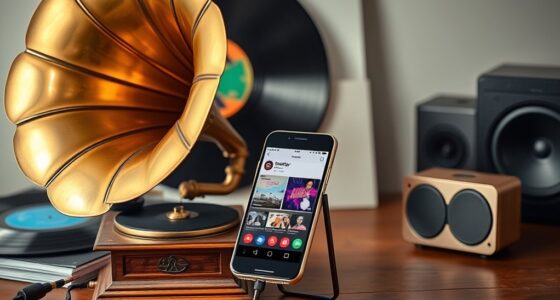
Digital dilemmas deliver delightful vinyl experiences through digital emulation. You can find streaming services, apps, and digital players designed to digitally mimic the authentic sound and feel of vinyl. These tools translate the tactile, textured listening experience into a modern format, enabling you to enjoy the essence of vinyl without the physical fuss. With digital emulation, you get the groove and ambiance of records, all at the click of a button.
How Do I Identify Authentic Vintage Phonographs and Turntables?
To identify authentic vintage phonographs and turntables, look for vintage markings like logos, model numbers, or serial numbers that match original manufacturer details. Check authenticity markers such as wear consistent with age, original parts, and craftsmanship. Research the specific brand and model to verify its history. Avoid replicas by inspecting for modern modifications or replacements. Authentic vintage devices often have a distinct feel and sound that newer reproductions lack.
Conclusion
While some might think old-school tech like phonographs and turntables are outdated, they still offer rich, authentic sound that digital can’t match. If you’re worried about maintenance or complexity, remember that with a little care, these devices become rewarding collectibles and tools for a nostalgic listening experience. Embracing this vintage tech means reconnecting with music’s roots—and trust me, the warmth and character are worth the effort. Don’t miss out on rediscovering true sound quality.
Halloween Picks
halloween
As an affiliate, we earn on qualifying purchases.