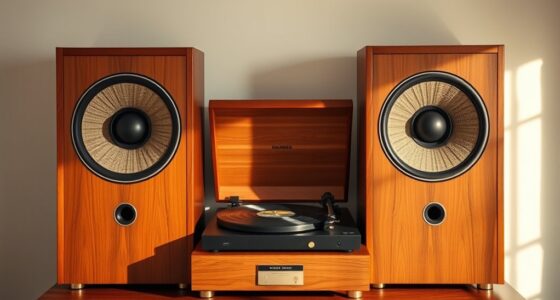
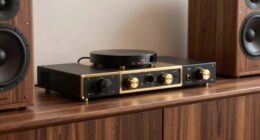
Adding Bluetooth to your vintage stereo lets you stream modern tunes wirelessly from smartphones or tablets, transforming your retro gear into a versatile, user-friendly music hub. You simply connect a Bluetooth receiver to the auxiliary input and power it up. This upgrade eliminates messy cables, improves convenience, and preserves audio quality with support for high-quality codecs. With minimal effort, you can enjoy the best of both worlds—classic looks and modern wireless sound—more details reveal how easy this really is.
Key Takeaways
- Choose a Bluetooth receiver with support for latest Bluetooth versions (4.2 or 5.0) and high-quality codecs like aptX or AAC.
- Connect the receiver to the stereo’s auxiliary input and power it via USB or batteries for easy setup.
- Ensure the adapter provides stable wireless connectivity to enjoy seamless streaming of modern tunes.
- Use high-fidelity Bluetooth adapters to preserve audio quality, making music sound as close to wired as possible.
- Transform vintage gear into a versatile, wireless music hub, enhancing usability while maintaining retro aesthetics.

If you own a vintage stereo and want to enjoy modern wireless convenience, adding Bluetooth capability is a simple upgrade. This allows you to stream your favorite music directly from your smartphone, tablet, or other Bluetooth-enabled devices without the hassle of cables. With wireless connectivity, you can easily move around your space while controlling your music, making your vintage gear more versatile and user-friendly. The process is straightforward, and you don’t need to replace your entire system—just a small Bluetooth adapter can do the trick.
Upgrade your vintage stereo with a Bluetooth adapter for wireless music streaming and convenience.
When selecting a Bluetooth receiver, focus on one that offers strong wireless connectivity. A reliable connection ensures your music streams smoothly without interruptions or dropouts. Look for models that support the latest Bluetooth versions, like 4.2 or 5.0, which provide better range, stability, and compatibility with newer devices. Some adapters come with built-in antennae or signal boosters, further enhancing wireless connectivity. Once installed, these adapters typically connect to your stereo’s auxiliary input, allowing you to pair your devices effortlessly.
A common concern when adding Bluetooth to vintage equipment is whether the audio quality will suffer. Fortunately, many modern Bluetooth adapters transmit high-quality audio that rivals wired connections. Look for models that support aptX or AAC codecs—these ensure your music sounds clear, detailed, and faithful to the original recording. Keep in mind that some older Bluetooth versions might compress audio more, leading to a slight loss in quality. Choosing a high-quality adapter helps preserve the richness and depth of your music, so you can enjoy your favorite tunes exactly as intended.
Installation is usually quick and simple. Most Bluetooth adapters have a plug-and-play design, requiring no technical expertise. You just connect the device to your stereo’s auxiliary input, power it up via USB or batteries, and pair your device. Once connected, your vintage stereo transforms into a wireless music player, capable of streaming from any Bluetooth device within range. This upgrade extends the life of your vintage gear, blending nostalgia with modern convenience.
Additionally, understanding audio codecs can help you select a Bluetooth adapter that maintains high sound quality, ensuring your listening experience remains rich and detailed. Adding Bluetooth to your vintage stereo doesn’t just improve functionality; it also opens up new listening possibilities. You can effortlessly switch between different devices, control your music remotely, and enjoy wireless freedom. The enhanced wireless connectivity means fewer cables cluttering your space, giving your setup a cleaner, more streamlined look. Plus, with high-quality audio transmission, you won’t have to compromise sound fidelity for convenience. It’s a small upgrade that makes a significant difference, turning your beloved vintage stereo into a contemporary music hub.
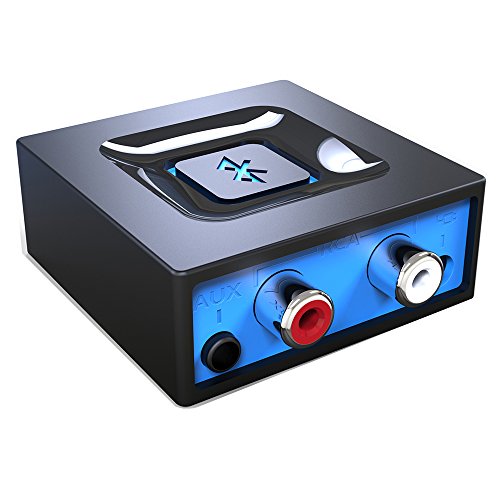
Bluetooth Audio Adapter for Music Streaming Sound System, Esinkin Wireless Audio Adapter Works with Smartphones and Tablets, Bluetooth Receiver for Home Stereo
Listen music wireless: Connect with computer speakers, home stereo systems or other speaker systems via the 3.5 mm…
As an affiliate, we earn on qualifying purchases.
As an affiliate, we earn on qualifying purchases.
Frequently Asked Questions
Will Bluetooth Adapters Damage Vintage Stereo Components?
Bluetooth adapters generally won’t damage your vintage stereo components if you choose a quality one. They provide wireless connectivity that’s compatible with most devices, so you can enjoy modern tunes without risking harm. Just make certain the adapter matches your stereo’s input/output specs and isn’t too powerful. Proper installation and using adapters designed for audio equipment help protect your gear while enabling seamless device compatibility and wireless convenience.
Can I Use Multiple Bluetooth Devices Simultaneously?
You can’t typically use multiple Bluetooth devices simultaneously with a vintage stereo because most Bluetooth adapters only support one device at a time. During Bluetooth pairing, verify your devices are compatible, and disconnect one device before connecting another. If you want multi-device support, look for Bluetooth adapters that specifically offer multi-point connectivity, but keep in mind, device compatibility varies, and some adapters may have limitations on simultaneous connections.
How Do I Ensure High-Quality Audio With Bluetooth?
To guarantee high-quality audio with Bluetooth, choose devices that support advanced audio codecs like aptX or LDAC, which provide better sound clarity. Keep your Bluetooth devices within a close range to reduce signal interference, which can cause audio dropouts or distortion. Also, avoid obstacles between your device and stereo, and ensure both are updated with the latest firmware for peak performance.
Is There a Latency Issue With Bluetooth Streaming?
Yes, there can be a slight audio delay with Bluetooth streaming, causing synchronization issues, especially with video or live performance. However, using Bluetooth 5.0 or aptX Low Latency codecs minimizes this audio delay. To guarantee smooth audio sync, check your device’s compatibility and consider upgrading your Bluetooth receiver. While some latency remains, these steps help you enjoy wireless tunes without noticeable lag, preserving your vintage stereo’s charm.
What’s the Best Placement for Bluetooth Receivers in My Stereo?
Think of your Bluetooth receiver as the conductor of an orchestra—placement is key. To guarantee clear sound, position your receiver away from metal objects, Wi-Fi routers, and other electronics that cause signal interference. For ideal signal, place it near your stereo’s input, ideally on a shelf or mounted behind or beside the unit. This minimizes latency and keeps your vintage gear sounding crisp and seamless.
![[Upgraded] 1Mii B06Pro Long Range Bluetooth Receiver, HiFi Wireless Audio Adapter, Bluetooth 5.3 Receiver with 3D Surround aptX HD Low Latency Optical RCA AUX 3.5mm Coaxial for Home Stereo System](https://m.media-amazon.com/images/I/41ZGeOnD1xL._SL500_.jpg)
[Upgraded] 1Mii B06Pro Long Range Bluetooth Receiver, HiFi Wireless Audio Adapter, Bluetooth 5.3 Receiver with 3D Surround aptX HD Low Latency Optical RCA AUX 3.5mm Coaxial for Home Stereo System
【DUAL ANTENNAS&LONG RANGE】With dual antennas and class 1 Bluetooth technology, the 1Mii B06Pro Long Range Bluetooth receiver can…
As an affiliate, we earn on qualifying purchases.
As an affiliate, we earn on qualifying purchases.
Conclusion
By adding Bluetooth to your vintage stereo, you blend classic style with modern convenience effortlessly. Did you know that over 80% of smartphone users now stream music wirelessly? This shows how essential Bluetooth technology has become in enjoying our favorite tunes. So, upgrading your vintage gear not only preserves its charm but also keeps you connected to today’s music world—letting you enjoy retro sound with a fresh, wireless twist.

1Mii B06+ Bluetooth Receiver, Hi-Fi Wireless Audio Adapter, Bluetooth 5.3 Receiver with 3D Surround aptX HD aptX Low Latency for Home Music Streaming Stereo System
【98FT LONG RANGE】With Class 1 Bluetooth technology, the 1Mii Bluetooth receiver can achieve a range of up to…
As an affiliate, we earn on qualifying purchases.
As an affiliate, we earn on qualifying purchases.

COMSOON Bluetooth Receiver for Car, Noise Cancelling 3.5mm AUX Bluetooth Car Adapter, Wireless Audio Receiver for Home Stereo/Wired Headphones, Hands-Free Call, 16H Battery Life – Black+Silver
【Enjoy Wireless Streaming Music】This car Bluetooth adapter can be connected to non-Bluetooth car audio systems, home stereos, speakers,…
As an affiliate, we earn on qualifying purchases.
As an affiliate, we earn on qualifying purchases.