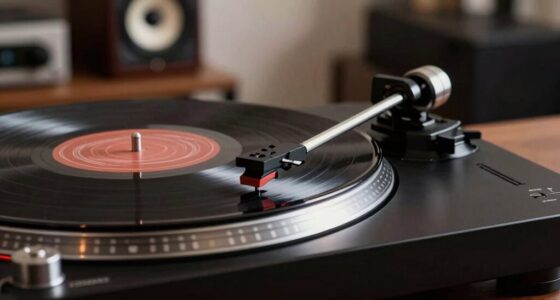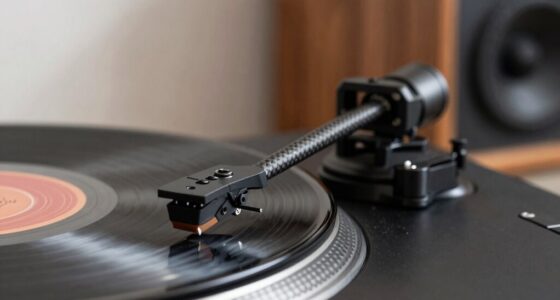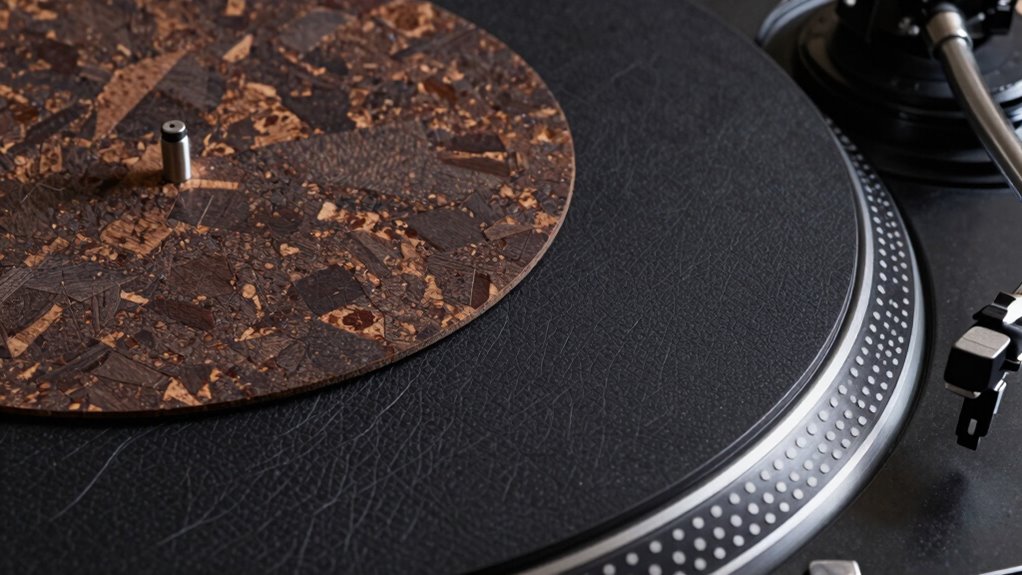

Choosing the right turntable mat affects sound quality, record preservation, and playback stability. Cork mats absorb vibrations and reduce resonance, helping your records sound clearer while protecting their surface. Rubber mats are versatile, dampening shocks and adding warmth to your sound. Leather mats offer a premium look and dampening qualities for richer tones but require extra care. Beyond these, options like felt or silicone can enhance your listening experience—exploring these details will help you make the best choice.

Get furniture and decor delivered free with Prime
- Fast, free delivery on millions of items
- Prime Video, Amazon Music and more included
- Member-only deals all year
Key Takeaways
- Turntable mats act as buffers that influence vibration transfer, affecting sound quality and record preservation.
- Cork mats excel at vibration absorption and reducing wear but may wear out over time.
- Rubber mats provide good shock absorption, grip, and a warmer, bass-rich sound profile.
- Leather mats offer aesthetic appeal and vibration damping, enhancing sound but requiring maintenance.
- Material choices like felt or silicone can optimize sound quality and long-term record preservation based on user priorities.
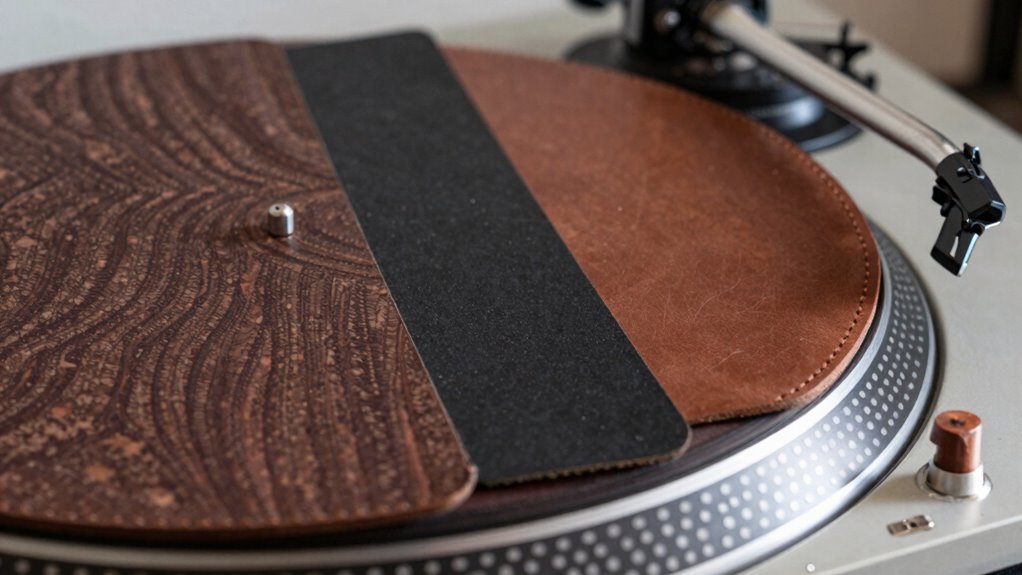
If you’re serious about vinyl playback, understanding the role of turntable mats is crucial. The mat you choose can markedly influence sound quality, vinyl record preservation, and overall listening experience. Turntable mats act as a buffer between the record and the platter, affecting how vibrations transfer and how securely the record sits during playback. When considering a turntable mat material comparison, you’ll find options like cork, rubber, leather, and others, each offering unique benefits and drawbacks.
Choosing the right turntable mat enhances sound quality, protects records, and improves overall vinyl listening experience.
Cork mats are lightweight and natural, providing excellent vibration absorption. They help minimize unwanted resonance, which can lead to clearer sound reproduction. Because cork is a porous material, it offers a slightly softer surface that gently grips the record, reducing slippage without damaging the vinyl. Many audiophiles favor cork for its ability to preserve vinyl records over time, as it minimizes wear and tear during playback. However, cork mats can sometimes be less durable and may compress over time, requiring replacement. Additionally, cork’s vibration absorption qualities are especially valued in high-fidelity setups. Incorporating material properties into your choice can further optimize your setup’s performance. Proper record preservation is also crucial for maintaining the longevity of your vinyl collection. Selecting the right turntable mat can also influence how well the tonearm tracks the record, impacting sound fidelity. Understanding how different materials can influence static buildup and dust attraction is also important for maintaining a clean playback environment.
Rubber mats are among the most common due to their affordability and versatility. They offer good shock absorption and reduce vibrations that could distort sound. Rubber provides a firm grip on the record, helping prevent slipping, and can contribute to a warmer, more bass-rich sound profile. When comparing turntable mat materials, rubber’s durability and ease of maintenance make it a practical choice for everyday use. Still, some audiophiles argue that rubber can sometimes introduce subtle distortions or dampen high frequencies, so the sound quality difference depends on your specific setup.
Leather mats are a more premium option, often chosen for their aesthetic appeal and unique damping qualities. Leather’s natural softness can help reduce vibrations and static buildup, contributing to cleaner sound and better vinyl record preservation. They tend to add a warm, rich tone but may require more care and maintenance to keep their appearance and performance. Leather mats are typically thicker, which can influence tracking and playback accuracy, so they work best with turntables designed to accommodate different mat thicknesses.
Beyond these common materials, you’ll find options like felt, silicone, and specialized composite mats, each with their own sound and preservation benefits. Considering the durability of the material and how it will age over time can also help you make a more informed decision. Ultimately, the right turntable mat depends on your specific priorities—whether it’s minimizing record wear, optimizing sound quality, or balancing both. By carefully comparing turntable mat materials, you can enhance your vinyl experience and ensure your records stay in top condition for years to come.
As an affiliate, we earn on qualifying purchases.
Frequently Asked Questions
How Do Turntable Mats Affect Sound Quality?
Turntable mats directly impact sound quality by reducing vibrations and enhancing clarity. You’ll notice a more precise sound with better vibration dampening, especially when using materials like cork or rubber. Material durability also matters, as sturdy mats maintain their shape and performance over time, preventing unwanted distortions. Choosing the right mat can improve your listening experience by providing a stable, vibration-free platform for your records.
Are There Maintenance Tips for Different Mat Materials?
Yes, maintenance varies by material. For cork mats, gently wipe with a damp cloth and avoid excessive moisture to preserve durability. Rubber mats benefit from regular mat cleaning with a soft brush or cloth to prevent dirt buildup. Leather mats should be cleaned with a damp cloth and conditioned periodically to maintain flexibility and durability. Always follow manufacturer guidelines to guarantee your mat stays in good shape and continues to optimize sound quality.
Can a Turntable Mat Improve Tracking Force?
A turntable mat can improve tracking force by providing better vibration damping, which helps your stylus stay steady. The right material also enhances material durability, ensuring consistent performance over time. For example, cork absorbs vibrations effectively, while rubber offers excellent damping. By choosing a suitable mat, you reduce unwanted resonance, leading to more accurate tracking force. This results in improved sound quality and longer-lasting components.
Do Specific Mats Suit Certain Music Genres Better?
Yes, certain mats suit specific music genres better due to genre compatibility and material durability. For example, cork mats enhance warmth for jazz and classical, while rubber mats offer better grip for energetic genres like rock or hip-hop. Leather mats provide a balanced sound suitable for many genres, and their durability guarantees longevity. Selecting the right mat depends on your preferred music style and the material’s ability to withstand regular use.
How Do I Choose the Right Mat for My Turntable?
Choosing the right turntable mat is like picking the right suit for a special event. You want durability, so consider materials like cork or rubber that withstand wear. Aesthetic options matter too, matching your style or your turntable’s look. Think about your listening habits; if you prefer warm sound, leather might suit you. Ultimately, test different mats to find one that enhances your music experience and fits your vibe.
As an affiliate, we earn on qualifying purchases.
Conclusion
Ultimately, choosing the right turntable mat depends on your listening style and preferences. While some swear by cork for its warmth, others prefer rubber for its stability. Leather offers a luxurious feel, but its impact on sound is debated. Trust your ears and experiment—sometimes, the best choice isn’t the most popular. Remember, the right mat can elevate your vinyl experience, making every spin feel just a bit more special.
As an affiliate, we earn on qualifying purchases.
As an affiliate, we earn on qualifying purchases.
Halloween Picks
halloween
As an affiliate, we earn on qualifying purchases.