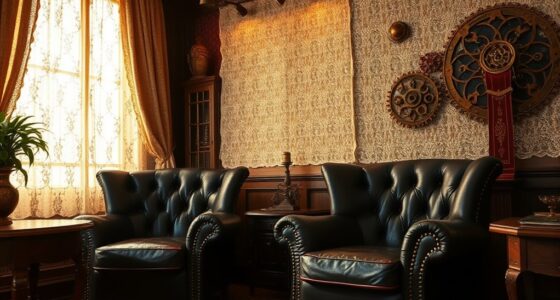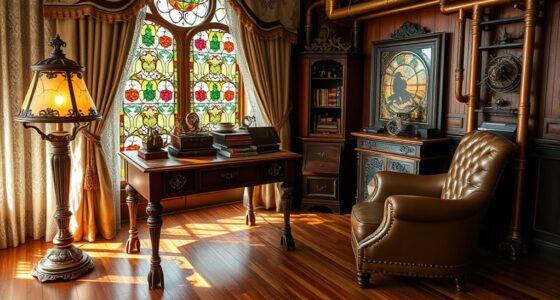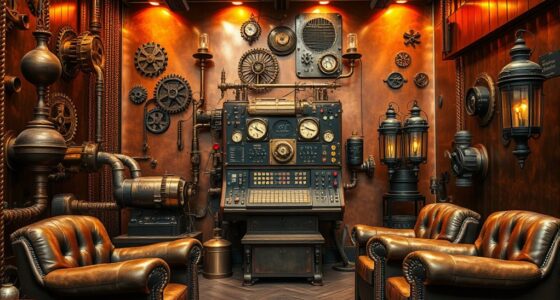
Steampunk style traces its roots to Victorian literature, inspired by authors like Poe and Verne who imagined fantastical machines and gears. It evolved alongside the Industrial Revolution’s focus on intricate craftsmanship and technological innovation. Over time, it gained popularity in movies, fashion, and interior design, blending vintage charm with modern elements. If you explore further, you’ll discover how this unique mix continues to influence trends from decor to fashion today.
Key Takeaways
- Steampunk originated from Victorian-era literature, featuring automata and industrial motifs by authors like Poe and Verne.
- The Industrial Revolution’s machinery and steam technology inspired early steampunk aesthetics and themes.
- Victorian design elements such as ornate craftsmanship, gears, and metallic accents influenced steampunk interior styles.
- Modern steampunk blends vintage Victorian motifs with contemporary, eco-friendly materials and technological innovations.
- Visual elements include brass fixtures, gear motifs, reclaimed materials, and tech-infused decor reflecting the style’s evolution.
Literary Roots and Early Inspirations
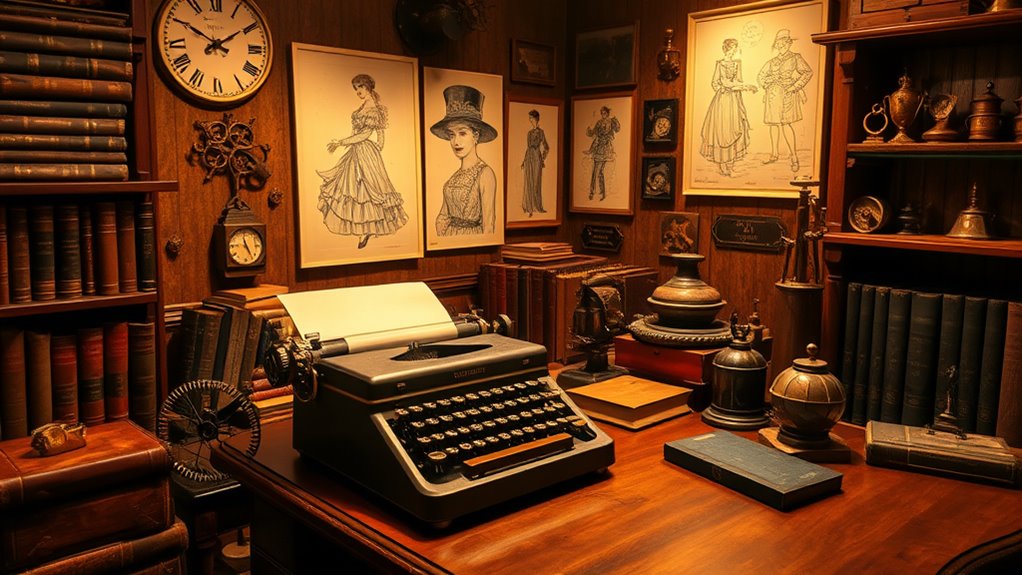
Steampunk’s roots can be traced back to a handful of influential literary works that captured the imagination of early enthusiasts. These stories often featured automaton symbolism, representing both technological innovation and human curiosity. Victorian literary motifs played a significant role, emphasizing themes of progress, invention, and societal change. You’ll notice how authors like Edgar Allan Poe and Jules Verne visualized fantastical machines and intricate gears, reflecting a fascination with machinery and industrialization. These narratives blended science with imagination, inspiring steampunk’s aesthetic that combines vintage Victorian elements with mechanical ingenuity. As a result, early steampunk enthusiasts drew heavily from these literary motifs, shaping a style rooted in a romanticized view of the Victorian era’s technological marvels and symbolic automata.
The Evolution of Victorian Aesthetics
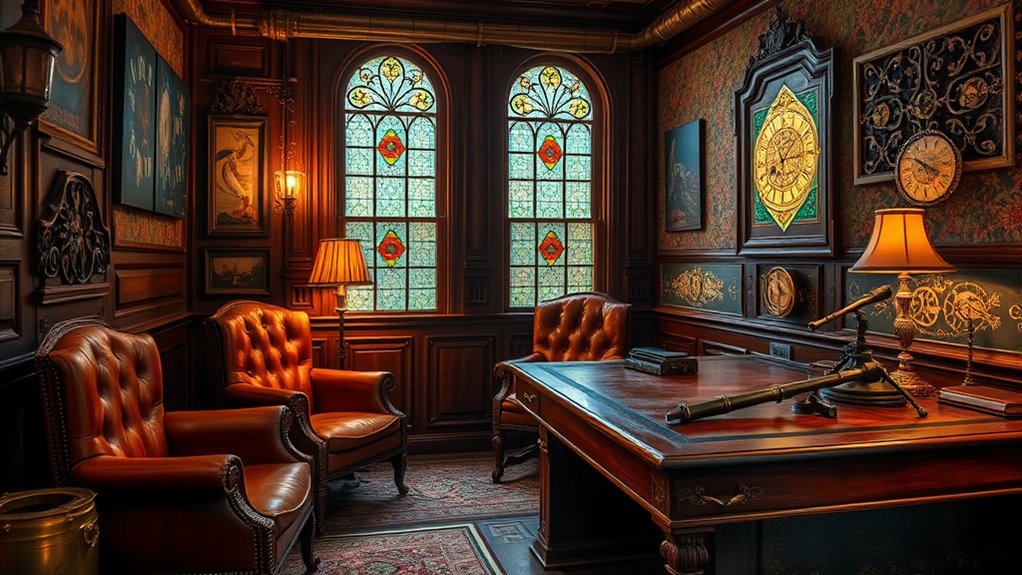
The Victorian aesthetic evolved considerably as it intertwined with technological advancements and industrial design, shaping the distinctive look associated with steampunk. You notice how clockwork elegance became a hallmark, blending intricate gears and mechanisms into everyday objects. During the Victorian revival, this style gained renewed popularity, emphasizing ornate details and craftsmanship. The era’s fascination with precision and decorative complexity influenced interior design, fashion, and art. You see how furniture, textiles, and accessories reflect this blend of elegance and innovation. Victorian revival champions the ornate and eclectic, creating a sense of grandeur with a touch of industrial grit. This evolution highlights a period where beauty and mechanical ingenuity coalesced, setting the foundation for steampunk’s distinctive aesthetic that celebrates both history and invention. Additionally, the integration of sound engineering techniques into design elements echoes this fascination with mechanical harmony and innovation. The use of yarn and textiles in upholstery and accessories further emphasizes the craftsmanship and ornate details characteristic of this era’s aesthetic. The appreciation for decorative complexity during this time continues to influence modern interpretations of Victorian-inspired steampunk design. Moreover, incorporating digital sound synthesis techniques can enhance the immersive experience in steampunk-themed environments, blending historical aesthetics with contemporary technology.
Industrial Revolution and Technological Influence
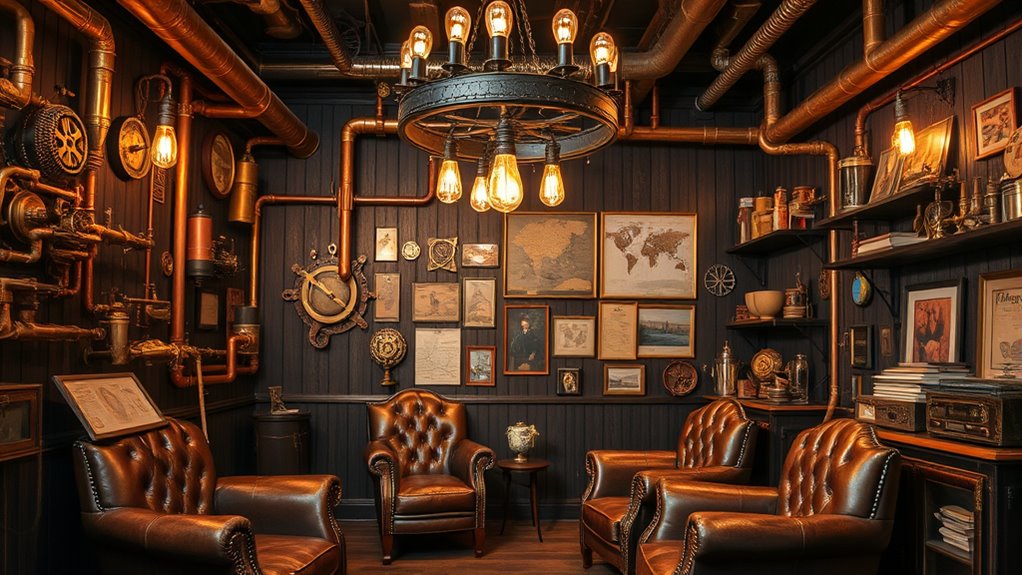
The Industrial Revolution dramatically transformed society by introducing innovative machinery and manufacturing methods that reshaped everyday life. You see, gear mechanisms became central to machinery, enabling precise movement and control in factories. Steam-powered devices revolutionized transportation, production, and communication, making processes faster and more efficient. These technological advances fostered a fascination with mechanical ingenuity, inspiring designers and inventors alike. As you explore steampunk aesthetics, you’ll notice how gear mechanisms and steam-powered devices symbolize ingenuity, progress, and industrial strength. The era’s emphasis on machinery and technological innovation laid the groundwork for the distinct blend of Victorian elegance and industrial grit that characterizes steampunk style today. This period’s influence is unmistakable, shaping the visual language and thematic elements that define the movement. Additionally, the focus on mechanical innovation during this time inspired elaborate designs and ornamentation that are hallmarks of steampunk interiors, reflecting a love for intricate craftsmanship and detailed decoration. Moreover, the integration of self-watering plant pots in steampunk-inspired interior design exemplifies how functional technology was incorporated into aesthetic settings to create a sense of harmony between form and function.
The Rise of Steampunk in Popular Culture

Have you noticed how steampunk elements have quietly woven their way into movies, fashion, and literature? This rise in popularity is partly due to a fascinating cyberpunk crossover, blending dystopian tech with Victorian aesthetics. Films like *Wild Wild West* and recent steampunk-inspired blockbusters showcase intricate costumes and gadgetry, fueling your fascination. Steampunk fashion has become more than costume; it influences everyday style with leather vests, goggles, and brass accents. Social media and conventions have amplified its presence, making it accessible and trendy. You see it in graphic novels, fashion runways, and pop culture references, creating a vibrant community. The movement’s growth reflects a desire for nostalgia combined with innovation, drawing you into a world where history and imagination collide in enthralling ways. Additionally, the fashion trends associated with steampunk often draw inspiration from detailed character portrayals, such as those seen in costume-heavy shows like *South Beach Tow*, where unique character styles help define individual identities. This cultural phenomenon is also supported by the rise of niche communities, which foster creativity and shared passion for the aesthetic. The design elements of steampunk, like gear motifs and vintage machinery, further enhance its appeal across various creative fields. Moreover, the popularity of remote hackathons has fostered virtual communities where enthusiasts can collaborate on steampunk-inspired projects and innovations. Interestingly, the crafting movement has embraced steampunk as a source of inspiration for handmade accessories and decor, broadening its reach into eco-friendly handmade crafts.
Transition Into Interior Design and Home Decor

You can incorporate vintage industrial elements like exposed pipes and reclaimed wood to create a steampunk-inspired space. Retro-futuristic accents, such as brass fixtures and gear motifs, add a unique touch that blends old and new. These design choices transform your home into a stylish reflection of the steampunk aesthetic.
Vintage Industrial Elements
Vintage industrial elements seamlessly shift from their origins in factory and warehouse settings into stylish interior design and home decor. You’ll notice clockwork motifs that evoke a sense of mechanical ingenuity, often incorporated into wall art or decorative accents. Brass accents add warmth and a touch of refinement, contrasting with rugged materials like distressed wood or exposed brick. Industrial lighting fixtures with metal shades and vintage filament bulbs enhance the authentic feel. These elements create a balanced aesthetic that combines raw, utilitarian charm with sophisticated detail. When you incorporate vintage industrial pieces, you evoke a sense of history and craftsmanship, giving your space a unique character rooted in the steampunk ethos. This blend of functional and decorative features transforms everyday interiors into immersive, vintage-inspired environments. For example, Vetted electric bike conversion kits demonstrate how combining reliable performance with vintage-inspired design can elevate both practicality and aesthetic appeal in modern spaces. Incorporating preppy dog names can also add a touch of classic elegance to your decor, enhancing the overall sophisticated vibe. Additionally, integrating industrial materials like steel and reclaimed wood can further emphasize the rugged yet refined style characteristic of steampunk interiors. Furthermore, using sustainable sourcing practices when selecting vintage elements can help preserve environmental resources while maintaining authenticity. Moreover, the use of analytical cookies in online shopping experiences can help you discover the most authentic vintage pieces tailored to your style preferences.
Retro-Futuristic Accents
Ever wondered how the future once looked through the lens of yesterday’s imagination? That’s the essence of retro-futuristic accents in steampunk-inspired interiors. You’ll notice mechanical motifs—gears, cogs, and intricate machinery—integrated into furniture and decor, creating a sense of industrial innovation. Brass embellishments add warmth and a vintage feel, reflecting the Victorian fascination with craftsmanship. These accents evoke a bygone era’s vision of the future, blending antique aesthetics with futuristic ideas. You might see brass light fixtures shaped like steampunk contraptions or wall art featuring gears and pistons. Incorporating these elements transforms your space into a nod to the past’s imaginative view of what’s to come, making your home both nostalgic and forward-looking. Understanding asset division laws can also help you navigate the process smoothly if you decide to undertake a major renovation involving shared assets or property. Additionally, recognizing how design influences from literature shape interior styles can inspire more authentic decorating choices.
Contemporary Interpretations and Future Trends
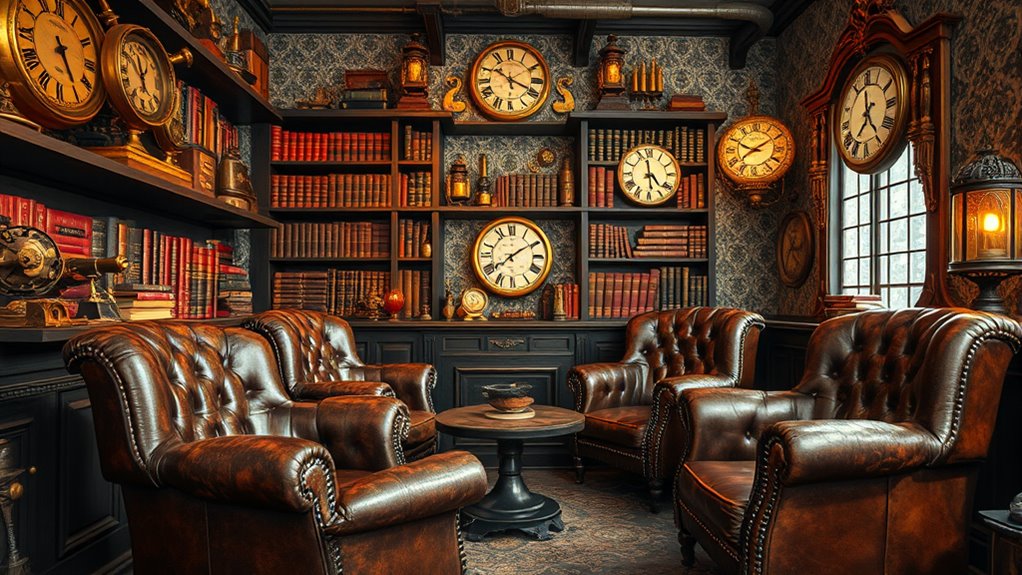
As you explore modern steampunk aesthetics, you’ll notice how designers blend vintage charm with sleek, contemporary elements. Sustainable materials are becoming more popular, reflecting a shift toward eco-friendly practices within the style. Additionally, tech-infused design trends are pushing steampunk into the future, creating innovative and functional interpretations of the genre.
Modern Steampunk Aesthetics
Modern steampunk aesthetics blend traditional Victorian influences with innovative technology-inspired designs, creating a dynamic and evolving style. You’ll notice gear motifs prominently featured in furniture, jewelry, and décor, symbolizing the intricate craftsmanship of the era. Brass finishes are a staple, adding warmth and a vintage industrial feel to pieces, whether it’s a clock, lamp, or wall art. Contemporary interpretations emphasize a mix of raw, unfinished metals and sleek, modern elements, balancing nostalgia with innovation. You might see sleek, minimalist designs infused with steampunk accents, reflecting future trends. This style continues to evolve, embracing bold, imaginative ideas while honoring its Victorian roots. As a result, modern steampunk remains versatile, inspiring creativity in interior design, fashion, and art.
Sustainable Materials Adoption
Building on the innovative spirit of contemporary steampunk aesthetics, designers are increasingly turning to sustainable materials to craft their creations. They embrace biodegradable plastics and upcycled metals, blending eco-consciousness with vintage charm. These materials allow you to achieve the intricate, industrial look without harming the environment. Upcycled metals, such as reclaimed copper and brass, add authenticity and history to your designs. Biodegradable plastics, molded into gears and decorative elements, provide lightweight, eco-friendly alternatives. This trend reflects a commitment to sustainability while maintaining the steampunk ethos of innovation and craftsmanship. As you explore future trends, expect more integration of eco-friendly materials that honor the past and support a greener future.
| Material Type | Example Uses | Environmental Benefit |
|---|---|---|
| Biodegradable plastics | Gears, decorative accents | Reduces plastic waste |
| Upcycled metals | Furniture, fixtures | Reuses existing resources |
| Reclaimed wood | Shelving, paneling | Limits deforestation |
| Recycled glass | Decorative panels | Conserves raw materials |
| Natural fibers | Upholstery, textiles | Biodegradable, sustainable |
Tech-Infused Design Trends
Tech-infused design trends are transforming the classic steampunk aesthetic by seamlessly integrating modern technology with vintage-inspired elements. You’ll notice clockwork fashion influences, blending intricate gears and cogs with contemporary textiles and accessories. Steam-powered gadgets now serve functional purposes while maintaining their nostalgic charm, acting as conversation pieces that bridge past and future. Smart lighting, hidden speakers, and interactive displays are incorporated into steampunk-inspired interiors, creating immersive environments that honor tradition while embracing innovation. Future trends may include augmented reality interfaces embedded into vintage decor or wearable tech styled as Victorian jewelry. This fusion offers a dynamic, personalized experience, letting you enjoy the charm of traditional steampunk while benefiting from cutting-edge technology. Your space becomes a living affirmation to both history and progress.
Frequently Asked Questions
How Did Steampunk Influence Other Alternative Fashion Movements?
Steampunk influences other alternative fashion movements by blending Victorian aesthetics with industrial motifs, creating a unique, retro-futuristic look. You might see this in the way people incorporate corsets, goggles, and gears into their outfits, inspired by steampunk’s vintage yet tech-inspired vibe. This style encourages creativity and individualism, inspiring fashion trends like cyberpunk or dieselpunk that also draw on industrial elements and historical aesthetics for bold, innovative expressions.
What Materials Are Most Commonly Used in Steampunk Interior Design?
In steampunk interior design, you’ll most often see materials like brass fixtures that add a vintage, industrial feel, along with distressed wood to create a weathered, antique look. You might also incorporate leather, copper, and iron to enhance the steampunk vibe. These materials help you craft a space that blends Victorian elegance with a rugged, mechanical aesthetic, making your interior uniquely immersive and nostalgic.
Are There Specific Authors or Books That Define Steampunk Literature?
You’ll love exploring steampunk literature’s roots, with authors like Jules Verne and H.G. Wells leading the way. Did you know that over 60% of steampunk stories blend Victorian influence with inventive storytelling? These writers craft worlds where steam-powered technology meets Victorian elegance, setting the tone for the genre. Their works inspire both literature and interior design, immersing you in a retro-futuristic universe full of innovation and style.
How Has Digital Technology Impacted Contemporary Steampunk Art?
Digital technology has profoundly impacted contemporary steampunk art by enabling digital fabrication, which lets you create intricate, authentic-looking steampunk pieces more easily. Virtual reality also immerses you in interactive steampunk worlds, enhancing your appreciation and creativity. These tools let you experiment with designs and concepts, blending Victorian aesthetics with modern innovation, making steampunk more accessible and dynamic for artists and enthusiasts alike.
What Are Emerging Trends in Steampunk-Inspired Architecture?
You notice the latest in steampunk-inspired architecture—futuristic facades that seem to blend past and future, hinting at endless possibilities. Eco-friendly materials are transforming these designs, making sustainability a core element. These emerging trends evoke excitement and curiosity, as you envision buildings that are both timeless and innovative. The fusion of vintage aesthetics with modern tech creates an enthralling landscape, pulling you into a world where history and future collide seamlessly.
Conclusion
As you explore steampunk’s rich history, you’ll find that its blend of Victorian charm and industrial grit almost feels like a happy accident of history. Maybe it’s no coincidence that today’s interiors mirror that same eclectic mix—reminding you that style often emerges where history and innovation unexpectedly meet. So, as you incorporate steampunk elements into your space, remember, it’s the surprises along the way that truly make it unique.