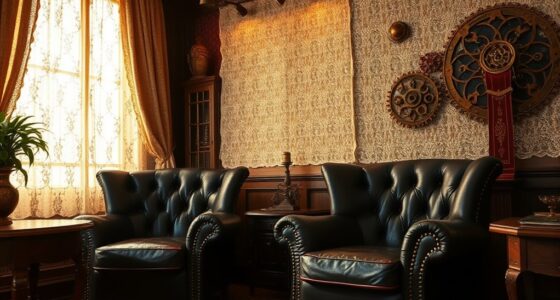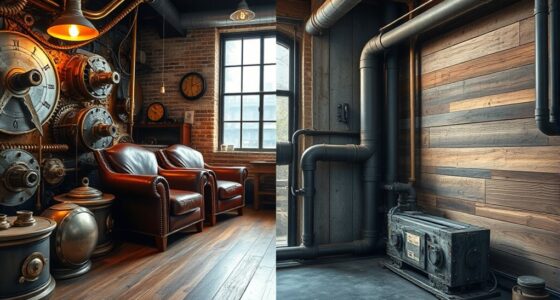

To repurpose antique machinery into furniture, start by evaluating the condition of the pieces and cleaning them thoroughly to reveal their authentic features. Repair minor damages while preserving original details like gears, rivets, and textures for vintage charm. You can turn parts into unique tables, shelves, or decor accents, often adding modern touches or lighting. Combining careful restoration with creative design transforms these relics into durable, stylish furnishings that add character to any space—explore more ways to make this happen.
Key Takeaways
- Evaluate machinery condition, clean, and preserve authentic details for vintage charm.
- Repair minimal damages and maintain structural integrity for durable furniture.
- Convert machinery into functional pieces like tables or display stands, highlighting mechanical features.
- Enhance with paint, lighting, or protective coatings to modernize or accentuate vintage elements.
- Blend machinery into interior styles, creating unique, conversation-starting decor with character.
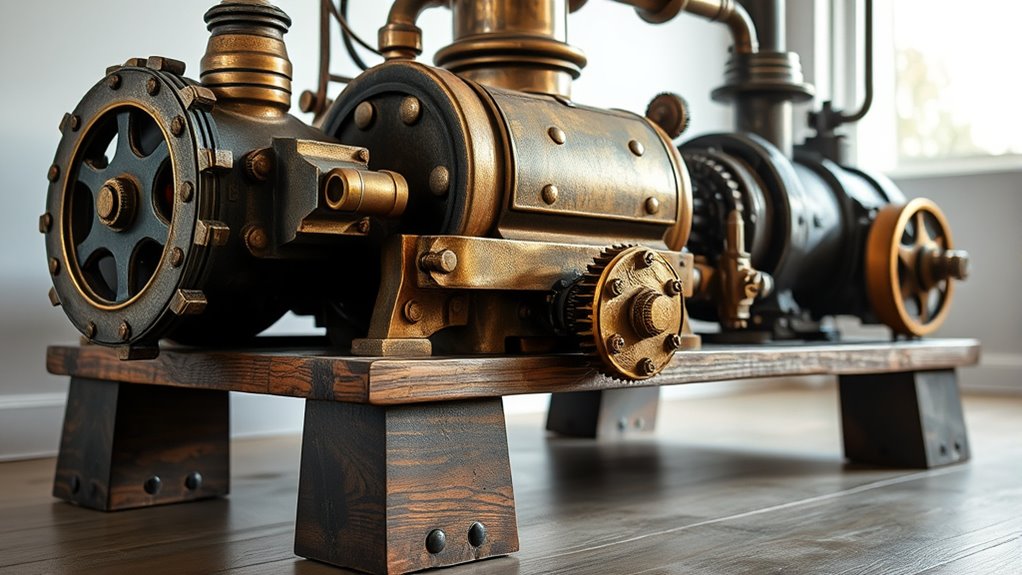
Many antique machines, once forgotten or discarded, can be transformed into striking pieces of furniture that add character to your space. This process, rooted in vintage restoration, allows you to breathe new life into old machinery while celebrating its history. When you repurpose these items, you’re not just creating functional furniture—you’re crafting conversation starters that embody industrial design’s raw, authentic aesthetic. By combining the rugged charm of vintage machinery with modern interior styles, you elevate your decor to a unique level of sophistication and originality.
Starting with vintage restoration, you evaluate the condition of the machinery. Many machines are sturdy enough to be repurposed with minimal repairs, which keeps the project straightforward and cost-effective. Clean the surface thoroughly, removing rust, dirt, and old paint. You may choose to maintain some of the machine’s original features—like exposed gears or metal textures—to enhance its industrial appeal. Restoring with a focus on preserving authentic details ensures the piece retains its vintage charm while functioning as a piece of furniture. Understanding market trends can also help you select machinery that aligns with current interior design styles and increases its value as decor.
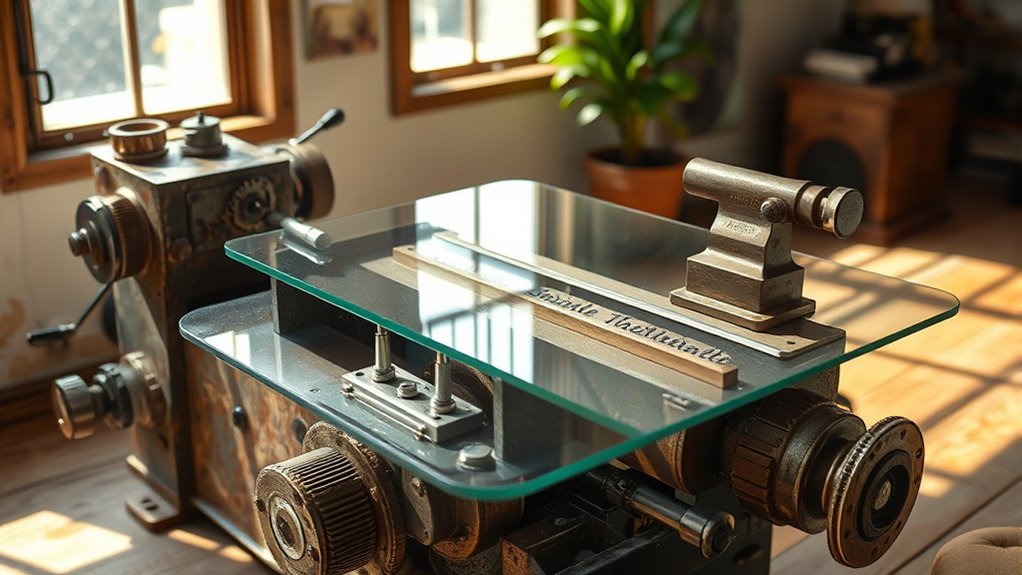
Once cleaned and repaired, you decide how to incorporate the machinery into your space. For example, an old metal lathe can become a coffee table by adding a sturdy glass top, allowing the intricate mechanisms to remain visible. Similarly, an antiquated printing press can serve as a unique side table or display stand. The key is to highlight the industrial design elements—metal textures, rivets, and mechanical parts—that give these pieces their distinctive character. These details not only tell a story but also evoke a sense of history and craftsmanship.
You also have the opportunity to customize these pieces to suit your style. Applying a fresh coat of paint or a protective finish can modernize the look, or you can opt to keep the original patina for a more authentic feel. Lighting can further enhance the appeal; strategically placed spotlights or LED strips can accentuate the machinery’s mechanical intricacies, making it a focal point in your room.
Repurposing antique machinery into furniture isn’t just about aesthetics—it’s about creating sustainable, conversation-starting pieces that reflect your appreciation for history and craftsmanship. It’s a perfect blend of vintage restoration and industrial design, emphasizing durability, texture, and character. With some effort and creativity, you turn forgotten relics into functional art that enriches your environment. Whether you’re aiming for a rustic loft or a modern industrial vibe, these transformed pieces add a unique touch that’s both practical and deeply personal.
Frequently Asked Questions
How Do I Ensure Safety When Repurposing Antique Machinery?
To guarantee safety when repurposing antique machinery, always prioritize antique safety by thoroughly inspecting each piece for rust, corrosion, or damage. Use machinery protection gear such as gloves and goggles during work. Keep the workspace well-ventilated and clear of debris. Make sure to disconnect power sources before working on electrical parts. Properly stabilize and secure the machinery to prevent accidents, and consult safety guidelines for handling vintage equipment.
What Materials Work Best for Restoring Antique Machinery Into Furniture?
Did you know that combining metal reinforcement with wood pairing increases furniture durability by up to 30%? When restoring antique machinery, opt for sturdy hardwoods like oak or walnut for the main structure, and reinforce key areas with metal components for strength. These materials blend authenticity with stability, ensuring your piece lasts. Use rust-resistant metals, and consider sealed finishes to preserve the antique charm while enhancing durability.
How Much Does Professional Repurposing Typically Cost?
You can expect professional repurposing to cost between $1,000 and $5,000, depending on size, complexity, and materials used. Pricing estimates typically include labor costs, which can vary based on craftsmanship and location. Keep in mind that intricate details or restoring antique machinery to a high standard may increase expenses. It’s best to get multiple quotes to understand the range and make certain you’re getting quality work within your budget.
Are There Specific Antique Machines Better Suited for Furniture Projects?
Like a skilled chef selecting ingredients, you should choose machines with strong design features for furniture projects. Steam engines and vintage sewing machines often work best because of their aesthetic appeal and sturdy construction. Focus on machine selection and aesthetic considerations to guarantee your piece has both charm and durability. Avoid delicate or overly ornate machines that may not hold up or fit your desired style.
How Do I Maintain and Care for Repurposed Machinery Furniture?
You should regularly clean your machinery furniture with soft cloths and gentle cleaners. To maintain its shine, use polishing techniques suited for metal or wood, depending on the material. Applying protective coatings, like clear sealants or wax, helps prevent corrosion and damage. Reapply these coatings periodically, especially if you notice wear. Keep your furniture away from excessive moisture and direct sunlight to prolong its beauty and durability.
Conclusion
Turning antique machinery into furniture is like breathing new life into old stories, giving them a fresh chapter. By repurposing these pieces, you transform history into functional art that tells a story with every detail. It’s a dance of creativity and craftsmanship, where past and present collide beautifully. When you embrace this process, you’re not just restoring items—you’re weaving timeless character into your space, creating a legacy that endures like a well-worn melody.