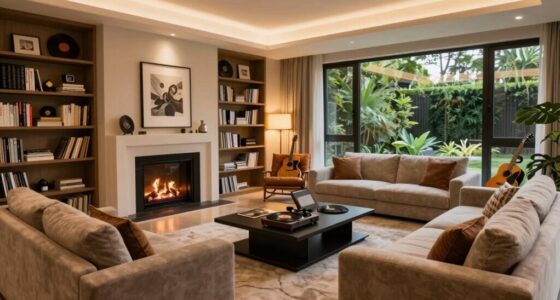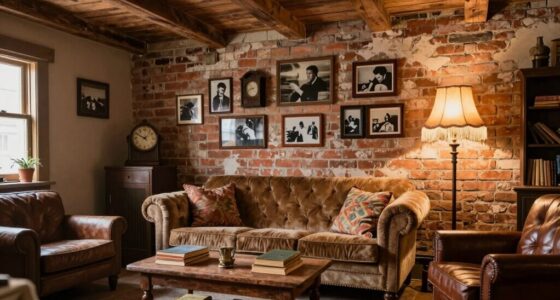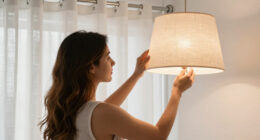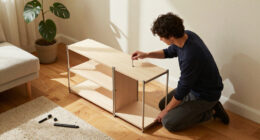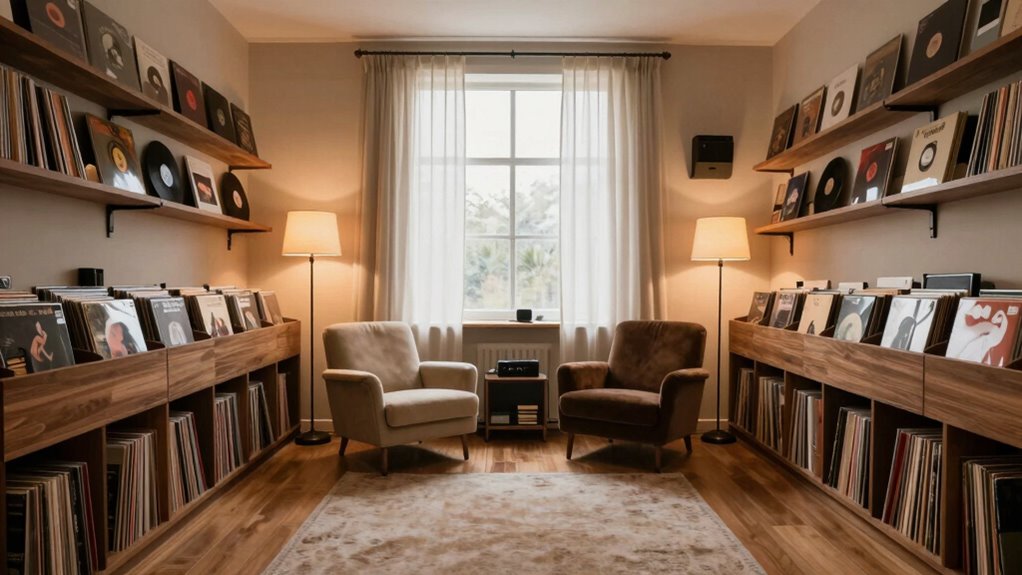

To build a comfortable record room, prioritize acoustic treatments like bass traps and diffusers to improve sound quality without feeling cramped. Use adjustable, ergonomic furniture to support long sessions and organize equipment to reduce clutter. Incorporate layered lighting with dimmable options for mood and reduced eye strain, and guarantee proper ventilation for comfort. Thoughtful room layout and soundproofing help maintain a peaceful environment, making it easy to focus. Keep exploring to discover more ways to create your ideal space.

Get furniture and decor delivered free with Prime
- Fast, free delivery on millions of items
- Prime Video, Amazon Music and more included
- Member-only deals all year
Key Takeaways
- Incorporate ergonomic furniture and organized equipment to ensure comfort during long recording sessions.
- Use layered lighting and adjustable fixtures to create a cozy, well-lit environment without glare.
- Add acoustic treatments like bass traps and diffusers to improve sound quality while maintaining a pleasant atmosphere.
- Maintain proper temperature and ventilation for comfort without compromising soundproofing.
- Design the layout for easy access, reducing clutter and enhancing both functionality and relaxation.
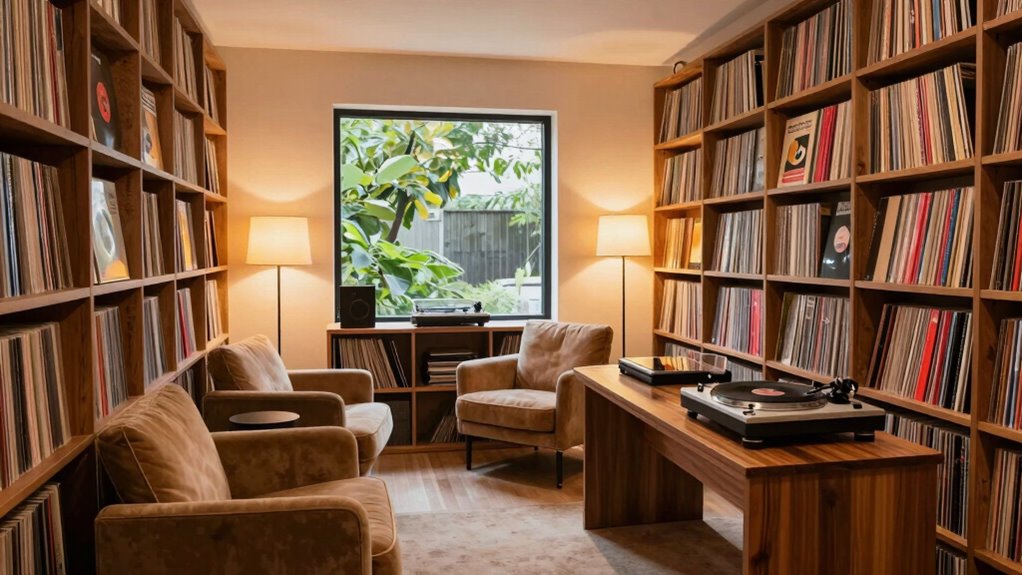
Creating a dedicated record room doesn’t mean you have to sacrifice comfort. In fact, designing a space that balances sound quality with your personal ease is entirely achievable. The key lies in thoughtful acoustic treatment and lighting design, which work together to create an environment that’s both functional and inviting. The goal is to minimize unwanted sound reflections and external noise, so you can focus on your music without distractions. You might start by adding bass traps in the corners to absorb low frequencies that tend to build up, and installing diffusers or acoustic panels on the walls to break up sound waves and prevent echoes. These treatments not only improve sound clarity but also create a more pleasant listening environment, so you won’t feel overwhelmed by harsh reverberations. Once you address the acoustics, turn your attention to lighting design, which plays a fundamental role in your overall comfort. Instead of harsh overhead fluorescents, opt for layered lighting options. Incorporate adjustable LED fixtures, warm-toned lamps, or dimmable lights that allow you to set the mood and reduce eye strain during long recording or mixing sessions. Good lighting should be flexible, so you can brighten the room for detailed work or mellow it out for relaxed listening. Consider adding task lighting near your mixing console or instrument areas, and ambient lighting around the perimeter of the room. This creates a cozy atmosphere without compromising visibility. Additionally, avoid glare and reflections that can cause discomfort or distort visuals on screens. Position your lights thoughtfully, ensuring they don’t shine directly into your eyes or onto reflective surfaces. Comfort also extends to furniture and room layout, so choose ergonomic chairs and desks that support long hours of work. Keep your equipment organized to reduce clutter, which can cause frustration and fatigue. Temperature control is equally essential; a well-ventilated space with adjustable climate settings ensures you stay comfortable no matter how long you’re working or listening. Paying attention to soundproofing techniques can further enhance the silence and isolation needed for high-quality recordings. Proper room acoustics can also help prevent sound reflections, making your recording environment more effective and enjoyable.
acoustic bass traps for recording room
As an affiliate, we earn on qualifying purchases.
As an affiliate, we earn on qualifying purchases.
Frequently Asked Questions
What Are the Best Soundproofing Materials for a Record Room?
You should choose acoustic panels and bass traps for effective soundproofing in your record room. Acoustic panels absorb mid and high frequencies, reducing echo, while bass traps target low-frequency sound waves, preventing bass buildup. Install them strategically on walls and corners to create a balanced sound environment. Combining these materials guarantees your space stays quiet and comfortable, allowing you to enjoy listening or recording without unwanted noise interference.
How Can I Optimize Lighting Without Damaging My Records?
You can turn your record room into a fortress of protection by using LED lighting, which emits minimal heat and UV rays, safeguarding your precious collection. Position your record display and shelving organization away from direct sunlight or harsh bulbs, and opt for dimmable, soft lighting options. This way, you enjoy perfect visibility without risking any damage—your records stay pristine, and your space remains brilliantly illuminated.
What Climate Control Options Are Most Effective for Record Preservation?
You should focus on humidity regulation and air filtration to preserve your records effectively. Use a dehumidifier or humidifier to maintain a stable, cool humidity level around 40-50%, preventing warping or mold. Incorporate an air purifier with HEPA filters to remove dust, pollutants, and mold spores. Regularly monitor temperature and humidity, ensuring your records stay in ideal conditions without sacrificing comfort in your room.
How Much Space Do I Need for a Comfortable Record Room?
You’ll need at least 100 square feet to comfortably house your record collection, but more space allows for better record shelf organization and easy browsing. If your collection grows, consider expanding to 150 or even 200 square feet. Keep in mind, a cozy, well-organized room makes every listen more immersive. Don’t underestimate the power of ample space to preserve your collection’s quality and your enjoyment.
What Furniture Is Ideal for a Functional yet Cozy Record Space?
You should opt for decorative shelving to display your records stylishly while keeping access easy. Vintage furniture, like a cozy armchair or a classic desk, adds comfort and character to your space. Mix and match these pieces to create a functional yet inviting environment. Make sure your furniture supports your activities without cluttering the room, so you enjoy both the aesthetic and practicality of your record haven.
ergonomic adjustable office chair
As an affiliate, we earn on qualifying purchases.
As an affiliate, we earn on qualifying purchases.
Conclusion
Building a record room that’s both functional and cozy is like planting a garden—you need the right balance of structure and nurture. I once transformed a cluttered corner into a serene listening space, and it became my sanctuary. Remember, comfort isn’t just an afterthought; it’s the foundation. With a little planning and care, your record room can be a haven where music and relaxation flourish together, enriching your life like a well-tended garden.
As an affiliate, we earn on qualifying purchases.
As an affiliate, we earn on qualifying purchases.
Columbus Day / Indigenous Peoples' Day Picks
long weekend sales
As an affiliate, we earn on qualifying purchases.