The phonograph transformed your home life by making music personal and accessible like never before. It allowed you to listen to favorite songs anytime, shifting music consumption from live shows to private enjoyment. This invention not only improved sound quality over time but also paved the way for future music technology. Its impact changed how you experience entertainment, turning music into a constant part of everyday life. Keep exploring to discover how this invention continues to influence your modern listening experience.

Get furniture and decor delivered free — and shop member deals
- Fast, free delivery on millions of items
- Access to Prime Big Deal Days deals on October 6–7
- Prime Video, Amazon Music and more included
Key Takeaways
- The phonograph revolutionized home entertainment by enabling people to listen to recorded music anytime.
- It shifted music consumption from live performances to private, personal listening experiences.
- Advances in sound quality made recordings more natural and immersive, enhancing the home listening environment.
- The device’s evolution influenced modern audio technology, including vinyl records and digital streaming.
- It transformed cultural practices, making music more accessible and shaping the growth of the music industry.
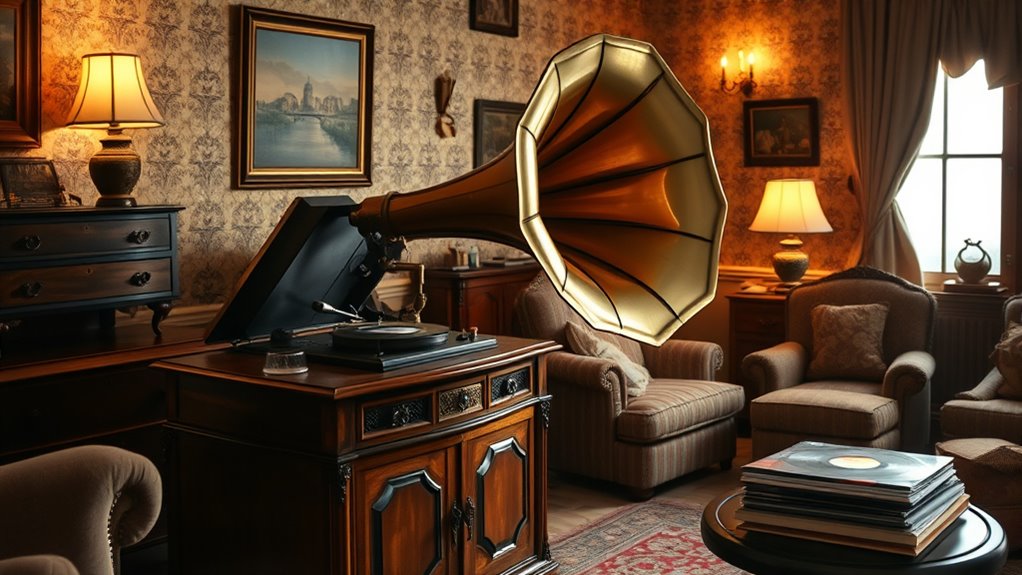
The phonograph revolutionized how people experience music by allowing sound recordings to be played back at home or in public settings. This breakthrough marked a pivotal moment in music innovation, transforming the way we access and enjoy sound. Before the phonograph, music was limited to live performances or written scores, but now, with this invention, you could listen to recordings of your favorite songs anytime you wanted. It made music more accessible and personal, shifting it from a communal experience to something you could enjoy privately in your own space.
The phonograph made music accessible and personal, transforming listening from shared performances to private enjoyment.
As you explore the history of the phonograph, you’ll notice how it embodies the ongoing technological evolution of sound recording devices. Early models, invented by Thomas Edison in the late 19th century, used a cylinder to capture and reproduce sound. These early machines were simple but powerful, opening the door for further innovations. Over time, the technology improved—moving from cylinders to flat discs, or records, which became the standard. This shift was vital because records were easier to produce, store, and handle, making the technology more practical for widespread use. This ongoing progression in design and function reflects a continuous pursuit of better sound quality and user experience, fueling the growth of the music industry and changing homes forever.
You can see how each new development in the phonograph’s design pushed the boundaries of what was possible, advancing the field of music innovation. The introduction of electrical recording and amplification in the early 20th century greatly enhanced sound fidelity, allowing you to hear music with greater clarity. This technological evolution made it possible for recordings to sound more natural and immersive, bringing you closer to the live experience than ever before. Additionally, innovations such as improved playback mechanisms contributed significantly to sound quality, making listening a more enjoyable and authentic experience. These innovations didn’t happen in isolation—they built upon previous advancements, creating a dynamic process that continually refined how recorded music was produced and played back.
Today, the legacy of the phonograph is evident in modern audio technology, from vinyl records to digital streaming. But understanding its roots helps you appreciate the trail of technological evolution that led here. The phonograph didn’t just change how you listened to music; it sparked a wave of innovations that redefined entertainment and culture. It paved the way for portable players, high-fidelity sound systems, and now, the internet-based streaming services you use today. Each step in this evolution was driven by a desire to make music more accessible, more personal, and more immersive—an ongoing journey rooted in that groundbreaking invention.
Frequently Asked Questions
How Did the Phonograph Influence Modern Music Playback Devices?
The phonograph revolutionized modern music playback devices by paving the way for innovations like vinyl revival and digital integration. You can appreciate how its design influenced turntables, which now see renewed popularity, blending nostalgic vinyl sounds with today’s digital formats. This evolution allows you to enjoy high-quality music, combining classic analog warmth with modern convenience, shaping the way you experience music at home today.
What Materials Were Initially Used to Make Phonograph Records?
Did you know that early shellac records made up over 90% of records in the early 20th century? Back then, you’d find vinyl composition and shellac used to craft phonograph records. You might be surprised to learn that early shellac, a resin derived from insects and natural materials, was favored for its durability. Vinyl composition later replaced shellac, offering better sound quality and longevity for your favorite tunes.
How Did the Invention Impact the Music Industry Financially?
You see, the invention of the record player boosted the music industry’s revenue through increased record sales and music royalties. As more people bought records, artists and companies earned more from sales and licensing their music. This technological breakthrough expanded the market, making music more accessible and profitable, ultimately transforming the industry’s financial landscape and setting the foundation for future innovations in music distribution.
Were There Any Cultural or Societal Shifts Caused by the Phonograph?
Imagine a world where social gatherings now involve everyone staring at a box instead of talking. The phonograph subtly shifted societal norms, blurring gender roles as men and women alike enjoyed music without traditional boundaries. It made homes more public, turning private spaces into mini concert halls. This cultural shift encouraged shared experiences, breaking down social barriers and transforming the way society viewed entertainment and gender expectations.
What Are Some Rare or Unique Phonograph Models Still in Existence?
You might find collector’s gems like the Edison Amberola or the Victrola VV-XVI among vintage rarities still in existence. These unique phonograph models stand out for their craftsmanship and historical value. As a collector, you’ll appreciate their rarity and the way they capture early sound technology. Owning such vintage rarities not only enriches your collection but also offers a tangible connection to the origins of recorded music.
Conclusion
As you imagine your home today filled with streaming music and sleek devices, remember the first record player’s humble beginnings. Back then, a bulky machine sat in the corner, its cracked surface echoing the crackle of new sounds. It transformed silent rooms into lively spaces, just as today’s technology brings entertainment to every corner. That tiny spark of innovation turned static silence into a symphony, forever changing how your home feels and sounds.
Evergreen bestsellers Picks
bestsellers
As an affiliate, we earn on qualifying purchases.