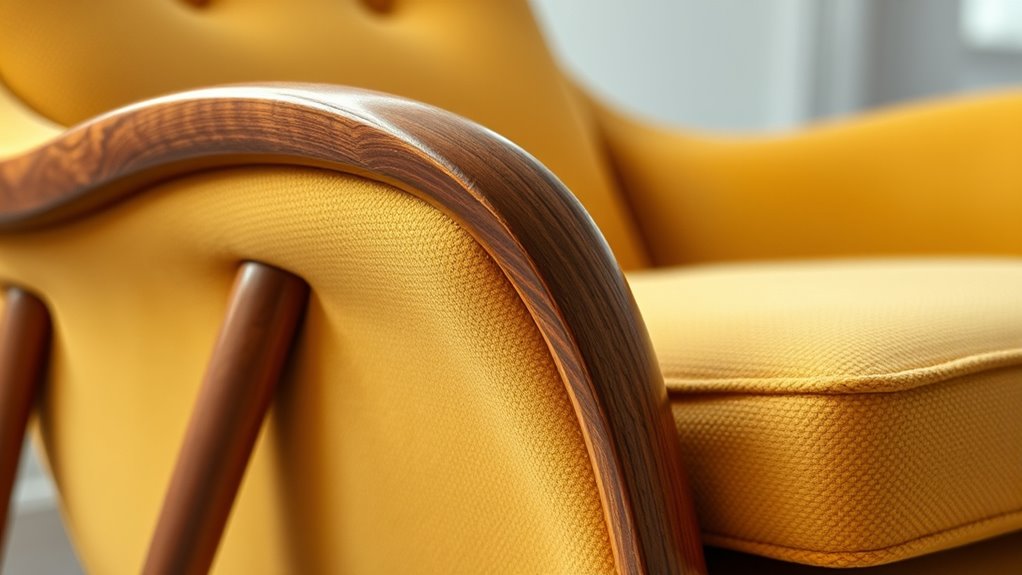

Mid-century chairs are so comfy because they blend ergonomic design with high-quality materials and expert craftsmanship. They naturally support your body’s curves, reducing pressure points and helping maintain good posture. Soft yet durable fabrics, foam padding, and careful shaping create a plush, supportive feel that lasts over time. This thoughtful combination makes them both stylish and extremely comfortable, offering lasting coziness. Keep exploring to discover the science behind these timeless seating innovations.
Key Takeaways
- Mid-century chairs feature ergonomic designs that support natural body curves and promote proper posture.
- High-quality materials like foam and natural fibers enhance comfort and durability over time.
- Thoughtful integration of support and cushioning reduces pressure points and minimizes fatigue.
- Well-crafted details ensure seamless support, comfort, and aesthetic appeal through expert craftsmanship.
- Scientific principles behind ergonomic design and material choice contribute to their enduring comfort.
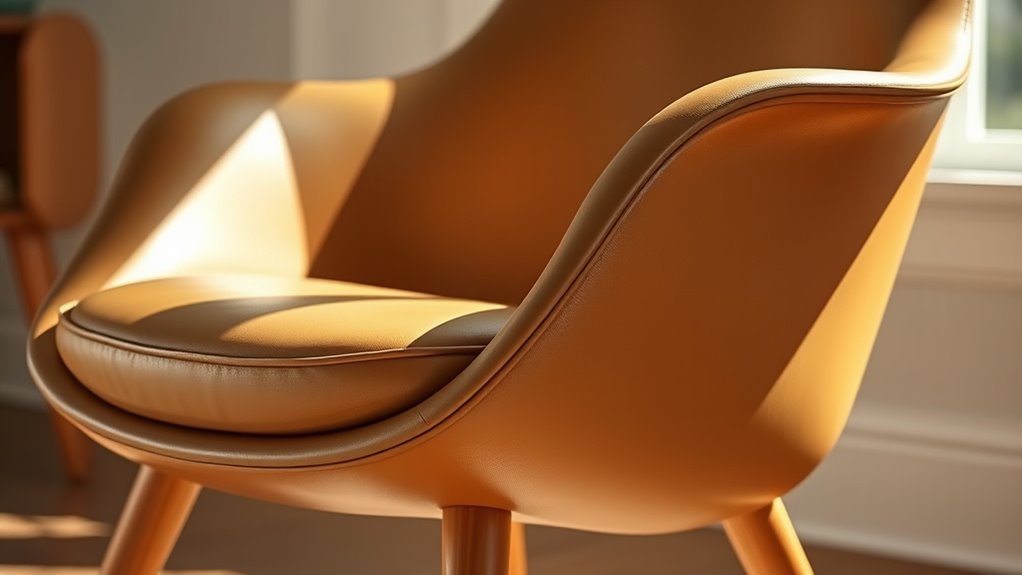
Have you ever wondered why some seats feel more comfortable than others? It’s not just luck or aesthetic appeal; a lot of it comes down to how the chair is designed and what materials are used. When you sit down, your body craves support and softness in just the right places. Mid-century chairs, renowned for their comfort, excel because they prioritize ergonomic design and material comfort, making them a standout example of seating science at work.
Ergonomic design is fundamental to why these chairs feel so good. This design philosophy considers the natural curves and movements of your body, ensuring that the chair supports your spine, distributes your weight evenly, and encourages good posture. Instead of forcing you into a rigid position, mid-century chairs often feature gently curved backs, angled seats, and well-placed armrests that align with your body’s natural resting points. This thoughtful approach reduces pressure points, minimizes fatigue, and enhances overall comfort. When you sit in one, you’re not just resting; you’re experiencing a custom-fit support system that adapts to your posture, making long periods of sitting less taxing and more enjoyable.
Material comfort plays an equally essential role. Mid-century chairs utilize a range of high-quality materials, from plush cushions to smooth, durable upholstery. The choice of materials impacts how the chair feels against your skin and how it responds to your body’s movements. For instance, foam padding provides a soft, cushioning effect that absorbs pressure, while natural fibers like wool or linen can add breathability and a cozy tactile sensation. The use of quality materials ensures that the chair maintains its comfort over time, resisting sagging or wear that can diminish support. When you settle into one of these chairs, the materials work together to cradle you gently, giving a sensation of softness without sacrificing support.
Additionally, the craftsmanship behind mid-century chairs often emphasizes the seamless integration of ergonomic principles with material selection. This union results in seating that’s not only stylish but also highly functional. It’s about creating a balanced experience—support where you need it and comfort where you want it. The combination of ergonomic design and material comfort means that every detail, from the shape of the seat to the upholstery fabric, is tailored to enhance your sitting experience. That’s why these chairs remain popular today: they’re a perfect blend of science and artistry, crafted to keep you comfortable for hours on end.
Furthermore, research shows that body support and proper material selection can significantly impact overall comfort and wellbeing during extended periods of sitting.
Top picks for "science seat century"
Open Amazon search results for this keyword.
As an affiliate, we earn on qualifying purchases.
Frequently Asked Questions
What Materials Contribute Most to the Comfort of Mid-Century Chairs?
You’ll find that upholstery fabrics like soft tweed, velvet, or leather contribute most to the comfort of mid-century chairs by offering a cozy, inviting feel. The frame construction also plays a key role, with sturdy, well-designed frames providing stability and support. Together, these materials create a balance of plushness and durability, ensuring you sit comfortably for hours while enjoying the timeless style that makes these chairs so appealing.
How Does Ergonomics Influence Mid-Century Chair Design?
Did you know that ergonomic principles critically shaped mid-century chair design? When you sit, these principles guarantee your spine remains aligned and pressure points are minimized, making your experience more comfortable. Designers used design optimization to create chairs that support natural body posture, reducing fatigue. This focus on ergonomics transforms simple seating into functional art, making mid-century chairs not only stylish but also incredibly supportive for everyday use.
Are There Health Benefits Associated With Sitting in Vintage Chairs?
Sitting in vintage chairs can offer health benefits like improved posture alignment and better circulatory health, especially if the chair supports your body’s natural curves. Vintage designs often emphasize proper lumbar support, reducing back strain. When you choose a well-crafted mid-century chair, you encourage healthy sitting habits, which can lower the risk of discomfort and circulation issues. Just make sure the chair fits your body and promotes good posture.
How Do Cushioning Techniques Differ in Mid-Century Versus Modern Chairs?
You’ll notice that mid-century chairs often use foam padding combined with spring support, creating a balanced feel that molds to your body. Modern chairs tend to rely more on dense foam or memory foam, offering uniform comfort but less bounce. The key difference is that mid-century techniques focus on a mix of spring support and cushioning, which provides both resilience and comfort, making your sitting experience more enjoyable and supportive.
Can Mid-Century Chairs Support Long-Term Sitting Without Discomfort?
Like a trusted suit of armor, mid-century chairs support your posture alignment, making long-term sitting comfortable. Their ergonomic designs cradle your body, reducing fatigue and discomfort over time. Plus, their aesthetic appeal adds a touch of timeless elegance to any space. So, you can sit for hours without feeling strained, enjoying both style and support that stand the test of time, just like the classics from that golden era.
Conclusion
Now that you understand the science behind mid-century chairs, you realize they’re like cozy clouds crafted into furniture. Their design cradles your body perfectly, inviting you to sink in and relax. When you sit in one, it’s as if comfort and style dance together in harmony. So next time you choose a seat, remember: good design isn’t just about looks, it’s about creating a haven where you can truly unwind and feel at home.