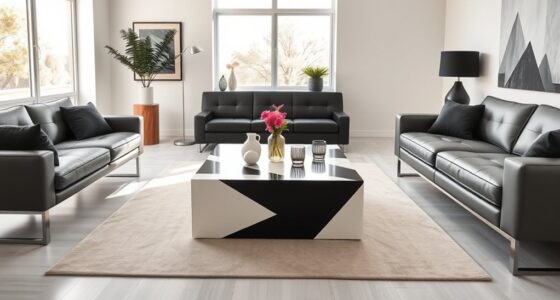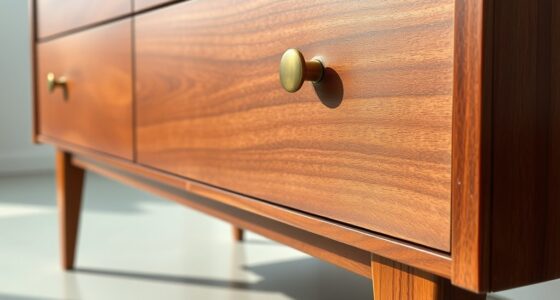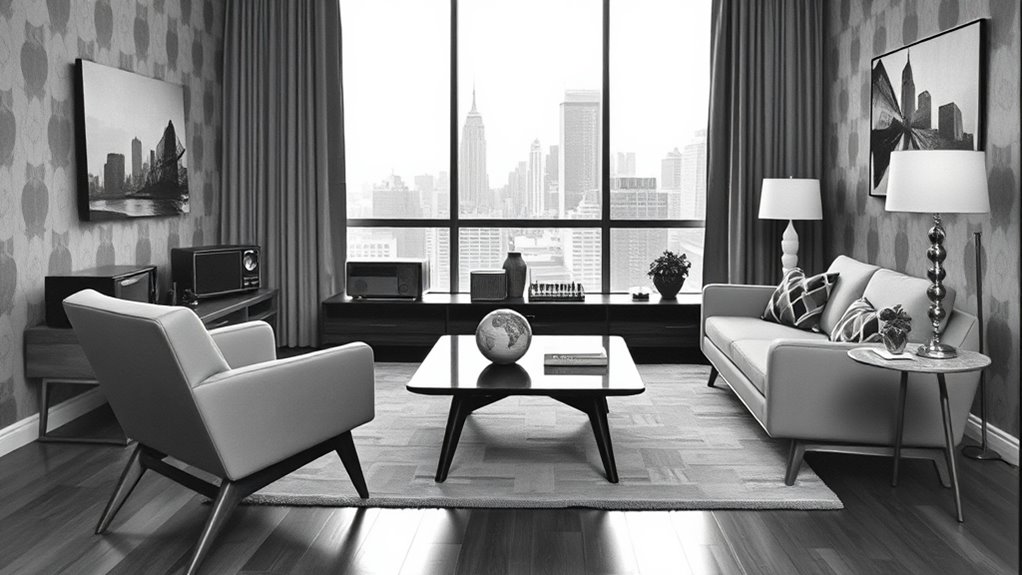

World War II dramatically influenced mid-century design by pushing you to focus on resourcefulness, innovation, and practicality. Shortages of raw materials led designers to repurpose vintage items and develop new plastics, resulting in sleek, minimalist shapes and functional forms. The era’s aesthetic shifted from ornate to efficient, emphasizing modernism and technological progress. If you explore further, you’ll discover how these wartime influences laid the foundation for the timeless, innovative style that continues to inspire today.

Get furniture and decor delivered free with Prime
- Fast, free delivery on millions of items
- Prime Video, Amazon Music and more included
- Member-only deals all year
Key Takeaways
- WWII resource shortages prompted the reuse of vintage materials and innovative recycling in design practices.
- Wartime technological advancements led to new manufacturing techniques and the development of durable, lightweight plastics.
- Design styles shifted from ornate to sleek, functional forms emphasizing minimalism and geometric simplicity.
- Industrial design principles emerged, focusing on practicality, efficiency, and mass production.
- These wartime innovations and resourcefulness significantly shaped the modern minimalist aesthetic of mid-century design.
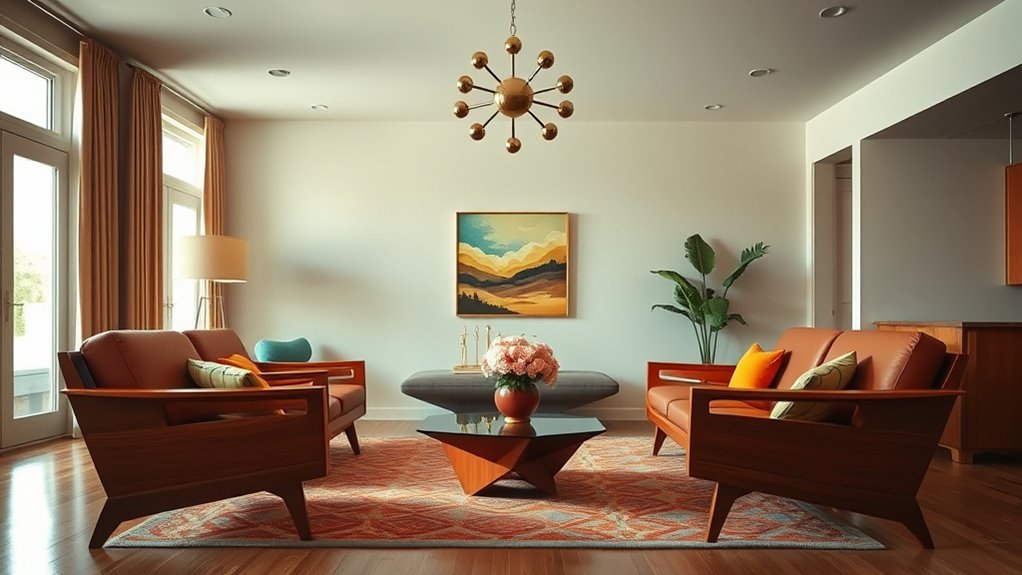
World War II profoundly reshaped design trends in the mid-20th century, influencing everything from furniture to architecture. During this period, resource scarcity and wartime innovation pushed designers to rethink traditional materials and techniques. You’ll notice that vintage materials, once considered old-fashioned or discarded, suddenly gained new relevance. Wartime restrictions on raw materials meant manufacturers turned to alternative sources, recycling what was available and repurposing old supplies. This led to a surge in creative use of wood, metal, and plastics—materials that might have been overlooked before the war. The scarcity of new resources compelled designers to innovate with what they had, fostering a culture of ingenuity that defined the era.
WWII’s resource shortages sparked innovation, recycling vintage materials into sleek, functional mid-century designs.
Wartime innovation wasn’t just about sourcing materials; it also revolutionized manufacturing processes. You might see how new techniques, born out of necessity, sped up production and introduced sleek, functional designs. The focus shifted from ornate embellishments to practicality and efficiency. This approach is evident in the rise of minimalist furniture with clean lines and utilitarian forms, which prioritized function over form. The war effort also accelerated technological advances, such as the development of new plastics, which became essential in creating lightweight, durable furniture and household items. These innovations made mid-century design more accessible, affordable, and adaptable to post-war needs.
The influence of wartime innovation extended beyond materials and manufacturing. It inspired a shift toward modernism, emphasizing simplicity, geometric forms, and a sense of progress. You’ll notice that many designs from this period reflect a futuristic outlook, inspired by the technological advancements driven by wartime research. The use of vintage materials, often salvaged and reused, became a hallmark of this new aesthetic, giving designs a sense of history and resilience. This combination of old and new—vintage materials infused with wartime ingenuity—created distinctive styles that still resonate today. Additionally, the heightened focus on efficiency and mass production influenced the proliferation of industrial design principles that continue to shape contemporary aesthetics.
In essence, WWII pushed designers to think outside the box, leading to a mid-century style characterized by practicality, efficiency, and innovation. You can see this influence in everything from the streamlined shapes of furniture to the architectural emphasis on function. The necessity born out of wartime scarcity and technological progress ultimately laid the groundwork for the modern, minimalist aesthetic that defines mid-century design. Far from a purely functional response, it became a creative movement that balanced resourcefulness with a forward-looking optimism.
mid-century modern minimalist furniture
As an affiliate, we earn on qualifying purchases.
As an affiliate, we earn on qualifying purchases.
Frequently Asked Questions
How Did Wartime Materials Influence Furniture Design Choices?
Wartime materials led you to prioritize recycled materials and wartime austerity in furniture design. You adapt by repurposing available resources, such as plywood, metal, and plastic, which become central in creating functional, minimalist pieces. This practical approach results in streamlined, efficient furniture that reflects the resourcefulness of the era, emphasizing simplicity and durability. Your design choices are shaped by necessity, transforming scarcity into innovative aesthetics.
Were Any Specific Designers Significantly Affected by WWII Experiences?
You’ll find that designers like Charles and Ray Eames were markedly affected by WWII experiences, showcasing remarkable resilience. Wartime inspiration pushed them to innovate with new materials and functional forms, reflecting their ability to adapt and evolve. Their designs embody this spirit, blending practicality with modern aesthetics. This resilience not only shaped their work during the war but also influenced the sleek, functional style that defined mid-century design.
How Did Post-War Economic Recovery Shape Design Trends?
Post-war economic recovery fuels consumer optimism, inspiring you to embrace modern design. You notice a shift toward industrial materials like plastics, metal, and plywood, making furniture more affordable and functional. This optimism encourages innovative styles that blend practicality with sleek aesthetics. As a result, you see a surge in minimalist designs, bright colors, and versatile pieces, reflecting a hopeful outlook and a desire for progress in everyday living.
What Role Did Government Policies Play in Design Innovation?
Government policies, like incentives and regulatory standards, played a vital role in driving design innovation. You benefit from these policies by seeing increased support for new materials and technologies, which encourage creative solutions. Incentives motivate designers and manufacturers to experiment with modern ideas, while regulations guarantee safety and functionality. This dynamic pushes the boundaries of mid-century design, making it more innovative, accessible, and aligned with post-war societal needs.
Did WWII Impact the Global Spread of Mid-Century Modern Style?
Yes, WWII profoundly impacted the global spread of mid-century modern style. You see, the war fostered cultural exchange and international influence, spreading ideas across borders. As soldiers and refugees traveled, they brought modern design concepts with them, inspiring local innovations. This exchange made mid-century modern style a global phenomenon, blending diverse influences into sleek, functional designs that continue to influence architecture and interior design worldwide.
vintage style plastic dining chairs
As an affiliate, we earn on qualifying purchases.
As an affiliate, we earn on qualifying purchases.
Conclusion
As you explore mid-century design, remember WWII’s paradoxical influence: while it brought shortages and austerity, it also sparked innovation and simplicity. The war’s chaos contrasted with the era’s sleek, functional aesthetics, proving that hardship often fuels creativity. So, as you admire clean lines and modern forms, recognize the resilience behind them—where struggle gave birth to beauty, turning wartime austerity into timeless elegance.
As an affiliate, we earn on qualifying purchases.
lightweight durable plastic storage bins
As an affiliate, we earn on qualifying purchases.
As an affiliate, we earn on qualifying purchases.
Halloween Picks
halloween
As an affiliate, we earn on qualifying purchases.