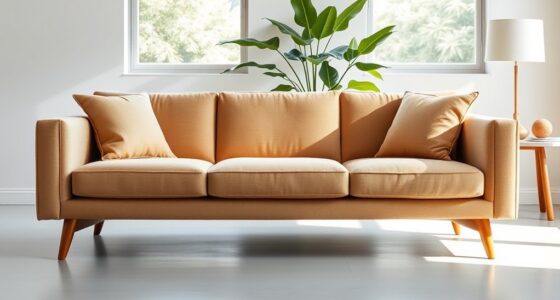
Upcycling vintage furniture into mid-century style pieces lets you creatively breathe new life into old items while embracing sustainable practices. Start by choosing sturdy, simple pieces with interesting details, then sand and prep the surfaces. Use bold colors, geometric patterns, and sleek hardware updates to achieve the classic mid-century look. Add modern touches like new legs or fabrics to personalize your project. Keep exploring to discover tips that help you craft unique, eco-friendly furniture that combines style with sustainability.
Key Takeaways
- Select vintage furniture with sturdy frames and clean lines suitable for modernizing into mid-century style.
- Plan color schemes with warm woods, muted tones, or bold accents, emphasizing geometric patterns.
- Sand and prep surfaces, then apply eco-friendly paints or stains to achieve a fresh, updated look.
- Update hardware with sleek, minimalist handles and replace legs for a contemporary, mid-century aesthetic.
- Incorporate custom upholstery and design details to personalize and enhance the vintage piece’s style.
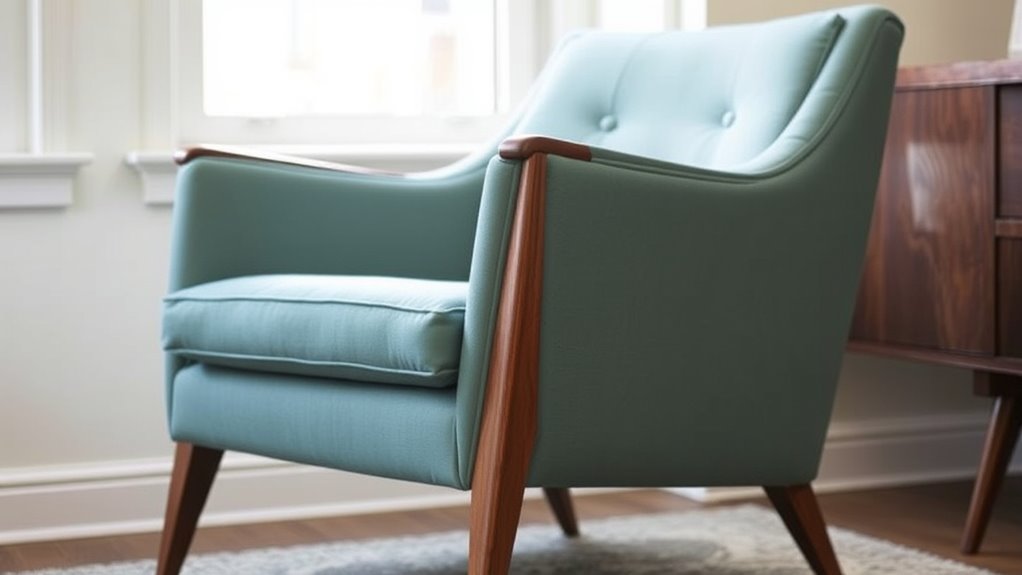
Upcycling vintage furniture is a rewarding way to breathe new life into old pieces while expressing your personal style. When you choose to upcycle, you’re not just giving furniture a facelift; you’re engaging in sustainable practices that reduce waste and minimize environmental impact. This approach allows you to merge eco-consciousness with creative expression, making each piece uniquely yours. Transforming vintage furniture into mid-century style highlights the design transformation that’s possible when you combine your vision with sustainable methods. Instead of discarding worn-out or outdated pieces, you breathe new energy into them by reimagining their shape, color, and function. Incorporating life-cycle assessments into your project can help you make more informed, environmentally friendly choices throughout the upcycling process.
Upcycling vintage furniture combines sustainability with creative expression, transforming old pieces into stylish, eco-friendly designs.
To start, assess the furniture you want to upcycle. Look for pieces with sturdy frames, interesting lines, or unique details that lend themselves well to a mid-century aesthetic. This style emphasizes clean lines, simple forms, and functional design, so focus on furniture that can be easily streamlined or modernized. Once you’ve selected your piece, plan your design transformation. Think about the color palette typical of mid-century furniture—warm wood tones, muted hues, or bold pops of color—and how these can complement your existing decor. Sanding and stripping old paint or varnish not only prepares the surface for new finishes but also respects the vintage character of the piece.
Choosing eco-friendly paints, stains, and finishes is essential in sustainable practices. Opt for low-VOC or water-based products to minimize your environmental footprint. When applying new finishes, consider techniques like staining or painting with bold geometric patterns, which are characteristic of mid-century design. Hardware updates can also make a significant impact; replace outdated handles with sleek, minimalist hardware to enhance the modern aesthetic. These small details can dramatically shift the look, making the piece feel fresh yet respectful of its vintage origins.
The beauty of upcycling lies in the ability to customize each piece to fit your space and style preferences. You might add new legs to a table for a more elevated profile or reupholster a chair with modern fabric that echoes mid-century patterns. The process encourages experimentation and creativity, allowing you to learn new skills while staying environmentally responsible. Every completed project not only adds a distinctive touch to your home but also champions sustainable practices by extending the life cycle of furniture. Ultimately, transforming vintage pieces into mid-century style highlights how thoughtful design and eco-conscious choices can coexist beautifully, creating furniture that’s both timeless and personally meaningful.
Frequently Asked Questions
What Tools Are Essential for Upcycling Vintage Furniture?
To upcycle vintage furniture, you’ll need essential tools like a variety of brushes for proper finish application and to guarantee smooth coverage. Your brush selection matters for different paints and stains. Additionally, mastering sanding techniques with different grit sandpapers helps prep surfaces effectively, removing old paint or varnish and creating a perfect base. These tools make your project easier, helping you achieve a sleek, mid-century style look with professional results.
How Do I Choose the Right Paint or Finish?
When choosing the right paint or finish, you should consider your desired look and durability. For a sleek mid-century vibe, opt for high-quality latex or chalk paint, which offers smooth coverage and easy application. Decide on finish types like matte for a modern feel or semi-gloss for durability. Test paint samples first to see how they complement your piece, ensuring you select colors and finishes that enhance its character.
Can I Upcycle Furniture Without Prior Experience?
Did you know that over 60% of DIY enthusiasts start with no experience? Yes, you can definitely upcycle furniture without prior experience! Use upcycling inspiration from vintage furniture trends to guide your project. Start with simple pieces, watch tutorials, and gather the right tools. Your creativity and willingness to learn are the most important. Soon, you’ll turn old furniture into stunning mid-century style pieces, even as a beginner.
What Are Common Mistakes to Avoid?
You should avoid rushing furniture restoration, as it can lead to mistakes. Don’t skip cleaning or sanding thoroughly, since vintage restoration tips emphasize surface prep. Be cautious with paint and finishes—apply thin coats and let each dry completely. Neglecting hardware or not matching the original style can break mid-century authenticity. Ultimately, don’t be afraid to seek advice or tutorials, making your upcycling process smoother and more successful.
How Do I Ensure the Durability of My Upcycled Pieces?
To make certain your upcycled furniture lasts, you’ve got to build in a little extra muscle. Use quality paints and sealants that boost furniture longevity and wear resistance. Sand surfaces thoroughly before finishing, and apply multiple coats for added protection. Regular maintenance, like cleaning and touch-ups, keeps pieces in top shape. Remember, a stitch in time saves nine — taking care early on prevents bigger issues down the line.
Conclusion
By upcycling vintage furniture into mid-century style pieces, you not only breathe new life into old items but also create unique, stylish accents for your home. It’s a rewarding way to combine sustainability with design, giving furniture a fresh, modern look. Why settle for mass-produced pieces when you can craft something truly one-of-a-kind? Embrace your creativity and transform vintage finds into stunning mid-century masterpieces—you’ll love the character and charm they bring to your space.