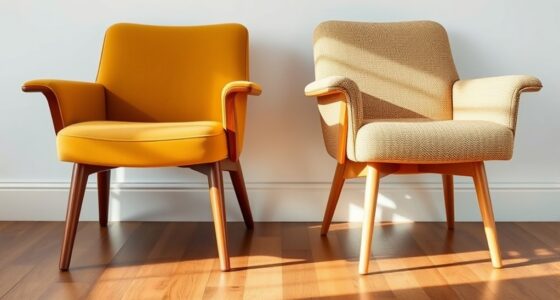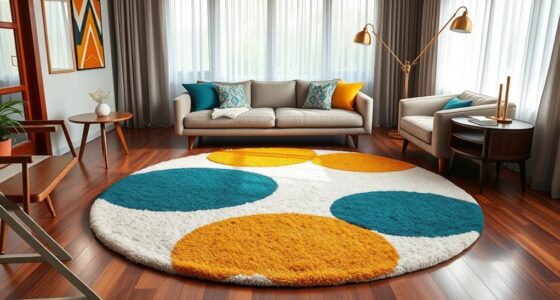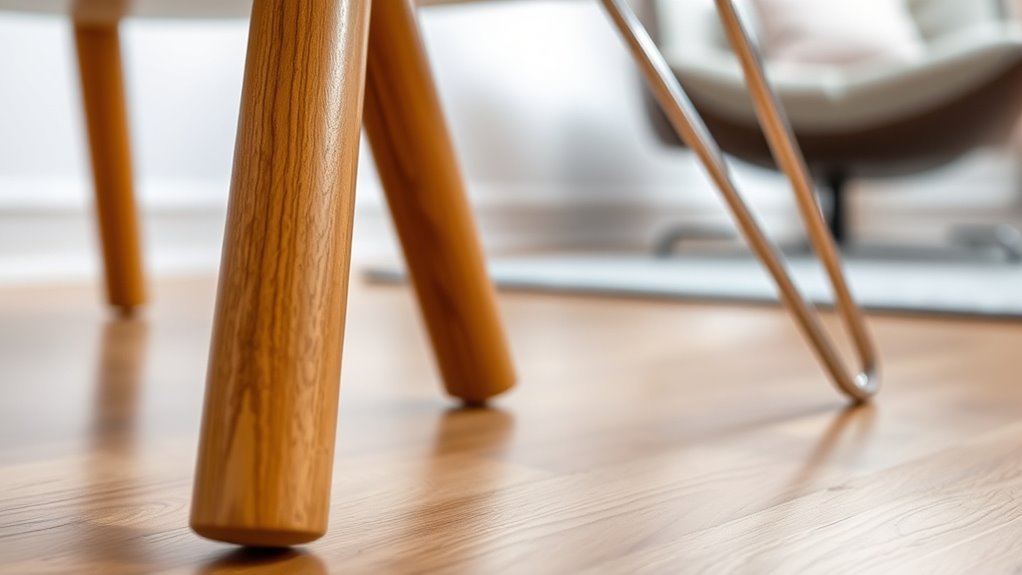

Tapered legs and hairpin legs are signature features of mid-century modern (MCM) furniture, giving it that sleek, minimalist look you love. Tapered legs are made from wood and gradually narrow, making furniture appear lighter and more open. Hairpin legs are crafted from bent steel or iron, creating a simple U-shape that adds a touch of industrial charm. If you keep exploring, you’ll uncover how these design elements enhance both style and practicality.
Key Takeaways
- Tapered legs are crafted from solid or engineered wood, featuring clean, gradual thinning for a sleek Mid-Century Modern look.
- Hairpin legs are made from bent steel or iron, forming a minimalist U-shape that complements MCM’s simple aesthetic.
- Both leg styles emphasize lightness and openness, creating furniture that appears less bulky and more airy.
- They enhance space efficiency by making furniture easier to clean and rearrange, aligning with functional design principles.
- These signature features combine craftsmanship and style, serving as statement elements that elevate MCM furniture’s timeless appeal.
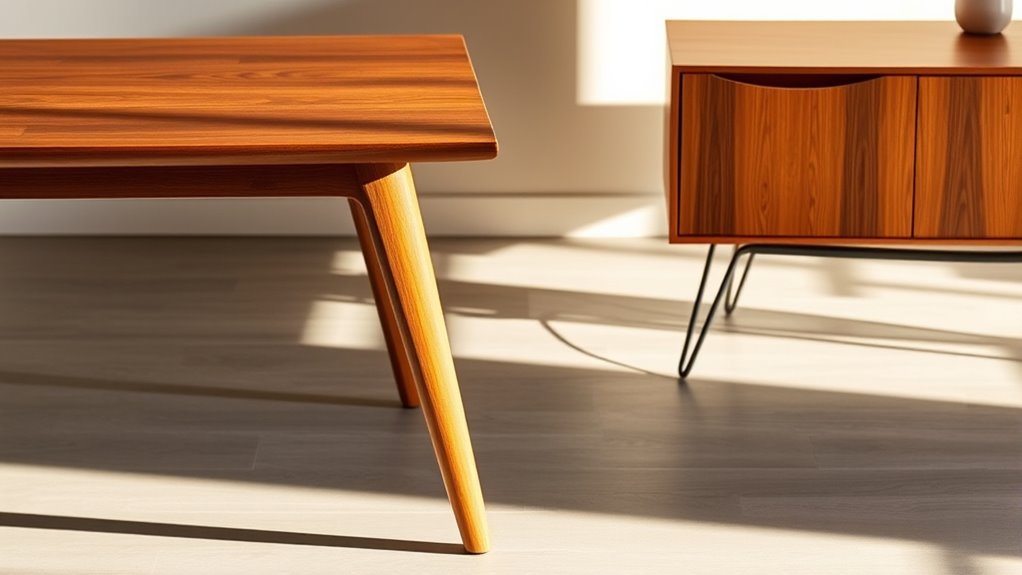
Tapered legs and hairpin legs are popular choices for furniture design because they combine style with functionality. These distinctive features are hallmarks of Mid-Century Modern (MCM) furniture, offering a sleek, minimalist look that appeals to many design enthusiasts. When you choose furniture with tapered or hairpin legs, you’re embracing a style that emphasizes clean lines and simplicity, which are essential elements of the design aesthetics associated with this era. The visual appeal of these legs lies in their ability to make furniture appear lighter and more open, enhancing the overall space without overwhelming it. Their slender profiles contribute to a sense of airiness, making even substantial pieces feel less bulky.
Tapered and hairpin legs add sleek, minimalist style while making furniture appear lighter and more open.
From a manufacturing perspective, these legs are crafted using specific techniques that ensure durability while maintaining their aesthetic appeal. Tapered legs are often made from solid wood or engineered wood, where the wood is carefully shaped and smoothed through precise cutting and sanding processes. The tapering itself is achieved either through traditional woodworking techniques or modern CNC machinery, which guarantees consistency and accuracy. Hairpin legs, on the other hand, are typically made from metal, such as steel or iron, bent into a U-shape to form their signature look. Manufacturing these involves bending and welding processes that ensure strength and stability, especially since these legs support significant weight. The use of high-quality materials and precise manufacturing techniques guarantees that both types of legs are not only stylish but also capable of withstanding daily use. Additionally, advancements in manufacturing technology have allowed for greater precision and customization options, ensuring these legs meet diverse design needs.
You’ll notice that the appeal of these legs isn’t just in their looks but also in their practicality. Their slim profiles make cleaning around furniture easier, and their lightweight nature allows for effortless rearrangement. When selecting furniture with tapered or hairpin legs, you’re also opting for pieces that align with contemporary trends and sustainable practices, as these designs often involve less material waste during manufacturing. Plus, the simplicity of these legs makes them versatile, allowing you to mix and match with various interior styles beyond MCM, including industrial, Scandinavian, and even modern eclectic.
Ultimately, whether you’re drawn to the refined elegance of tapered legs or the minimalist charm of hairpin legs, you’re investing in furniture that balances aesthetic appeal with functional durability. Their design aesthetics are rooted in a timeless simplicity, and the manufacturing techniques behind them ensure they stand the test of time. These legs aren’t just structural elements—they’re statement features that elevate your furniture, making every piece feel thoughtfully designed and beautifully crafted.
Top picks for "legs taper hairpin"
Open Amazon search results for this keyword.
As an affiliate, we earn on qualifying purchases.
Frequently Asked Questions
How Do Tapered and Hairpin Legs Impact Furniture Stability?
Tapered and hairpin legs can enhance furniture stability by improving weight distribution, which prevents tipping or wobbling. Their design maintains structural integrity, especially if they’re properly secured and made from strong materials. However, if the legs are too thin or poorly attached, they might compromise stability. When you choose furniture with these legs, make sure they’re designed for balanced weight support to keep your piece steady and durable.
Are These Legs Suitable for Outdoor MCM Furniture?
Yes, tapered and hairpin legs can be suitable for outdoor MCM furniture if you prioritize weather resistance and aesthetic compatibility. Choose legs made from rust-resistant materials like powder-coated metal or treated wood to withstand the elements. Their sleek, minimalist look complements outdoor settings, blending style with functionality. Just verify you select options specifically designed for outdoor use, so your furniture remains durable and maintains its classic appeal.
What Materials Are Commonly Used for Tapered and Hairpin Legs?
You’ll find that tapered and hairpin legs are commonly made from metal options like steel, brass, or aluminum, offering durability and a sleek look. Some designs incorporate wood finishes to create a warm, vintage feel. Metal options provide strength and stability, making them suitable for indoor furniture, while wood finishes add a touch of elegance. Consider your style and environment when choosing the right material for your MCM furniture.
Can These Legs Be Added to Existing Furniture?
You can definitely add these legs to existing furniture, and it often feels like a perfect coincidence that your piece can get a stylish upgrade. Using various leg attachment methods, such as brackets or screws, makes customization options straightforward. This way, you can transform your furniture’s look, giving it a fresh, modern vibe while preserving the original piece. It’s a simple way to personalize your space without replacing your favorite furniture.
How Do Maintenance Needs Differ Between the Two Leg Styles?
You’ll find that tapered legs typically need less frequent cleaning and minor repairs, thanks to their smooth surfaces that resist dust buildup. Hairpin legs, however, might require more regular cleaning to remove dust and debris from the thin metal wires, and repair considerations involve checking for loose joints or bends. Overall, maintenance for both styles is straightforward, but hairpin legs demand a bit more attention to keep them looking their best.
Conclusion
You might be surprised to learn that hairpin legs first gained popularity in the 1940s, reflecting the post-war love for sleek, modern designs. When you see tapered or hairpin legs on furniture, you’re witnessing a timeless style that combines elegance with functionality. These signature features continue to influence contemporary pieces, proving their enduring appeal. So next time you spot them, remember—they’re more than just stylish; they’re a nod to decades of design innovation.