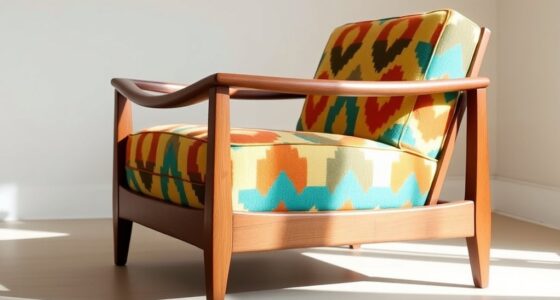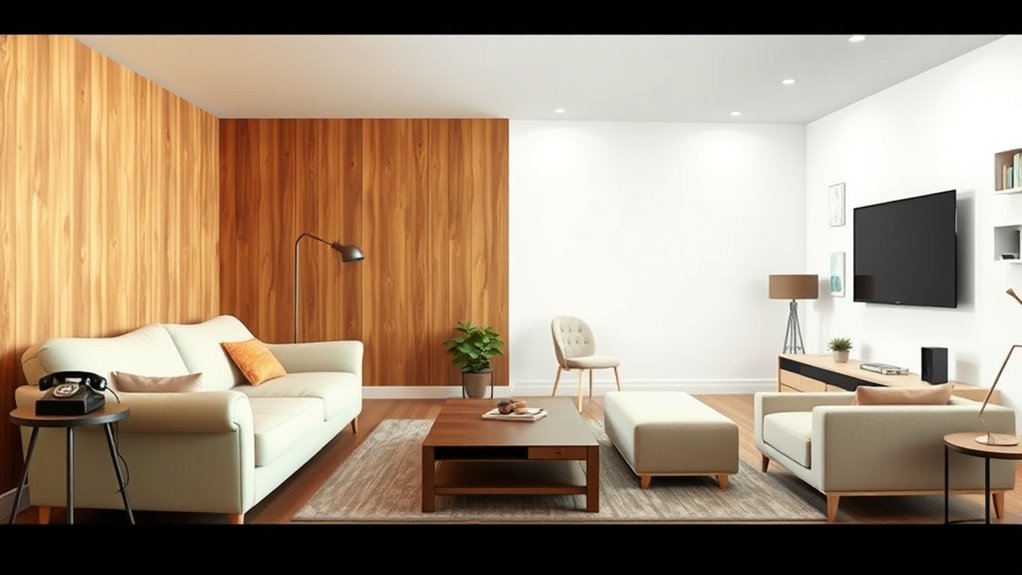

Since the 1950s, your living room has evolved from sleek, minimalist designs influenced by mid-century modern trends to a tech-enabled space centered on comfort and personalization. Technological advancements like televisions, smart devices, and multimedia systems transformed it into an entertainment hub. Layouts now promote socialization and flexibility, reflecting changing lifestyles. If you keep exploring, you’ll uncover how these shifts continue shaping the space into a versatile, connected part of your home.
Key Takeaways
- The 1950s living room emphasized sleek, functional furniture and modern minimalism, marking a shift from Victorian styles.
- Technological advancements like TVs and stereo systems transformed the living room into an entertainment hub.
- Interior design shifted toward personalization, comfort, and multimedia integration, reflecting individual lifestyles and preferences.
- Modern living rooms feature open layouts, smart technology, and versatile furniture for socializing, relaxation, and work.
- Overall, the living room evolved from mid-century aesthetics to connected, tech-enabled spaces emphasizing comfort, style, and adaptability.
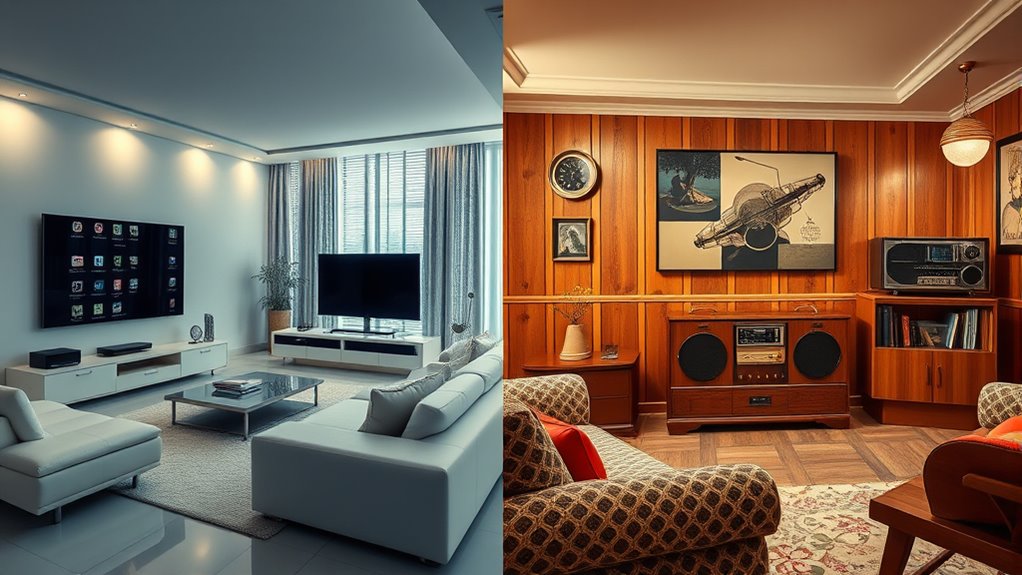
Have you ever wondered how the living room has transformed over the years? It’s fascinating to see how this space, once primarily a place for socializing and relaxation, has evolved alongside cultural shifts and technological progress. Going back to the 1950s, the living room was heavily influenced by mid-century design, which emphasized clean lines, functional furniture, and a sense of modern minimalism. You’d notice a focus on simplicity, with iconic furniture pieces like the Eames lounge chair or minimalist coffee tables that still hold style today. During this era, the living room was about making a statement with sleek, innovative designs that broke away from the ornate Victorian styles of the past. This period marked a shift toward modernity, highlighting the importance of form following function, and setting the stage for future innovations.
As technological advancements accelerated, the living room began to change dramatically. The introduction of television in the 1950s revolutionized the space, transforming it from a formal gathering area into a casual entertainment hub. Suddenly, the focal point was no longer just a fireplace or artwork but a large TV set that dictated furniture arrangements and room layout. Over the decades, innovations like remote controls, stereo systems, and later, home theater setups, further enhanced the experience, making the living room a space for multimedia entertainment. The rise of cable TV, then streaming services, kept families glued to screens, which influenced furniture choices—think comfortable sofas and sectional arrangements designed for long viewing sessions. As technology advanced, living rooms also grew smarter, with the integration of smart devices, sound systems, and lighting that you can control with a tap or voice command. Additionally, interior design styles have shifted to incorporate personal influences, allowing homeowners to create spaces that reflect their individual tastes and lifestyles.
In recent years, the living room has become even more versatile, blending technology seamlessly into everyday life. Modern designs focus on open layouts that encourage social interaction, paired with smart furniture that adapts to your needs. You might now find sleek, minimalist décor that complements integrated tech gadgets, creating a space that’s both stylish and functional. The emphasis on comfort has grown, with plush sofas, adjustable lighting, and multi-purpose furniture that supports everything from work to relaxation. The evolution of the living room reflects more than just style—it mirrors how technological advancements have made the space more adaptable, connected, and personalized. From mid-century design’s sleek aesthetics to today’s tech-enabled environments, the living room continues to adapt, proving that it’s a dynamic, essential part of your home’s story.
Top picks for "evolution room today"
Open Amazon search results for this keyword.
As an affiliate, we earn on qualifying purchases.
Frequently Asked Questions
How Have Technological Advances Influenced Living Room Designs?
Technological advances transform your living room by integrating smart appliances and virtual interfaces, making your space more functional and interactive. You can control lighting, climate, and entertainment systems seamlessly through voice commands or apps. These innovations help you personalize your environment, enhance convenience, and create a modern, connected space that adapts to your lifestyle. As technology evolves, your living room becomes a smarter, more intuitive area for relaxation and entertainment.
What Cultural Trends Shaped the Living Room’s Evolution?
Imagine your living room as a chameleon, changing colors with cultural influences and societal shifts. These trends, like the rise of casual comfort or the desire for multifunctional spaces, shape its design. You adapt to cultural influences by embracing new styles, reflecting society’s evolving values. Society’s shifts—like increased focus on family bonding or technology—drive you to create spaces that are more inclusive, flexible, and personalized, mirroring the world outside.
How Do Eco-Friendly Materials Impact Modern Living Rooms?
Eco-friendly materials greatly impact your modern living room by promoting sustainable practices and eco-conscious design. When you choose sustainable materials like reclaimed wood, recycled fabrics, or biodegradable plastics, you reduce environmental harm and create a healthier space. These choices not only help the planet but also add unique textures and aesthetics. Embracing eco-conscious design demonstrates your commitment to sustainability and helps you craft a stylish, environmentally responsible living area.
What Are Future Trends Predicted for Living Room Design?
Future living room designs will focus on smart furniture and modular layouts, allowing you to customize your space easily. Expect furniture embedded with technology for seamless connectivity and multi-functional pieces that adapt to your needs. You’ll have more flexibility to reconfigure your living space quickly, making it both practical and stylish. These trends aim to enhance convenience, sustainability, and personal expression, transforming your living room into a smart, adaptable sanctuary.
How Has Furniture Ergonomics Changed Over the Decades?
You’ll notice that furniture ergonomics have vastly improved over the decades through innovative designs focused on your comfort. Modern ergonomic innovations prioritize adjustable features, lumbar support, and contouring to fit your body’s natural curves. These advancements make furniture more comfortable, reducing strain during long periods of sitting. Today’s focus on furniture comfort guarantees you can relax and work more efficiently, reflecting a deep understanding of how your body interacts with your living space.
Conclusion
As you’ve seen, the living room has transformed dramatically over the decades, reflecting changing tastes and technology. From cozy fireplaces to sleek smart TVs, each era tells a story of innovation and style. Remember, like a well-worn book, its evolution shows that comfort and adaptability never go out of fashion. Embrace these changes, and your living space will continue to tell a story that’s uniquely yours—because in the end, home is where the heart truly resides.