
Making your own hairpin leg furniture is an affordable way to add vintage charm and modern style to your space. You can choose sustainable materials like reclaimed wood and easily attach pre-made hairpin legs, which are widely available and simple to install. This DIY approach lets you customize sizes, finishes, and design details while keeping costs low. Keep exploring to discover tips on selecting materials and assembling your perfect piece with ease.
Key Takeaways
- Use reclaimed wood and affordable hairpin legs for a cost-effective, vintage-inspired mid-century look.
- Choose simple designs with clean lines to achieve authentic mid-century modern style on a budget.
- Attach pre-made hairpin legs easily with basic tools to DIY custom tables or desks.
- Source materials during sales or in bulk to reduce overall project costs.
- Incorporate eco-friendly, salvaged materials to create stylish, sustainable furniture affordably.

Creating your own furniture with hairpin legs is a satisfying way to add a modern, industrial touch to your home. When you choose to craft your pieces, you’re not only customizing your space but also making eco-friendly choices by prioritizing sustainable materials. Using reclaimed wood or repurposed materials for your tabletops and surfaces reduces waste and gives your furniture a unique vintage charm. This approach aligns perfectly with vintage decor styles, which emphasize character, history, and timeless appeal. By incorporating sustainable materials, you’re creating pieces that are both stylish and environmentally responsible, making your DIY project more meaningful.
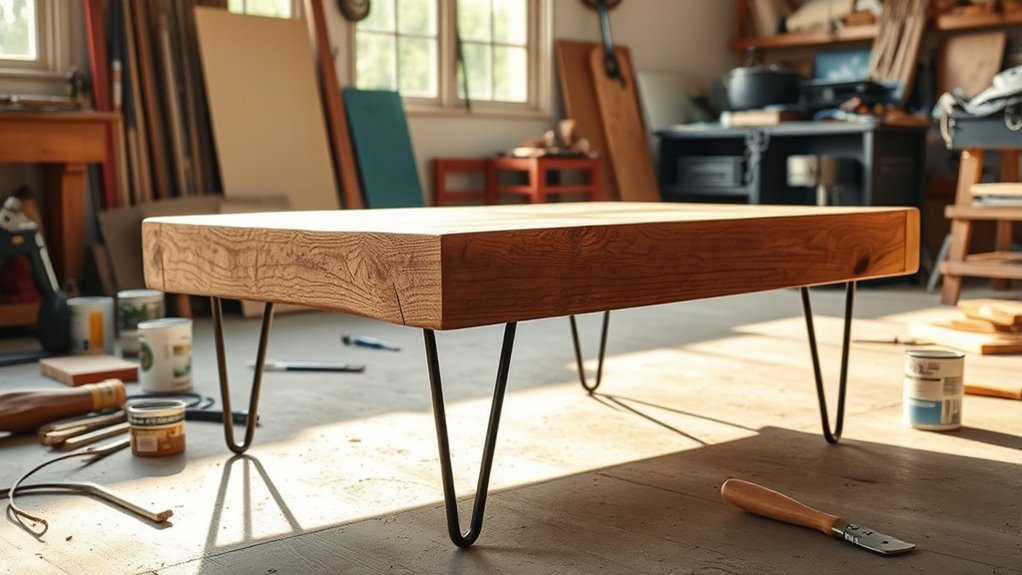
When selecting materials, look for reclaimed wood or repurposed pallets for your tabletops. These options are typically more affordable than new wood and add a rustic, vintage vibe to your furniture. You can sand and treat the wood to bring out its natural beauty, giving each piece a one-of-a-kind look. This process not only supports sustainability but also allows you to infuse your furniture with personality. Pairing these surfaces with sleek, black or brass hairpin legs creates a striking contrast that embodies the mid-century modern aesthetic. The simplicity of the hairpin legs complements the vintage decor, emphasizing clean lines and functional design.
As you assemble your furniture, you’ll find that hairpin legs are easy to attach with basic tools, making this project accessible even if you’re a beginner. You can find pre-made legs at hardware stores or online, often priced reasonably, especially if you buy in bulk or look for sales. Mounting the legs onto your reclaimed wood surfaces is straightforward—just drill holes, attach the legs with screws, and you’re ready to enjoy your custom piece. This DIY approach not only saves money but also gives you the flexibility to design furniture that perfectly fits your space and style. Reclaimed wood is a sustainable choice that adds authenticity and character to your furniture project.
Incorporating vintage decor elements into your DIY projects enhances the mid-century look. Consider adding vintage hardware or distressed finishes to the wood surfaces to amplify the retro feel. These small details can transform a simple table or desk into a statement piece that reflects your personal style and appreciation for history. Plus, because you’re choosing sustainable materials, you’re reducing your carbon footprint and supporting a more eco-conscious way of decorating. Your finished furniture becomes a conversation starter, blending modern craftsmanship with vintage charm and sustainable practices.
Ultimately, making your own hairpin leg furniture allows you to create affordable, stylish pieces that align with your values. By focusing on sustainable materials and vintage decor, you build a space that’s both contemporary and timeless. It’s a rewarding process that combines creativity, environmental responsibility, and a touch of mid-century nostalgia—all within your budget.
Top picks for "budget century make"
Open Amazon search results for this keyword.
As an affiliate, we earn on qualifying purchases.
Frequently Asked Questions
What Tools Are Essential for Making Hairpin Legs?
You’ll need a few essential tools for making hairpin legs. A metal bender helps with metal bending, ensuring smooth curves. You’ll also need a drill for leg assembly, making holes for screws or bolts. A measuring tape and a marker guarantee accurate measurements and placement. Finally, clamps can secure the metal while working, and a grinder might be helpful for smoothing rough edges, giving your furniture a professional finish.
How Do I Choose the Right Metal for Hairpin Legs?
Choosing the right metal for your hairpin legs is like selecting the perfect brush for a masterpiece. You want durable steel or iron with appealing metal finishes that match your style. Consider leg height options to ensure stability and proportion. Thicker gauge metal offers strength, while lighter options add sleekness. Match your finish to your decor—brushed nickel, matte black, or brass—to create a piece that’s both sturdy and stylish.
Can I Customize Hairpin Leg Sizes Easily?
Yes, you can easily customize hairpin leg sizes for your DIY project. To do this, measure your desired leg length and cut the metal accordingly, ensuring smooth, even cuts. You might need a metal saw or a cutting tool designed for metal. For leg size variations, adjust each leg’s length to fit your furniture’s needs. This DIY customization allows you to create unique, proportionate pieces that match your style perfectly.
How Do I Prevent Rust on Steel Hairpin Legs?
Did you know steel furniture can last over 50 years with proper care? To prevent rust on steel hairpin legs, start by applying a clear, rust-resistant sealant or paint. Regularly clean and dry the legs to avoid moisture buildup, which causes rust. Using steel maintenance practices like oiling the legs periodically also helps protect against corrosion. These simple steps keep your furniture looking sleek and durable for years.
Are There Safety Tips for Cutting Metal Rods?
When cutting metal rods, always wear protective gear like gloves, goggles, and a dust mask to stay safe. Use proper tools, such as a metal grinding wheel or a hacksaw, and secure the rod firmly to prevent slipping. Keep your workspace well-ventilated to avoid inhaling dust or fumes. Take your time, and guarantee you’re comfortable and focused to avoid accidents and get a clean cut.
Conclusion
Now that you’ve learned how to craft your own hairpin leg furniture, you’re ready to turn simple materials into stunning pieces. With a little bit of effort, you’ll have furniture that’s as unique as you are—kind of like adding a splash of personality to your space. So roll up your sleeves and get creative; your DIY masterpiece is waiting to shine, proving that with a bit of elbow grease, you can make your home truly your own.