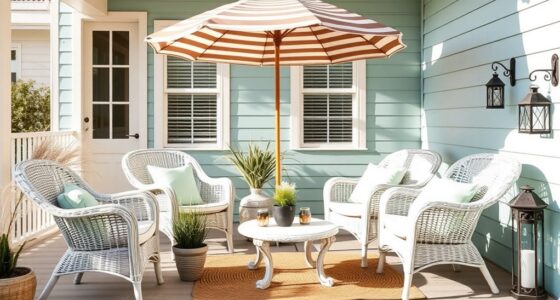
Shabby Chic and Cottagecore are charming vintage styles that create cozy, romantic spaces you’ll love. Shabby Chic features distressed furniture, soft pastel colors, and floral accents, giving your home a feminine, antique feel. Cottagecore emphasizes rural charm with blooming gardens, rustic details, and simple, handmade touches. Both styles focus on nostalgia and personal expression, making your space inviting and authentic. To discover how to incorporate these lovely designs into your home, keep exploring these timeless aesthetics.
Key Takeaways
- Shabby Chic features distressed furniture, soft pastel palettes, and romantic, feminine details for a vintage-inspired aesthetic.
- Cottagecore emphasizes rural, rustic themes with blooming gardens, simple living, and nostalgic, handcrafted decor.
- Both styles prioritize vintage charm, cozy atmospheres, and personal expression through DIY projects and floral patterns.
- Shabby Chic tends to be more romantic and feminine, while Cottagecore highlights rustic, countryside elements.
- Creating a personalized space with distressed furniture, floral textiles, and nostalgic touches defines these soft vintage styles.

If you’re drawn to cozy, nostalgic aesthetics, then Shabby Chic and Cottagecore offer charming ways to transform your space and style. Both embrace a vintage-inspired look that feels warm, inviting, and uniquely personal. With Shabby Chic, you’ll find beauty in distressed furniture, soft color palettes, and gentle, feminine touches. Cottagecore, on the other hand, celebrates rural life, blooming gardens, and a simpler way of living. The two styles overlap in their love of vintage charm, but each has its distinct personality.
One of the easiest ways to bring these styles into your home is through DIY furniture projects. Instead of buying new pieces, you can revamp old furniture with a little paint, sanding, or distressing. Think whitewashed dressers, chipped side tables, or painted chairs with a weathered finish. These DIY furniture projects let you customize your space and add a personal touch that’s central to both styles. You don’t need to be a professional; simple techniques like peeling paint or adding decorative knobs can make a big difference. Plus, working on furniture yourself gives you a sense of satisfaction and a unique story behind each piece.
Floral patterns are a staple in Shabby Chic and Cottagecore decor. Soft, delicate florals evoke a sense of nostalgia, femininity, and natural beauty. You can incorporate floral patterns through curtains, throw pillows, bedding, or wallpaper. Vintage-inspired floral fabrics are perfect for slipcovers or tablecloths, and you can even create your own fabric art or framed textile pieces. These patterns aren’t just about aesthetics—they create a cozy, welcoming atmosphere that makes your space feel like a retreat from the chaos of everyday life. When choosing floral designs, opt for soft pastel colors or muted shades, which complement the distressed furniture and vintage accessories typical of these styles.
Incorporating DIY furniture and floral patterns allows you to craft an environment that’s both charming and authentic. These styles emphasize a handcrafted, lived-in feel that’s hard to achieve with mass-produced decor. With a little effort, you can create a space that feels nostalgic, romantic, and uniquely yours. Whether you’re painting an old cabinet or sewing floral cushions, your personal touch will shine through. Additionally, understanding essential oils and their properties can enhance your home environment by adding natural aromas that promote relaxation and well-being, perfectly aligning with the cozy and calming vibe of Shabby Chic and Cottagecore. These styles aren’t just about aesthetics—they’re about making your home a cozy sanctuary that reflects your love for vintage beauty and simple pleasures.
Top picks for "shabby chic cottagecore"
Open Amazon search results for this keyword.
As an affiliate, we earn on qualifying purchases.
Frequently Asked Questions
How Do I Start Incorporating Shabby Chic Into My Home?
To start incorporating shabby chic into your home, focus on adding vintage floral pieces and distressed finishes. Look for furniture and decor with chipped paint or worn edges to create that charming, aged look. Mix in soft pastel linens and airy curtains to enhance the cozy vibe. Don’t be afraid to blend new items with vintage finds; the key is to create an effortless, lived-in feel that feels both elegant and relaxed.
What Are Key Color Palettes for Cottagecore Decor?
You should focus on pastel color schemes like soft pinks, gentle blues, and creamy greens to capture the cottagecore vibe. Incorporate floral pattern palettes with delicate roses, wildflowers, and dainty prints to add charm. These colors and patterns create a cozy, nostalgic atmosphere, perfect for embracing the vintage, rural aesthetic. Keep your decor light, airy, and charming, blending soft hues with floral designs for an authentic cottagecore look.
Can I Mix Shabby Chic and Cottagecore Styles?
Yes, you can mix shabby chic and cottagecore styles for a charming, personalized look. Incorporate vintage floral patterns and distressed furniture to blend the two aesthetics seamlessly. Use shabby chic’s soft pastel palettes and distressed finishes alongside cottagecore’s cozy, nature-inspired elements like woven textures and rustic accents. This combination creates a warm, inviting space that highlights your unique style while embracing the best of both vintage worlds.
What Furniture Best Suits These Vintage Aesthetics?
You’ll love selecting furniture with distressed finishes and floral upholstery, as these pieces perfectly embody shabby chic and cottagecore styles. Did you know that over 60% of vintage furniture enthusiasts prefer distressed finishes for their authentic charm? Opt for antique-looking dressers, cozy armchairs, and delicate side tables. These pieces add character and warmth, creating a soft, inviting atmosphere that aligns beautifully with these vintage aesthetics.
Are Eco-Friendly Materials Common in Shabby Chic and Cottagecore?
Yes, eco-friendly materials are quite common in shabby chic and cottagecore styles. You’ll often find sustainable fabrics like organic cotton, linen, and hemp used for furniture and textiles. Natural dyes are also popular, giving pieces a soft, vintage look while reducing environmental impact. By choosing these environmentally conscious options, you embrace the charm of these styles while supporting sustainability and creating a cozy, natural aesthetic in your space.
Conclusion
Now that you’ve explored shabby chic and cottagecore, you’re probably wondering what’s next. These styles aren’t just trends—they’re a way to create a timeless, cozy escape that feels uniquely yours. But the real magic happens when you start blending elements or adding your personal touch. Are you ready to transform your space into a charming retreat that keeps everyone guessing what cozy secret you’ll reveal next? The journey has only just begun.