The living room has transformed from an ornate parlor meant to impress guests into a cozy, functional space focused on comfort and entertainment. It shifted from formal furniture and decorative accents to simpler, versatile pieces like sofas and media consoles. Modern design now blends style with practicality, reflecting your personality and lifestyle. If you want to explore how this evolution connects to current trends and what the future holds, keep exploring more about this fascinating journey.

Get furniture and decor delivered free with Prime
- Fast, free delivery on millions of items
- Prime Video, Amazon Music and more included
- Member-only deals all year
Key Takeaways
- Originally formal parlors showcasing wealth, with ornate furniture and decorative accents for special occasions.
- Shifted toward casual, functional spaces emphasizing comfort and practicality for everyday use.
- Furniture evolved from heavy, ornate pieces to sleek, versatile designs reflecting modern minimalism.
- Integration of technology transformed living rooms into entertainment hubs with media-friendly layouts and furniture.
- Contemporary living rooms blend styles and personalize spaces to balance comfort, aesthetics, and technological needs.
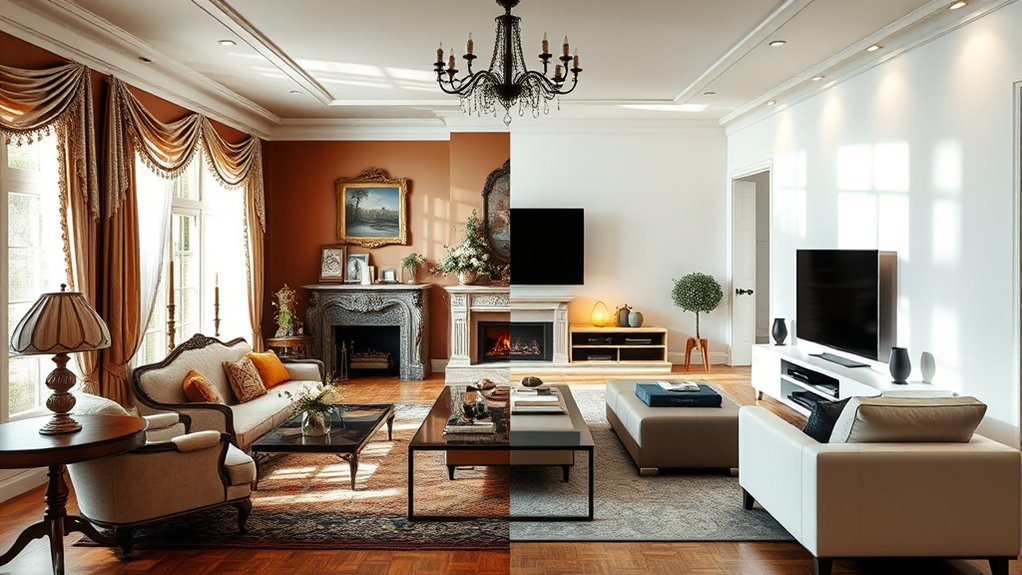
Have you ever wondered how the living room has transformed over the years? It’s fascinating to see how this space, once a formal parlor reserved for special occasions, has become the casual hub of modern homes. The evolution reflects changes in interior design and furniture styles, shaping the way you experience comfort and style at home. In earlier times, living rooms were designed to impress guests, featuring ornate furniture, intricate upholstery, and decorative accents that showcased wealth and sophistication. These rooms prioritized aesthetics over comfort, with heavy drapes, carved wood furniture, and elegant accessories dominating the space. Over time, however, the focus shifted from formality to functionality, influencing the interior design trends that now emphasize relaxed, welcoming environments.
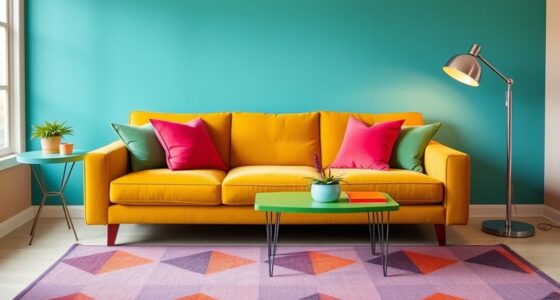
As you look back, you’ll notice furniture styles began to evolve, becoming more streamlined and practical. Mid-century modern designs introduced cleaner lines, lighter materials, and a minimalist approach that made the living room feel less stuffy and more inviting. The use of sleek sofas, functional coffee tables, and multi-purpose furniture became commonplace, reflecting a desire for versatility and ease. These changes in furniture styles also influenced the overall interior design, encouraging brighter colors, open layouts, and a focus on maximizing space. The living room transformed from a stiff, formal space into a place where you can unwind, entertain, or simply relax after a long day. Additionally, the integration of modern technology has further transformed the living room into an entertainment-focused space, influencing both furniture and layout choices.
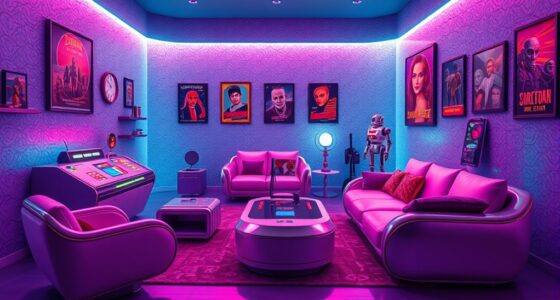
In recent decades, the rise of technology has further shaped the living room’s evolution. The advent of the TV turned this space into a dedicated entertainment zone, prompting a shift in furniture choices. You now see sectional sofas, media consoles, and cozy chairs arranged for optimal viewing, all designed with comfort and convenience in mind. Modern interior design embraces a mix of styles, blending contemporary pieces with vintage or eclectic touches to create personalized spaces. The furniture styles are more diverse than ever, allowing you to curate a living room that reflects your personality while maintaining practicality.
As an affiliate, we earn on qualifying purchases.
Frequently Asked Questions
How Has Technology Influenced Living Room Design Over the Decades?
Technology has transformed your living room by integrating smart home devices and interactive displays, making it more functional and engaging. You now control lighting, temperature, and entertainment systems with a tap or voice command. The design adapts to these innovations, creating a seamless space where technology enhances comfort and entertainment. As a result, your living room becomes a hub for connectivity, relaxation, and interactive experiences, reflecting modern digital lifestyles.
What Are the Latest Trends in Modern Living Room Furniture?
You’ll notice modern living room furniture trending toward smart furniture and modular designs. Smart furniture integrates technology for convenience and comfort, like built-in charging ports or adjustable features. Modular pieces let you customize your space, easily rearranging or expanding as needed. These trends emphasize flexibility, multifunctionality, and innovation, helping you create a versatile living area that adapts to your lifestyle while staying stylish and tech-savvy.
How Do Cultural Differences Affect Living Room Layouts Worldwide?
They say “home is where the heart is,” and your living room reflects that sentiment through cultural symbolism and regional furniture. In some cultures, open layouts foster family bonding, while others emphasize private, cozy spaces. You adapt your decor to honor traditions, incorporating specific symbols and styles. Cultural differences influence your living room’s design, making it a unique expression of identity and values, shaping how you connect with guests and family alike.
What Sustainable Materials Are Now Popular in Living Room Decor?
You can incorporate sustainable materials like reclaimed wood for furniture and biodegradable fabrics for cushions and curtains. Reclaimed wood adds a rustic, eco-friendly touch, reducing waste and deforestation. Biodegradable fabrics, made from natural fibers like hemp or organic cotton, break down naturally, minimizing environmental impact. Using these materials not only enhances your living room’s style but also supports eco-conscious living and reduces your carbon footprint.
How Can I Optimize My Living Room for Small Spaces?
You can optimize your small living room by choosing space-saving furniture that doubles as storage, like ottomans or wall-mounted shelves. Incorporate multifunctional decor, such as fold-out desks or sofa beds, which serve multiple purposes without cluttering your space. Arranging furniture thoughtfully and using light colors creates an open feel. These smart choices maximize your space, making your living area feel larger while maintaining comfort and style effortlessly.
As an affiliate, we earn on qualifying purchases.
Conclusion
As you step into your living room today, remember it’s more than just a space—it’s a living storybook that has evolved with you. From elegant parlors to cozy TV dens, each change mirrors your shifting world. Just like a chameleon adapting to its surroundings, your living room transforms, reflecting your tastes, technology, and memories. Embrace this journey, knowing that your space isn’t static but a vibrant canvas where history and modern life beautifully collide.
As an affiliate, we earn on qualifying purchases.
smart home entertainment devices
As an affiliate, we earn on qualifying purchases.
As an affiliate, we earn on qualifying purchases.
Fall Picks
fall essentials
As an affiliate, we earn on qualifying purchases.