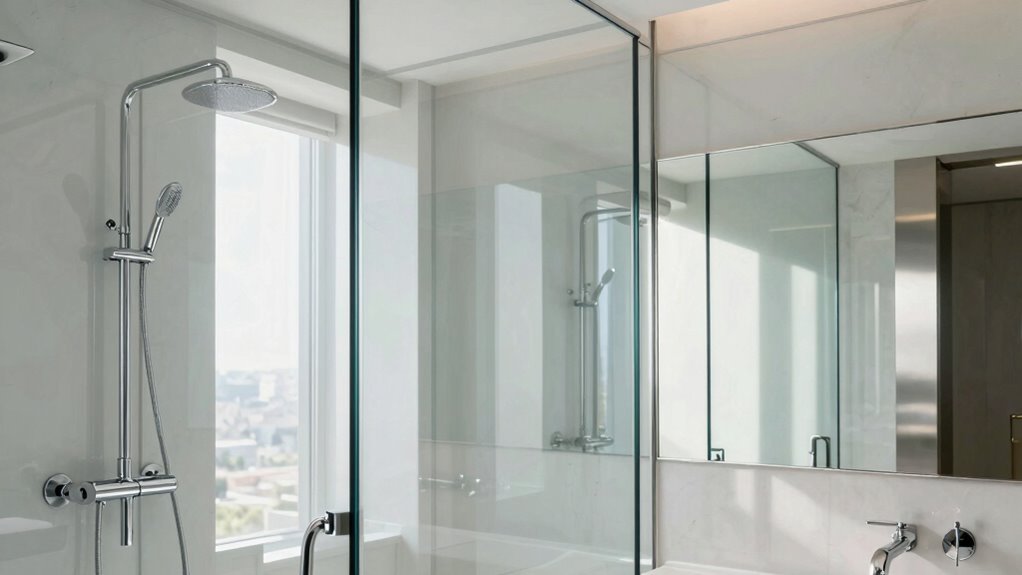

You can see how chrome, steel, and glass have shaped interiors since the early 20th century by blending vintage glamour with modern style. Chrome’s shiny surface adds reflective charm, while steel provides strength and versatility. Glass connects eras with transparency and openness. Their combination creates spaces that feel both nostalgic and current. If you want to explore deeper into their influence and how they work together, you’ll find plenty more to discover.

Get furniture and decor delivered free — and shop member deals
- Fast, free delivery on millions of items
- Access to Prime Big Deal Days deals on October 6–7
- Prime Video, Amazon Music and more included
Key Takeaways
- Chrome, steel, and glass revolutionized interior design in the early 20th century with their sleek, durable, and reflective qualities.
- Chrome’s shiny surface draws from Art Deco glamour, blending vintage charm with modern sophistication.
- Steel provides strength and versatility, seamlessly integrating industrial roots into contemporary interiors.
- Glass links vintage and modern aesthetics through transparency, lightness, and decorative textures.
- Combining these materials creates a nostalgic yet current design narrative, enriching spaces over time.
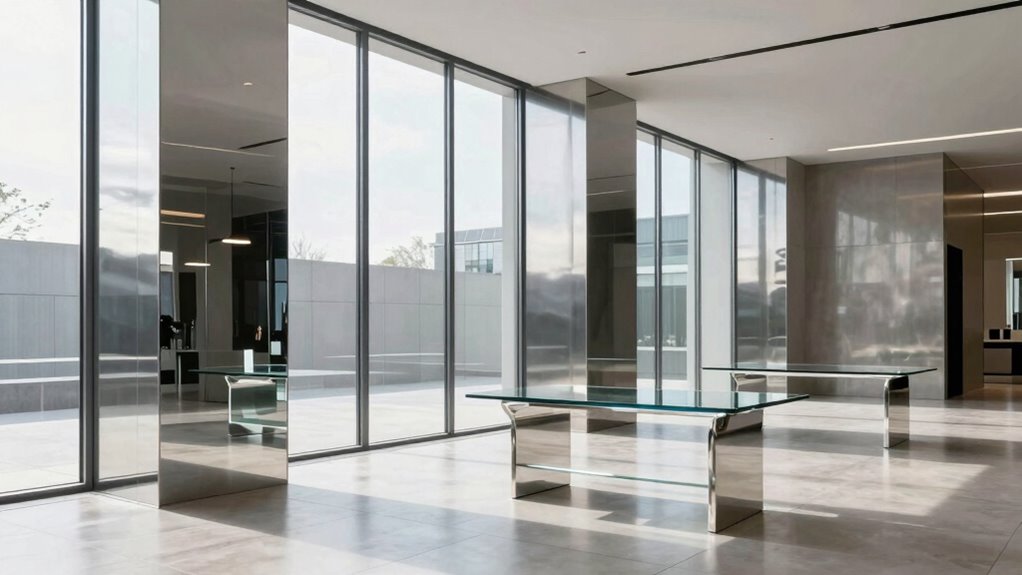
Since the early 20th century, chrome, steel, and glass have transformed interior design, blending sleek aesthetics with functional durability. You can see how these materials revolutionized spaces, merging vintage influence with modern aesthetics to create environments that are both timeless and forward-looking. Chrome’s shiny surface, for example, draws on Art Deco glamour from the 1920s, adding a touch of vintage charm that still feels fresh today. It reflects light beautifully, making rooms appear brighter and more spacious, while the sleekness hints at a sense of sophistication rooted in early modern design. The use of contrast ratios and lighting control can further enhance the visual impact of these materials in a space. Incorporating lighting design principles can help emphasize the reflective qualities of chrome and glass, creating a more dynamic environment.
Chrome’s reflective shine blends vintage glamour with modern sophistication, brightening spaces with timeless elegance.
Steel’s strength and versatility give you the power to craft furniture and architectural features that are both sturdy and stylish. Its industrial roots in factories and warehouses lend an unmistakable vintage influence, but steel has been seamlessly integrated into contemporary interiors. Whether you’re choosing a steel frame for a minimalist sofa or a polished steel staircase, it provides a clean, modern aesthetic that doesn’t sacrifice durability. Steel’s neutral tone pairs effortlessly with other materials, allowing you to blend vintage-inspired pieces with sleek, modern elements, creating a balanced and cohesive look. Additionally, advances in material technology have improved steel’s corrosion resistance and sustainability, making it even more adaptable for various interior styles. This ongoing innovation continues to expand the possibilities for steel in interior design.
Glass, with its transparent and reflective qualities, plays a vital role in connecting vintage influences with modern aesthetics. It’s often used in tables, partitions, and lighting fixtures, adding a sense of openness and lightness to your space. The vintage influence of stained or textured glass can bring a nostalgic feel, while clear, frameless glass panels emphasize modern minimalism. When you incorporate glass into your interiors, you’re not just adding beauty—you’re also enhancing functionality. Glass surfaces are easy to clean, contribute to a sense of airiness, and allow for creative layering of vintage and contemporary pieces. Additionally, understanding interior design principles can help you more effectively combine these materials for a cohesive look. Proper lighting and placement of glass elements can further amplify their aesthetic appeal and functional benefits, creating a harmonious interior environment.
Together, these materials form a narrative that bridges eras. You can combine chrome’s vintage-inspired shine with sleek steel furniture and glass accents for a look that’s both nostalgic and current. This synergy creates a space that feels curated over time, showcasing your appreciation for history while embracing modern design principles. Whether you’re renovating a classic apartment or designing a new space, understanding the interplay of vintage influence with modern aesthetics helps you craft interiors that are rich in character yet effortlessly contemporary. In the end, chrome, steel, and glass aren’t just materials—they’re storytellers, blending the past with the present to shape your perfect interior.
chrome and steel modern furniture
As an affiliate, we earn on qualifying purchases.
As an affiliate, we earn on qualifying purchases.
Frequently Asked Questions
How Do Chrome, Steel, and Glass Impact Interior Acoustics?
Chrome, steel, and glass impact your interior acoustics mainly through acoustic reflection and sound absorption. Their hard surfaces reflect sound waves, which can cause echoes and reduce clarity. However, they absorb some sound, especially if textured or combined with softer materials. To improve acoustics, you might add rugs, curtains, or acoustic panels, balancing the reflective qualities of these materials and creating a more comfortable, sound-friendly environment.
What Are the Environmental Effects of Using These Materials?
You should consider the environmental effects of chrome, steel, and glass by exploring eco-friendly alternatives, which reduce harmful emissions and resource use. Recycling and proper disposal are vital, as these materials are often recycled to conserve energy and minimize waste. However, their manufacturing can emit pollutants and consume significant resources. Choosing sustainable options and supporting recycling efforts help lessen their environmental footprint and promote more eco-conscious interior design choices.
How Do Maintenance Routines Differ for Each Material?
You need to tailor cleaning protocols for each material. For chrome, regularly wipe with a soft cloth to prevent smudges and apply a polish to maintain shine. Steel requires corrosion prevention measures, like using mild cleaners and avoiding moisture buildup. Glass demands gentle cleaning with non-abrasive products to prevent scratches. Consistent maintenance helps prolong their appearance, ensuring each material stays pristine and corrosion-free over time.
Are There Health Concerns Linked to These Materials Indoors?
You might think these sleek materials are perfectly safe, but ironically, they can impact indoor air quality. Chrome and steel often contain coatings or finishes that emit volatile organic compounds (VOCs), especially during installation or when damaged. Glass is inert, but dust from handling can affect air quality. Luckily, their durability means fewer replacements and less ongoing concern, but it’s wise to guarantee proper ventilation during installation to keep health risks minimal.
What Are Emerging Trends Involving Chrome, Steel, and Glass?
You’ll notice emerging trends that emphasize decorative finishes on chrome, steel, and glass, enhancing their aesthetic appeal. Designers are experimenting with matte, brushed, or colored coatings to create unique looks. Material durability remains essential, so innovations focus on making these materials more resistant to scratches and corrosion. These trends allow you to incorporate sleek, modern elements into your interiors while ensuring longevity and style, blending form with function seamlessly.
As an affiliate, we earn on qualifying purchases.
Conclusion
As you step into these spaces, imagine the gleam of chrome catching the light, the cool touch of steel under your fingertips, and the transparent glow of glass that opens up worlds. These materials don’t just define interiors—they breathe life into them, reflecting your style and spirit. Feel the smooth surface beneath your hand, the sleek lines that catch your eye, and let their timeless elegance inspire your own story within these luminous, modern sanctuaries.
As an affiliate, we earn on qualifying purchases.
As an affiliate, we earn on qualifying purchases.
Halloween Picks
halloween
As an affiliate, we earn on qualifying purchases.