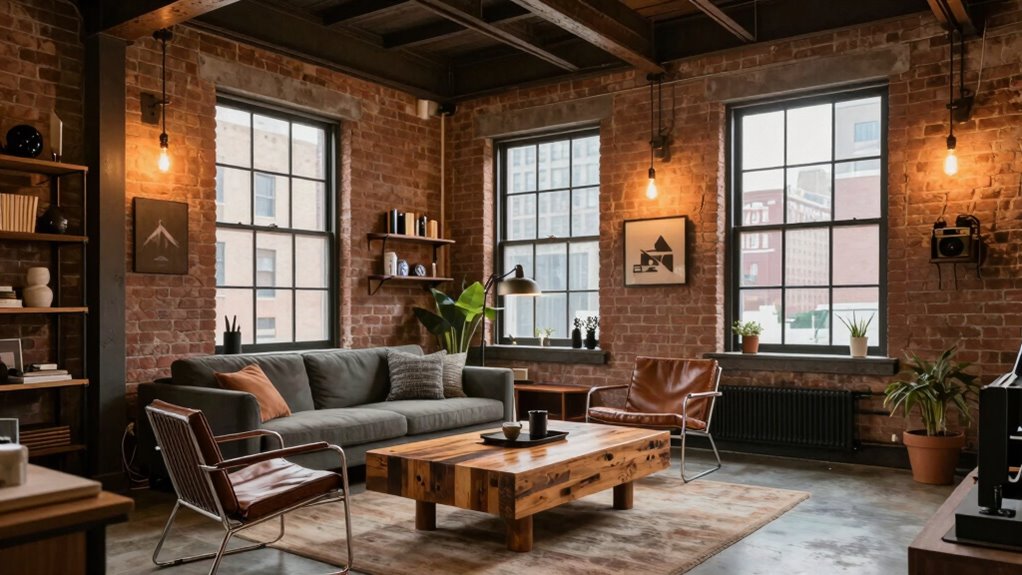

Industrial design evolved from practical factory solutions emphasizing durability and function into a stylish home decor style that combines raw materials, vintage craftsmanship, and modern elements. You’ll notice features like exposed brick, reclaimed wood, and metal fixtures that celebrate authenticity and imperfections. This style encourages creativity, sustainability, and personalized spaces by mixing vintage charm with sleek, minimalist aesthetics. Keep exploring to discover more about how this versatile trend can transform your home’s atmosphere and character.

Get furniture and decor delivered free with Prime
- Fast, free delivery on millions of items
- Prime Video, Amazon Music and more included
- Member-only deals all year
Key Takeaways
- Industrial design evolved from factory practicality to aesthetic appeal, blending raw materials with modern style in home decor.
- Vintage craftsmanship and reclaimed materials became key elements, emphasizing authenticity and resourcefulness.
- The style promotes simplicity, honesty in materials, and the fusion of vintage charm with contemporary aesthetics.
- Practical applications like pendant lights and reclaimed furniture popularized industrial-inspired home decor.
- Sustainability and personalization are central, reflecting the design’s roots in function, durability, and craftsmanship.
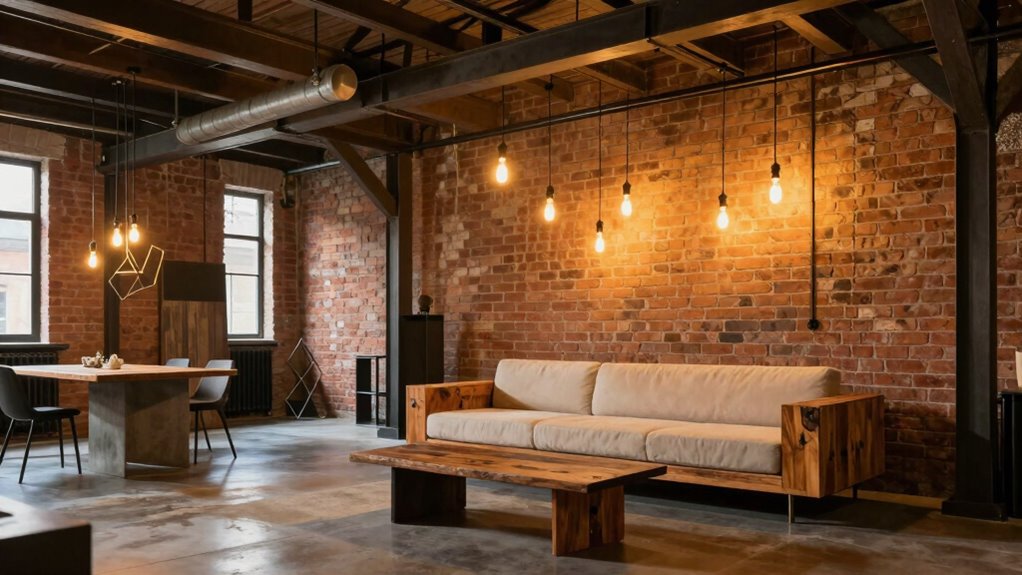
Have you ever wondered how industrial design influences the look and feel of your home? It’s a fascinating evolution that blends vintage craftsmanship with modern aesthetics, creating spaces that feel both timeless and contemporary. Industrial design started as a practical approach in factories and warehouses, emphasizing durability and function. Over time, these raw, utilitarian elements caught the eye of designers and homeowners alike, transforming into stylish decor choices. You can see this in exposed brick walls, metal fixtures, and reclaimed wood pieces that bring a sense of history into modern living spaces. These elements are rooted in vintage craftsmanship, showcasing the skill and resourcefulness of earlier eras. Yet, they’re seamlessly integrated into current trends, highlighting sleek lines, minimalist layouts, and a neutral color palette. This fusion of old and new gives your home a unique character, balancing warmth and sophistication.
The appeal of industrial design in home decor lies in its honesty. You’re not hiding imperfections or materials; instead, you celebrate them. For example, a reclaimed metal pipe used as a curtain rod or a weathered wooden table becomes a statement piece that tells a story. This appreciation for vintage craftsmanship breathes life into contemporary interiors, making them feel authentic and inviting. It’s about embracing imperfections and seeing beauty in the raw, unrefined qualities of materials. On the other hand, modern aesthetics bring a sense of clarity and simplicity. Clean lines, uncluttered spaces, and functional furniture make your home feel open and organized. When you combine these elements, you get a space that’s both stylish and practical—where vintage charm meets sleek, contemporary design. Additionally, understanding the importance of contrast ratio and color accuracy can further enhance the visual appeal of industrial-inspired interiors, creating a more dynamic and engaging environment. Recognizing how vintage craftsmanship influences contemporary design can deepen your appreciation for the authenticity and craftsmanship behind these elements. Incorporating these principles can also promote a more sustainable approach to decorating, emphasizing reuse and repurposing of materials.
You might notice how this style encourages creativity and personalization. Industrial design allows you to mix and match materials, textures, and finishes to create a space that feels uniquely yours. Whether it’s a vintage-inspired pendant light hanging above a modern kitchen island or a repurposed factory cart used as a coffee table, the possibilities are endless. This approach also values sustainability, giving new life to old materials and reducing waste. As a result, your home becomes not just a reflection of current trends but also a testament to craftsmanship and resourcefulness. When you understand how industrial design has become a popular choice in home decor, it’s clear that it offers a perfect balance—honoring the past while embracing the future.
Frequently Asked Questions
How Did Industrial Materials Influence Home Decor Trends?
Industrial materials greatly influence home decor trends by introducing raw, rugged elements like metal finishes and reclaimed materials. You notice how metal finishes add a sleek, modern touch, while reclaimed materials bring warmth and sustainability. These industrial-inspired elements create a balanced aesthetic, blending ruggedness with refinement. As you incorporate these materials, your space feels both trendy and eco-conscious, reflecting a shift toward functional, stylish, and environmentally friendly design choices.
What Are Key Differences Between Industrial and Traditional Design Styles?
They say, “Beauty lies in simplicity,” and that’s true when comparing industrial and traditional styles. Industrial design highlights raw, vintage furnishings, and uses minimalist aesthetics with exposed materials like metal and wood. Traditional design, on the other hand, features ornate details, rich fabrics, and classic furnishings. You’ll notice industrial’s utilitarian feel contrasts sharply with the warmth and elegance of traditional decor, making each style uniquely appealing.
How Has Technology Impacted Industrial Design in Homes?
Technology has transformed industrial design in homes by integrating smart appliances that combine function with sleek, utilitarian aesthetics. You now see more innovative materials and streamlined forms, making spaces feel modern yet practical. Virtual reality also plays a role, allowing you to visualize and customize designs before implementation. These advancements make industrial-inspired interiors more accessible, functional, and personalized, blending traditional ruggedness with cutting-edge technology seamlessly.
Are There Specific Regions Known for Industrial-Inspired Decor?
You’ll find regions like Brooklyn, Berlin, and Milan renowned for industrial-inspired decor. These areas celebrate urban craftsmanship and embrace vintage repurposing, giving old factory elements a fresh, stylish life in homes. In Brooklyn, you’ll see converted warehouses with exposed brick and metal accents. Berlin’s design scene highlights reclaimed materials, while Milan blends industrial with modern elegance, making these places hotspots for industrial-inspired interiors.
What Sustainability Practices Are Common in Industrial Home Decor?
Sustainability in industrial home decor is like planting seeds for the future. You’ll often find recycled metals used for furniture and fixtures, reducing waste and conserving resources. Eco-friendly finishes, like low-VOC paints and natural stains, help minimize environmental impact. By choosing these practices, you’re turning your space into a green oasis that’s stylish and mindful, proving that sustainability and industrial charm can go hand in hand seamlessly.
Conclusion
You might find it fascinating that industrial design’s raw, functional roots actually foster a sense of authenticity and craftsmanship in home decor today. This shift suggests that our appreciation for utilitarian aesthetics isn’t just trend-driven but rooted in a deeper desire for meaningful, durable pieces. So, next time you choose a piece of industrial-inspired decor, remember—you’re embracing a movement that blurs the line between utility and artistry, grounding your space in both history and honesty.
Halloween Picks
halloween
As an affiliate, we earn on qualifying purchases.