TL;DR
Thanksgiving table decor sets bundle coordinated pieces such as runners, placemats, napkins, or napkin rings, but the contents vary by seller. Check the package list, measurements, guest count, and care label before buying, then keep hot dishes, serving space, and sightlines in mind as you style the table.
Check the item list and quantities; “set” may mean a runner and a few placemats, not a place setting for each guest.
Measure the table and compare listed dimensions before choosing a runner or placemats.
Match fabric care needs to your meal: spills, laundering, wrinkles, embroidery, and natural fibers all affect cleanup.
Keep candles and tall arrangements clear of serving traffic and sightlines, and use trivets under hot cookware.
Compare a set’s price with the cost of only the pieces you need, then favor reusable basics if you host across seasons.

Get furniture and decor delivered free with Prime
- Fast, free delivery on millions of items
- Prime Video, Amazon Music and more included
- Member-only deals all year
Know what a Thanksgiving table decor set actually includes
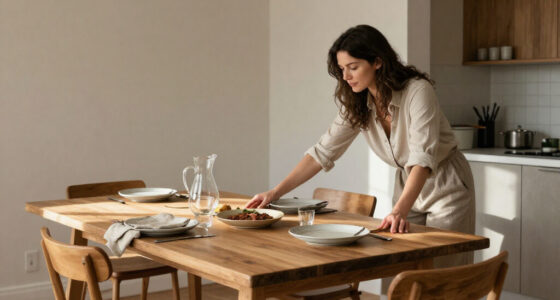
A Thanksgiving table decor set is a group of coordinated table accessories sold together, often including a runner, placemats, napkins, or napkin rings. Some sets add a centerpiece, candles, or place cards; others contain only one kind of linen. Read the item list and quantities, because the word “set” doesn’t promise a complete place setting for every guest. Imagine a listing photo with six place settings, pumpkins, taper candles, and a leafy centerpiece. The package might include only a runner and four placemats. Those other details may be styling props or items sold separately, so look for an explicit inventory and check whether the pieces are functional or decorative. This distinction affects more than the checkout price: if you assume dinnerware or enough napkins are included, you may discover the gap too late to find a matching replacement. Before you buy, count the seats you plan to fill and compare that number with the quantities shown. If eight people are coming and the listing includes four napkins, you’ll need four more or a different plan. Also consider whether you need matching pieces at every seat or simply a coordinated base; a runner and a few accents may be enough if you already own plain napkins. The key facts and quantities matter more than a polished photograph: confirm what arrives, how many pieces you get, and whether dinnerware or serving pieces are included.Products Worth Considering

Ring Wired Doorbell Pro (3rd Gen) with Chime Plus, Deep Silver

Bose Surround Speakers for Home Theater, Black

Dyson Purifier Hot+Cool HP2 De-NOx
As an affiliate, we earn on qualifying purchases.
Match the runner and placemats to your real table
Choose a table runner and placemats by measuring your table and checking that the finished layout leaves room for seats, plates, and shared dishes. Compare the runner’s length and width with your measurements, then decide how much overhang you want at each end. There is no single ideal drop for every table or meal: more overhang can make a long table feel dressed, while a shorter runner is less likely to catch on chairs or guests’ laps. For example, on a narrow four-seat table, a wide runner and bulky placemats can push dinner plates toward the edge and leave little room for the bread basket. A slim runner with one low centerpiece may work better. On a long table with guests at both ends, an overhanging runner can soften the empty surface, as long as it doesn’t fall into anyone’s lap or interfere with chairs. The goal is to fit the linens around the meal you actually serve, not arrange the meal around the linens. Use a quick measuring routine before you shop:- Measure the table’s length and width.
- Compare those numbers with the listed dimensions of the runner and placemats.
- Sketch or lay out the plates and serving dishes you expect to use.
- Leave clear space for guests’ arms and for passing food.
Pick a palette that feels festive and still looks like you
The easiest Thanksgiving palette to live with starts with one main color family, then adds a smaller accent. Traditional rust, burgundy, gold, and brown bring the familiar warmth of dried leaves; modern neutral linens, natural greens, and muted terracotta feel quieter. Plaid, pumpkins, wheat, and woodland motifs can add seasonal character without requiring every piece to match. Keeping one element calm gives the eye somewhere to rest and makes it easier to reuse the linens with different accents later. Consider a family dinner in a bright kitchen with a pale wood table. A rust runner, cream napkins, and a handful of small pumpkins can feel warm without darkening the room. In a dining room with burgundy chairs, neutral linens and a little greenery may sit more comfortably than another strong red pattern. The room, dishes, and furniture already contribute color, so let the set join the scene rather than compete with it. A useful check is to look at the table with the plates and glassware in place: a palette that looks balanced on a product page can feel much busier once the meal is set. Current broad home decor trends lean toward natural textures, earthy tones, understated seasonal styling, and reusable accents. Hosts often combine coordinated linens with individual touches instead of buying a perfectly matching collection. Dried foliage, little pumpkins, and simple greenery bring texture and color; these are general design trends, not a live ranking of products. Listings and availability change, so check the current details before buying.Choose fabrics that suit spills, heat, and cleanup
The right table decor material depends on how you host and what cleanup you can manage afterward. Cotton and linen offer a soft, natural look, but they can wrinkle and may need laundering. Polyester blends are often easier to care for, while woven natural materials add texture but may be less forgiving when gravy or cranberry sauce lands on them. These are tradeoffs rather than guarantees: blends, finishes, dyes, and decorative stitching can all affect how a particular piece handles washing and stains. Picture a busy kitchen table where children reach across for rolls and the serving spoons travel back and forth. Washable napkins and an easy-care runner may save you time when the meal ends. A delicate embroidered cloth might be lovely for a smaller dinner, but check its label before trusting it with a splash of red wine or a plate of buttery squash. Fibers and embellishments can change the care routine, even when two pieces look similar. If a stain-prone piece requires special treatment, consider whether you’re comfortable cleaning it promptly or would rather use something you can put straight in the wash. Decorative cloth is not automatically heat-safe. Put trivets or heat pads under hot cookware, and choose washable linens if spills are likely. Keep taper candles and tall centerpieces out of traffic and below guests’ sightlines; battery-operated candles can work well where an open flame doesn’t suit the setting. Think of the runner as a soft visual path, not a hot-dish pad or a barrier against every spill. That separation protects both the fabric and the table, while keeping the meal practical when serving dishes move around.Decide whether a coordinated set is worth the price
A coordinated set can simplify shopping, but buying separate pieces can cost less when you only need one or two items. Compare the contents, quantities, quality, and shipping against your guest count and what you already own. A bundle is convenient when its pieces solve several needs; individual buys offer more control when the bundle includes items you won’t use. The real comparison is the cost of a usable table, not the number of pieces advertised: extras that stay boxed still take up storage and don’t add value to your meal. For instance, suppose you have plain cream napkins and enough placemats already, but want a seasonal runner. A large bundle with eight napkin rings and a centerpiece may add cost and storage without helping your table. If you’re setting up a new holiday table from scratch, a coordinated group of runner, napkins, and placemats could make shopping faster and reduce guesswork. Think about how often you’ll use the pieces, too: a higher upfront price may make sense for washable basics you’ll bring out all year, while a theme-specific bundle is harder to justify if it suits one meal only.| Buying approach | Works well when | Check before paying |
|---|---|---|
| Coordinated set | You need several matching pieces at once | Included items, quantities, materials, and shipping |
| Separate pieces | You own some basics or want a custom mix | Color match, size compatibility, and per-item cost |
| Reusable neutral pieces | You host across several seasons | Whether accents can change the look without a full new set |