
TL;DR

Get furniture and decor delivered free with Prime
- Fast, free delivery on millions of items
- Prime Video, Amazon Music and more included
- Member-only deals all year
A Veranda writer reports that potted cape plumbago began producing new blooms within weeks of planting, after receiving one watering during a rainy stretch. The South African shrub is described as sun-loving and relatively low-maintenance, but the writer’s trial is still underway and does not establish that it is foolproof in every climate or container.
A Veranda writer reports that cape plumbago (Plumbago auriculata) began producing new flowers within weeks of being planted in front-door containers, offering an early example of a sun-loving, relatively low-maintenance shrub for warm-climate gardens. The account is a personal gardening update, not a controlled test: the plants had received substantial rain, and their performance through summer and fall was still unknown.
The writer said she chose cape plumbago after looking for a flowering plant that could tolerate heat and full sun and would not require frequent watering. She bought two one-gallon plants and four pint-sized plants, then planted them in containers with fresh potting mix. The report says she loosened the root balls, set them into openings wider and deeper than the roots, backfilled the pots, and applied a balanced slow-release fertilizer near the base without placing it directly against the stems.
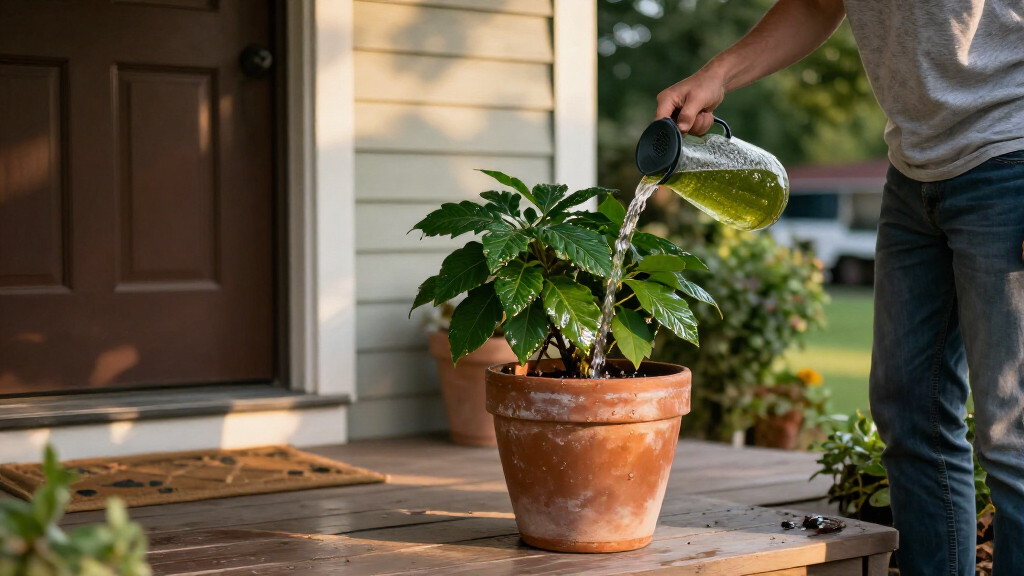
Within a few weeks, the plants were putting out new blooms almost daily and beginning to grow upward and spill over the container edges, according to the writer. Because rain had been steady in her area, she said she had used a hose only once. The report recommends watering one to two times a week depending on soil dryness, rather than following a fixed schedule regardless of conditions.
The writer said she planned to monitor the plants over summer, potentially adding fertilizer and pruning to encourage growth. Whether the containers will produce abundant flowers into fall or reach the plant’s stated potential height of at least six feet remains to be seen. She had bought obelisks to support the plants if they grow tall enough to climb around them.
A Container Option for Sunny Entries
Cape plumbago may appeal to homeowners seeking a flowering container plant for a sunny porch or entryway, particularly in regions where it can grow as a perennial. The report describes a plant that can be trained or allowed to grow as a shrub, climbing vine, or potted focal point, giving gardeners options for limited spaces and different support structures.
Its reported drought tolerance should not be read as a reason to ignore watering. The writer’s plants benefited from steady rainfall, and the suggested watering frequency depends on how dry the soil is. For readers, the practical takeaway is to check growing conditions and container soil rather than assume a plant can thrive without care. The early blooms are encouraging, but one gardener’s first weeks do not establish dependable results for every home.
Products Worth Considering

Philips Hue Festavia 130-Foot Indoor/Outdoor Smart String Lights, 500 LEDs

Philips Hue Festavia Globe Outdoor String Lights, 32 Bulbs, 91 ft

Levoit Core 400S-P Smart Air Purifier for Large Rooms
As an affiliate, we earn on qualifying purchases.
Warm-Climate Growing Conditions
Cape plumbago is a shrub native to South Africa. The source report says it is suited to USDA hardiness zones 8 through 11 and can tolerate winter temperatures dipping to about 20 to 25 degrees Fahrenheit. Those figures describe the conditions cited in the report; local climate, exposure, and whether the plant is in a pot can affect how it fares.
The plant is also described as deer-resistant and attractive to pollinators because of its clusters of blue flowers. These characteristics may be useful when choosing plants, but the source does not provide a measured pollinator study or guarantee that deer will never browse it. The writer’s experience is specifically with container-grown plants and is still at an early stage.
Summer Results Are Still Pending
The source account covers only the first few weeks after planting. It does not establish how the plants will perform through hotter, drier weather, whether they will continue flowering into fall, or whether they will reach the report’s stated potential height in the writer’s containers. Rainfall was a major factor in her watering experience, so results in drier locations may differ.
The report also does not give details such as the containers’ exact sizes, their drainage, or the writer’s precise local growing conditions. It provides no comparative trial against other front-door plants. Claims such as “foolproof” are therefore best understood as the article’s enthusiastic framing, not proof that the plant needs no attention or is suitable for every climate.
Watch for Growth Through Fall
The writer plans to track whether the plumbago continues blooming through summer and into fall, and whether it needs additional fertilizer or pruning. She will also see whether the plants grow enough to use the obelisks she bought for them. Those observations will provide a fuller account of how the containers fare beyond their first weeks.
For gardeners considering the plant, the source recommends checking the soil’s surface dryness and adjusting watering accordingly. Local temperature and growing conditions matter, especially for containers. The report offers no later update or confirmed seasonal outcome at this stage.
Key Questions
What is cape plumbago?
Cape plumbago (Plumbago auriculata) is a flowering shrub native to South Africa. The source report describes it as suitable for containers, shrub-like growth, or use as a climbing plant with support.
How often should cape plumbago be watered?
The report suggests watering one to two times per week, guided by how dry the soil is at the surface. Rainfall, container conditions, and local weather can change how often it needs water.
Can cape plumbago grow in a pot?
Yes. The writer planted cape plumbago in front-door containers and reported new blooms within a few weeks. Her longer-term results, including the plants’ eventual size and flowering season, were not yet known.
What climates does the report say suit cape plumbago?
The report lists USDA hardiness zones 8–11 and says the plant can tolerate winter temperatures of about 20 to 25 degrees Fahrenheit. Actual performance can vary with local conditions, and the source does not establish how every potted plant will fare in cold weather.
Source: veranda.com